


When most people consider the implications heart disease might hold for them, they think in terms of "it runs in my family" or "it doesn't."
And despite being bombarded by stories about the latest research, much of what we retain about heart disease is outdated. But in no field of medical research has a greater body of knowledge been gathered, with new information emerging all the time.
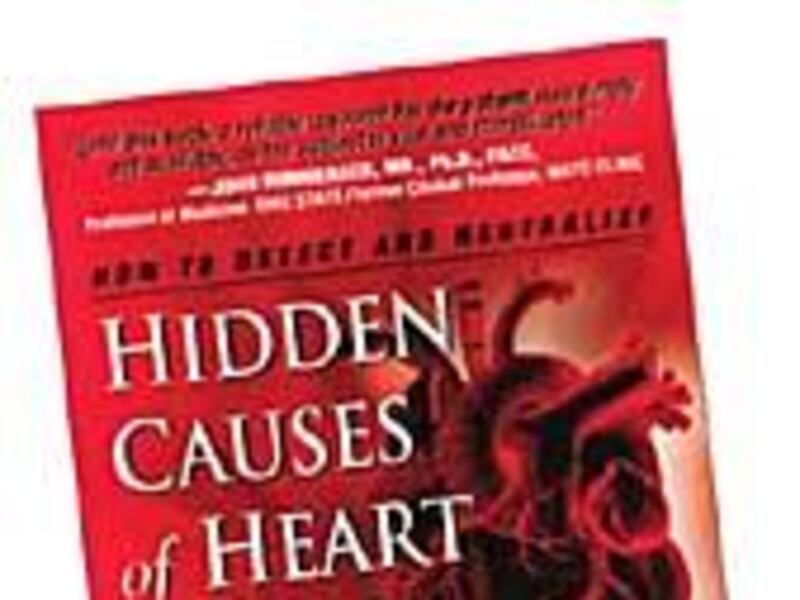
That's where Christian Wilde's book, "Hidden Causes of Heart Attack and Stroke," published recently by Abigon Press ($19.95) becomes invaluable for anyone who wants to know not only about heart disease, but about preventing it.
It's written in one of the more reader-friendly formats and is easy-to-understand. No dense medical prose in this 408-page book.
But it's also up-to-date, with a information (unheard of a few years ago) on inflammation's role in heart disease and how a simple test measuring C-reactive protein can detect risk for both heart attack and stroke.
He also writes about the independent risk factor for heart disease posed by homocysteine, lists common low-grade infections that may put someone at risk for heart attack and stroke and identifies other risk factors, such as fibrinogen. And sleep apnea.
There's a chapter, for instance, on how anger and hostility can be factors in development of a heart attack or stroke.
Another chapter looks at the link between heart disease and periodontal disease.
But the thing that sets this book apart, aside from its simple presentation, is now just how thoroughly Wilde examines the topic, but the resources he's pulled together to suggest solutions. The premise behind the book is that you can both detect and neutralize heart disease. So he spends a fair amount of ink explaining prevention measures, and not just fairly traditional advice like diet, exercise and don't smoke.
He presents the most recent thinking on what he calls "heart-friendly" supplements like fish oil and Coenzyme Q 10, backing it up with studies.
He even tackles some of the technology of heart repair.
And lest anyone question the science that goes with the readable prose, the foreword was written by Dr. Karol Watson, co-director of the Program in Preventive Cardiology and director of Lipid and Hypertension Management at University of California-Los Angeles. Testimonials come from other respected physicians working in heart-smart places like the Mayo Clinic.
When you have kids, you can count on certain things, like the occasional fever or cold. And the fact that medicine for kids can be messy.
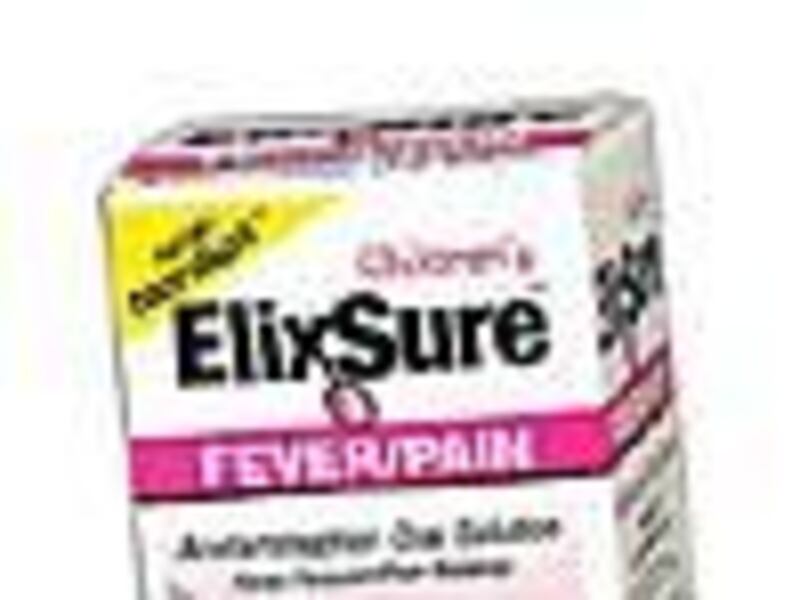
But there's a new kid in town: Children's ElixSure, in separate formulas for cough, congestion and fever/pain. They're manufactured by Taro Consumer Healthcare Products, a division of Taro Pharmaceuticals Inc.
The 4-ounce bottles look pretty typical and the formula itself is, too. After all, acetaminophen is acetaminophen. But pour the medicine into the little plastic teaspoon that's provided and there's a big difference: It doesn't spill. Even when you try really hard to get it to, a project my 5- and 6-year-old daughters were more than happy to help with.
It's roughly the texture of smooth grape jelly, no clumps.
The cough formula is available in a cherry bubble gum flavor, while the nasal decongestant ElixSure comes in grape bubble gum flavor. The fever/pain compound is bubble gum.
We've tried each of them as the occasion arose over the last three weeks and they work pretty much like any of the children's medicines when it comes to stopping symptoms. But with a price that's pretty comparable to most of the similar products, that no-spill factor makes it worth a look.
E-MAIL: lois@desnews.com