


Starting an exhibit design company just weeks after the Sept. 11, 2001, terrorist attacks was a gamble.
Business travel had not only begun a spiraling decline, but trade shows — the lifeblood of the exhibition industry — also were faltering.
Against those clouds, Cregg Cannon was faced with his own pinch: Continue to work for one of the nation's largest design companies or make it on his own.
"I was running the office here in Salt Lake, and they laid off all the employees that I had," Cannon said. "They said, 'You can stay with us, but you'll probably have to relocate,' and New York was thrown out there."
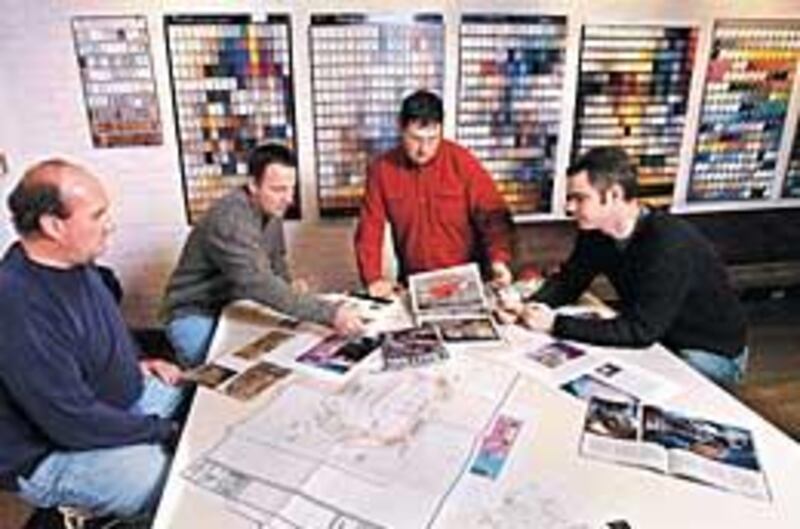
Rather than move, Cannon set out to capture his own clientele by launching Marathon Exhibits, a Salt Lake-based company specializing in high-end trade show booths.
Yet the chance of success was far from certain.
In 2001, U.S. businesses were accustomed to spending an average of more than $1.1 million annually on trade show exhibitions. But those same companies were on the verge of drastic cuts.
By the end of 2002, spending was down to less than $709,000, according to the Trade Show Exhibitors Association, a Chicago-based marketing group. Average expenditures on exhibits this year dropped to $532,039.
"It's been down for the last two to three years," said Debbie Jacobs, spokeswoman for the association. "People are going to less shows, budgets are down."
The average number of shows attended by exhibitors fell to 60 in 2003 from 114 in 2002.
Chris Hatch, chief executive officer of West Valley City-based Exhibit Center, a marketing display company, said opening an exhibit company in late 2001 was an extremely risky venture.
"We've seen a lot of our competitors actually go out of business," Hatch said. "The ones that are remaining are fighting for the business. We actually had a little over a half million dollars in our pipeline for projects to be sold, and three days after 9/11 we lost it all."
In order to survive, Exhibit Center expanded its operations to include retail merchandising and store interior exhibits. Today, about one-fourth of the company's revenues come from trade shows, compared to 85 percent before 9/11.
"What I've seen happen in the trade show industry, the trade shows have reduced in size," Hatch said. "Our clientele have dropped down to smaller booths. They have reduced the number of shows they go to. The attendance has dropped, but the percentage of actual buyers has increased."
Yet Cannon took a different approach. Instead of focusing on "pop-up" or low-end budget displays, Cannon turned his attention to Fortune 500 company exhibits.
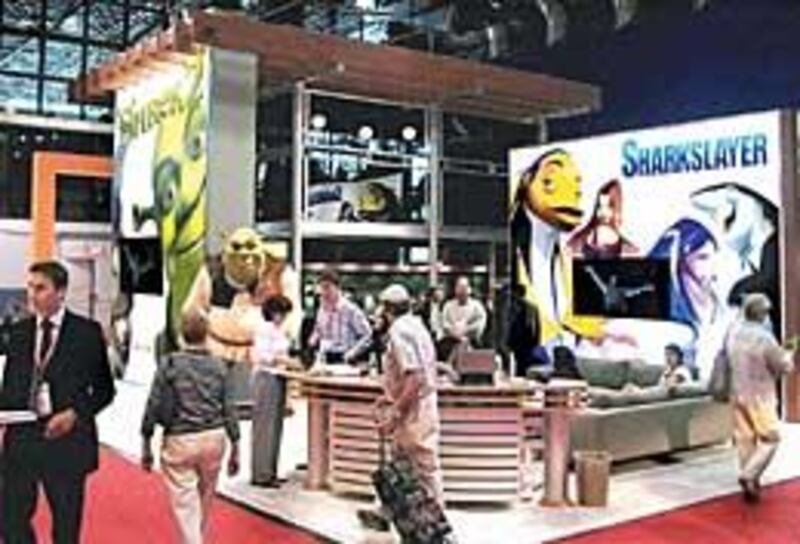
In the two years since introducing his company, Cannon has landed big contracts with big companies, including Novell, DreamWorks, LANDesk, Miramar Systems and Sorenson Media.
And Marathon's displays can be found in trade shows across the country, including Licensing International in New York City, the FOSE government trade show in Washington, D.C., and Macworld Conference and Expo in San Francisco.
His biggest client, Mattel Inc. — makers of Barbie, Fisher Price and Hot Wheels — signed a $1.2 million contract with Marathon for a 6,000-square-foot, two-story display at this past summer's Licensing International show.
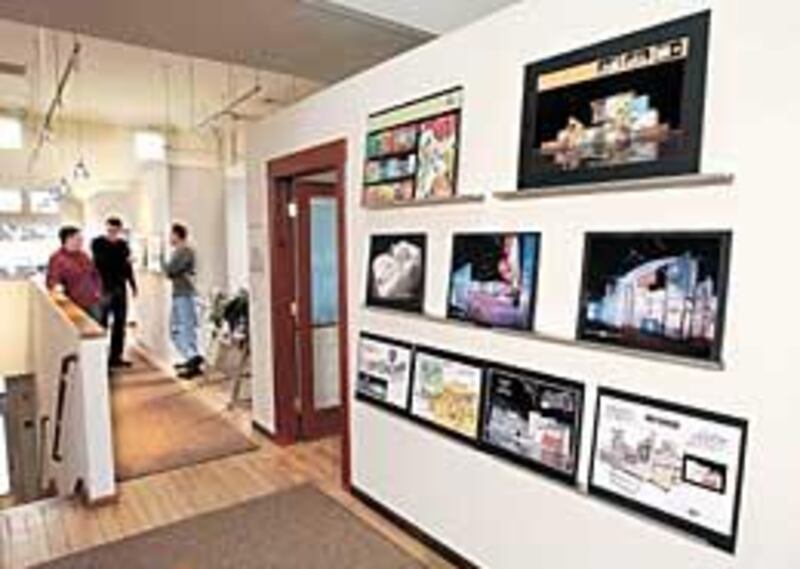
"We've designed exhibits that have waterfalls, exhibits that have private movie theaters, conference rooms, fashion show ramps," Cannon said. "They're environments where products, where branding or graphics can all be displayed in a 3-D environment."
Johnathan Barhite, director of worldwide trade show services for Mattel, said Marathon asked a lot of questions in the beginning to establish the goal of the project rather than just asking what the company wanted.
"Last year it was more of a matter of taking existing pieces and putting them back up again, so it wasn't a really dramatic presence," Barhite said from his El Segundo, Calif., office. "In past years it has kind of been separate pieces that haven't been centrally managed."
This year Marathon opted to showcase Mattel's brand image, putting less focus on the company's hundreds of toy product lines.
"It was a really dramatic change for them," Cannon said.
Exhibitor Magazine described Marathon's design technique as the "Barbie diet approach: no fat."
The result, Exhibitor said, was a 260 percent increase in Mattel's exhibit attendance, from 700 people per day to 1,800.
"I would use them on any project that I have at that magnitude without a doubt," Barhite said.
Cannon said Marathon's displays are all about showing a return on investment.
"If we can't at the end of the day say what we did added value to your company, we really don't want to participate," Cannon said. "We don't want to just put up something beautiful and say, 'I hope it worked out.' "
While Marathon — with less than $10 million in annual sales — is considered one of the smaller players in the industry in terms of revenue, its formation of a guild with 15 other design companies has leveraged its position.
"The whole purpose of it is to compete against these big companies," Cannon said. "We keep our overhead really low, but when we need national support or we need a project finished up in a short period of time, we can go to members of the guild."
By constructing Mattel's exhibit in Cincinnati through one of Marathon's guild partners, Mattel was able to save $30,000 alone in shipping costs, Cannon said.
"We can be very flexible with budgets because we don't have this big overhead we're carrying," he said. "But I think the talent we have here is far beyond what I've seen out there."
E-mail: danderton@desnews.com