

"9-1-1 What is your emer—"
"I'm at Chevys Fresh Mex and someone just came in and shot our manager!"
Bartender Christy Bond tries to keep her wits about her. On a cell phone behind the bar, she gives the restaurant's address, tells dispatchers what she knows and what she'd witnessed.
"I saw him pull out a gun and shoot our manager. Get them here right away!"
Bond, then 24, describes her manager, Jason Rasmussen, who is lying, still, a few feet away on the ground.
"He has dark brown hair —" She interrupts herself and pauses, listening: " . . . He just shot someone outside." Her voice is trembling. " . . . Is an ambulance coming right now?"
The dispatcher is more concerned about the gunshot victim's wounds and tells the single mom how to stop the bleeding. Get some clean towels, the dispatcher says. "Press down firmly and don't let up."
Bond stares at her friend. She's crying, trying to do what she's being told through the telephone. Rasmussen was a manager who made it fun to come to work. It's rare. Some restaurant people can be a drag to work with. He is slipping away.
Bond had been making drinks at the Chevys Fresh Mex restaurant in the east-side Fort Union neighborhood when she saw a man yelling at the front. What the hell's going on? she wondered. It's Thursday night.
Then more yelling, then the shots, and the man who'd been yelling at the the front desk was gone and Rasmussen was on the floor.
In moments she hovers over Rasmussen. Her voice weakens as she talks to the police dispatcher and she loses her composure. It seems to her she is on the phone with dispatchers forever and still no one comes to help. In reality, she is on the phone for less than three minutes. She sees her friend is fading.
" . . . He's not breathing. . . .
"Oh God. There's a guy down outside." Bond sees a middle-aged man with the gunman out the Chevys front door, then turns her attention back to Rasmussen. "He's not coming back . . .."
Far-away sirens interrupt the 9-1-1 recording.
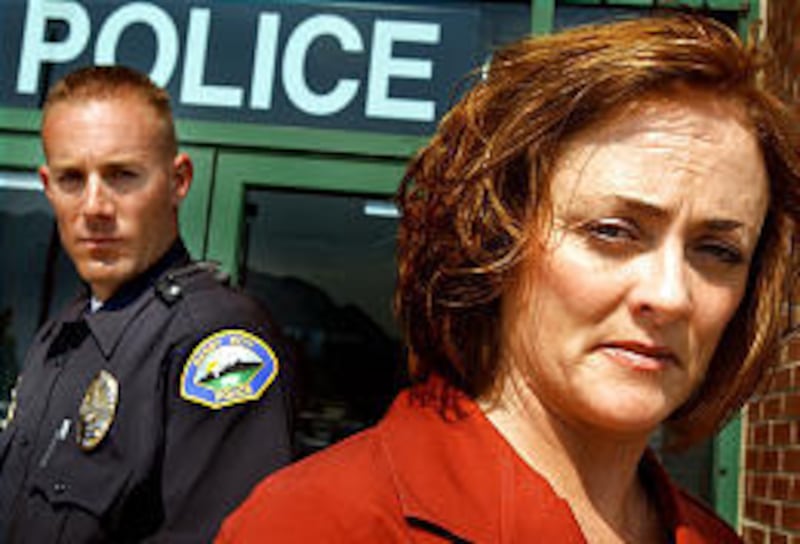
Behind the wheel of his police cruiser, 25-year-old Sandy police officer Brandon Colton drives as fast as he ever has. His siren screams and his police radio spits out details about shots fired at the restaurant.
On 700 East, as he races toward Chevys, his speedometer reads 120 miles per hour, but Colton feels as if he's in slow-motion.
One block from Chevys, dispatchers report the gunman is still shooting in the parking lot, and this kicks the new officer out of his reverie. He gets ready. Later he will say that at that moment he is prepared to shoot somebody; that he is prepared for a gun battle in the parking lot.
But there is no shooter in sight when Colton slides to a stop at 7475 S. Union Park Ave. just behind his sergeant.
Sandy Police Sgt. Patty Ishmael is checking out for dinner at Frontier Pies at 9400 South and 800 East when Bond's first call comes in. Three minutes later she is at Chevys and in charge of the biggest crime scene of her 21 years in law enforcement.
The first officers on the scene, Colton and Ishmael see no gunman, no assailant, only 43-year-old Peter Berg critically wounded on the ground.
"I need every available unit to respond to Chevys," Ishmael tells dispatchers.
Ishmael goes to work. Where is the shooter? Where are all the victims? Who saw what happened? Block that area. Get me some backup.
Her radio is on fire. Another victim near Creek Road. Another victim at the Maverik convenience store. Another at Pioneer Valley Hospital.
The group of people performing CPR on Berg look as if they knew what they are doing, and Colton follows Ishmael toward him, but a Chevys employee grabs him. "Our manager's inside on the ground," she says. "He's dying."
An officer with two years of training and police work under his belt, Colton walks through the doors into the chaos of the crime scene where gunman Quinn Martinez first met the public.
That fast, he takes it all in. There's a body on the floor. Someone's doing CPR. Where's the shooter? It's dark in here. There's a group of people. Thirty or so in the north corner. Some are huddled together. More lying on the floor. There's a hostess. She's falling, hysterical. Another waitress, screaming. Noise. So much noise.
Colton goes to the ground next to Rasmussen and starts chest compressions while a Chevys waiter, Jake Freeman, performs mouth-to-mouth on the dying man.
Later, the experience would prove too much for Freeman. Even then, as Colton notices the bullet wound oozing blood as the two performed CPR, it is apparent they are losing Rasmussen.
After three tries on an overloaded police radio system, Colton is finally able to get onto a frequency and let paramedics waiting outside know it is OK to come in. They take over on Rasmussen, and Colton goes to work.
He expects the mayhem and the noise, but he does not expect he'll spend a good deal of his energy trying to settle down hysterical servers and hostesses, who are screaming and falling to the floor.
He does not expect Chevys patrons to be arguing with servers about whether they had to pay their bill.
And a few hundred yards north on 1300 East, Ryan Gibbons, 31, does not expect to be drawn into a crime scene when she stops for a drink like she does every night after roller-blading on the Jordan River Parkway.
As she pulls into the Maverik station at 1300 East and South Union Avenue just after 8:45 p.m., she sees a Chevy Tahoe careen into the parking spot next to her.
Debbie Briggs had been shot at Chevys as Martinez tried to take her SUV, but the 44-year-old woman has managed to speed away and drive to the convenience store.
Gushing blood from a half-dollar-sized bullet hole in her cheek, Briggs tumbles out of her Chevy Tahoe. The woman stands there, blood pouring from her face. The .22-caliber bullet has gone in one side of her cheek and out the other and has blown her teeth and some of her jaw bone out along the way.
Gibbons helps her into the store and begins administering first aid. She gets the woman inside, lays her down on the floor, then unloads the ice machine on her. Debbie Briggs is in shock. She can barely talk.
Those who are inside the store lock the doors, call 9-1-1 and listen as information trickles in via phone.
A terrifying thought crosses Gibbons' mind. Debbie Briggs is the only person alive who has seen the gunman. What if he follows her? What if he is coming?
Like an eerie premonition, Maverik employees suddenly scream that the killer is coming their way. That he is walking toward the store.
Moments earlier, Martinez had emptied his gun and tossed the weapon near Chevys before running north across 1300 East and walking directly in front of the Maverik where employees, customers, Gibbons and Briggs are inside.
He apparently doesn't see them, or doesn't care by then, because Martinez is headed to the house of a friend nearby, looking for a hideout.
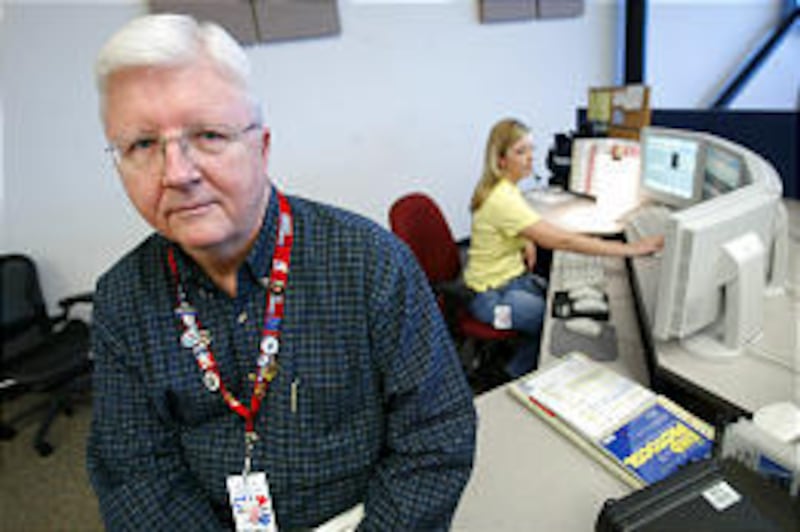
Sandy Police Chaplain Steve Meltzer is resting at home when his wife rushes in to tell him to go to Chevys right away. There has been a shooting, dispatch callers have told her.
"We need the chaplain."
In the sea of people, flashing lights and sirens at the scene, Meltzer finds a policeman and asks what he can do.
The officer points to a woman and two youngsters. "Those folks over there could use your help."
Loydene Berg huddles with her daughter, Whitney, 12, and 17-year-old son PJ. Meltzer sits on the curb with the small grieving family. He speaks softly to them. Comforts them.
The young girl looks up at Meltzer, squeezes him and asks, "We're going to get through this, aren't we?"
"Yes, honey. You're going to get through this," Meltzer replies. He doesn't know the identity of the man on the ground. He doesn't know the girl is the man's daughter.
"Your mom and dad are going to help you through this."
Years later, this exchange with Whitney Berg, who had watched Martinez shoot her father a few yards away, haunts the long-time police chaplain.
Whitney looks over at the body. "But that's my dad over there."
Meltzer can't speak, he simply wraps his arms around the family and sobs— and he never leaves the family's side for the next seven or eight hours.
At one point in that long evening, Meltzer notices PJ is wearing a "WWJD" bracelet, a religious acronym that stands for: "What Would Jesus Do?"
"I see you are wearing a WWJD bracelet," Meltzer asks PJ.
"Yes."
"What do you think he would do?"
"I don't know."
"I think I know," Meltzer says. "I think he would cry. I think he would be broken-hearted over what has happened to your family."
Today, Bond is one of dozens of patrons, witnesses and law enforcement officials who say their lives are forever changed by what happened the night of April 27, 2000.
"The repercussions of something like this go on forever," Bond says today. "It's like dropping a penny in the middle of the ocean. The waves ripple and hit the shore thousands of miles away."
Out of sorts and emotional after the shooting, she took a vacation to Hawaii. One month later, she got rid of her car and her apartment and moved there with her young daughter, settling in the community of Lahaina on the Hawaiian island of Maui.
"All that happened just took a toll on me, and I had to start over," she says. She met a man, had another child and says she is happy in her tropical paradise.
"Things are fine now, but that's the reason I live in Maui," she says. "When you go through something as traumatic as that, you have to turn the reality part of your brain off."
When brought back to that night with a reporter's questions, Bond's sentiments settle into a soft fury at Martinez.
"I'm religious. I read the Bible. I talk to God 50 times a day, but I can't forgive him."
Her friends sent her follow-up articles on the case. "I saw he got life in prison and I couldn't believe it," she says. "I thought: That bastard. He should be dead."
Sandy police officer Brandon Colton just wishes he'd been able to get there faster.
"The one thing that I felt the worst about was not getting there in time to actually stop him. Once I found out he shot this dad in front of his daughter . . .. If I'd just been a few minutes earlier, if I'd got there quicker, we could have prevented that."
Not "maybe," not "probably" prevented the shooting.
"We would have saved him," Colton says.
Ishmael also lives with regrets.
As the "incident commander" of the crime scene, she remembers that night three years ago as a big blur.
"I do have one regret after all is said and done," Ishmael says.
With hundreds of people in the crime scene, and in the confusion of screams and yelling, choppers overhead and the clutter of radio traffic, Ishmael was focused and intense. She directed her colleagues to witnesses and victims. She secured perimeters. She sent someone to nearby Extended Stay Hotel where the gunman might have been.
"But I missed Mr. Berg's little daughter," she says emotionally.
Whitney Berg had been ready to drive away with her dad after having dinner with her family.
She watched as Martinez tried to steal her family's car at gunpoint, then shot her father in front of her. She stood alone as Martinez ran toward Briggs, who was pulling her Chevy Tahoe into a parking spot. She watched Briggs scramble to put the car into reverse and watched the muzzle flash as Martinez fired into the SUV.
"To see her father get shot and to not have some attention from the police — that still bothers me. Dispatch was trying to tell me, and I missed it."
If Ishmael missed the girl at the scene, police chaplain Meltzer was so involved with Whitney, PJ and Loydene Berg that he says he is forever tied to the Berg family.
But Meltzer says he made the biggest mistake of his life that night, and he struggles with the awareness that the Chevys shootings shook his faith to the core.
Meltzer, 60, has seen a lot of homicides, suicides and fatal accidents. He has made dozens of death notices in the 12 years he has been a chaplain for various police departments in the Salt Lake valley.
He stood by to talk to victims at Alta View Hospital in 1991 when Richard Worthington, armed with guns and a bomb, stormed the hospital, killed a nurse and took staff and patients patients hostage.
"But this one . . . there was something about it. It just seemed to be so unfair, so evil," Meltzer said recently from his office at the Valley Emergency Communications Center where emergency calls throughout the valley are dispatched. "I will be tied to the Berg family emotionally for the rest of my life, and I think in my career this is the only time I can say that. I continue to feel for that family."
Meltzer says that moment with Whitney — when he told her that her dad would help her through the shooting — registers as the worst mistake he's ever made on the job. "I didn't know they were the victims."
But to the Bergs the man has become a friend. In early May of that year, Meltzer attended Peter Berg's funeral in Mountain Green and met Loydene Berg standing at the chapel door. She was happy to see him. Today, Meltzer is on a list of people who the Bergs say saved them with their support through the ordeal.
"She asked me to stand in the line and help her to receive her guests. I had never done anything like that, and it was the highest compliment," said Meltzer, who is full-time pastor of the Salt Lake Alliance Church.
"This is chaplain Meltzer," Loydene Berg said as she introduced him to a guest. "He didn't know us, but he loved us."
And as Meltzer reflects on that night, he says he did come to love the family in those hours. And this may be the reason he was not able to let go of anger toward Martinez as he had in so many other cases over so many years.
Usually Meltzer is the one facilitating grief sessions and so-called "debriefings" after a crime. This time though, he found himself at the other side of the table.
"As a Christian, I am not supposed to have the feelings I had. I felt I should be modeling an attitude of forgiveness," he said. "But I was pounding the table. I wanted to hurt that person for what he had done."
Even three years later, he is furious.
"Every time I think of it . . . . It was so unjust and so evil," he says slowly. "It is still really hard to deal with."
Some witnesses were not able to deal with the trauma of that night.
Chevys waiter Jake Freeman, 23, was across from Colton, giving CPR to Jason Rasmussen. Officials say it is unlikely that CPR could have saved the man from the bullet wound to his chest, but young Freeman never really did get over the fact they hadn't been able to save his friend. He stewed about it a lot, and friends say even a year later, he was still full of grief over the shootings and his own involvement.
"If I would've tried harder. If I would have breathed harder," he wished aloud to Bond a year after the shootings.
Bond, Freeman and other employees had a few drinks together later that April 27. They talked and cried together. They shared their profound disbelief at what had happened in the upper middle-class neighborhood.
But Freeman continued to have a hard time.
His daughter, Hailey, was born a month later, but still Freeman thought frequently about the shooting and his proximity to death.
"It kept coming up in that next year," Alice Freeman, Jake's mother, said from her home in Laramie, Wyo. ". . . What he could have done and the helplessness of it all."
Freeman also believed it was sheer chance that he hadn't been killed along with his friend.
Normally, Chevys waiters ring up sales at the front cash register, in the same area where Martinez shot Rasmussen and wounded another waiter, Joshua Parker. That night, though, Freeman wanted to catch a glimpse of a game on television, so he was ringing up his sales at the sports bar in the back of the restaurant when Martinez came in.
Freeman's mom says he could never get over that detail. "You know how survivors have guilt? He almost felt that it wasn't right that he wasn't up there at the front."
And so Freeman rekindled his on-again/off-again relationship with drugs and alcohol. Friends say he spiraled downward.
One day about 16 months after the shootings, Freeman's girlfriend called police to their Sandy home. Her boyfriend wouldn't wake up, she told them.
Five days later, Freeman was gone. He had overdosed on alcohol and a sedative called "Special K," and while his mother doesn't believe the Chevys shooting is the reason her son is dead, it certainly didn't help.
"It's fair to say he was quite affected by the incident at Chevys," she says. "And it contributed to his existing problems with addictions."
The Chevys incident impacted Jerry Guenon's life in a similar way. It probably wasn't the only cause of the man's divorce, but he says it certainly was a contributing factor.
There was nothing really special about the Guenon family's decision to go to Chevys for dinner that night.
Guenon had won some lunches for the restaurant on radio station B98.7, and the couple and some friends had checked it out. It was good, if a little out of the way from the couple's home off 4700 South and 3200 West in West Valley City.
The couple and their two young children went out to dinner a lot at that time because there was a lot going on for the family. A fair amount of stress, Guenon says. The couple was building a house, and after being a stay-at-home mom for years, Leslie Guenon was going back to work part-time to help pay big bills from the house.
The couple argued on the way to the restaurant, and Leslie said a quiet prayer. "Give me some kind of a sign God. What should I do about this marriage."
Before leaving their home, the couple argued about Guenon taking his Ruger 9 mm pistol with him. He usually left the gun at home but said he'd felt antsy all day and wanted to take it that night. His wife didn't like guns and asked him to leave it at home.
This argument — and Guenon's decision to leave the gun behind — plagues him today. Because 30 minutes later, as the family cowered under a table about 10 feet from where Martinez unloaded his .22-caliber pistol into Rasmussen and Parker, the former police officer reached for his gun, and it wasn't on his hip.
The Guenon family had sat down and ordered when the couple's 3-year-old daughter, Jaycie, wanted to go to the bathroom. Conversation had been tense between Jerry and Leslie, and Guenon told his daughter to hold it.
People sang "Happy Birthday" somewhere in the restaurant, and a few seconds later, two distinct sets of sounds rose above the restaurant din.
Guenon registered them almost simultaneously. Profanity and Martinez yelled for a phone just a few yards away at the hostess counter.
"Then I heard this pop, pop, pop, pop. Just like someone popping balloons, that's what a .22 sounds like."
Guenon, who'd graduated from the police academy in the mid-90s and had worked as a marshal in Tooele County's Stockton for a year, ordered his family under the table.
"All he had to do was shoot anywhere under that table, and we'd have been dead," Guenon said. "We had nowhere to go."
A split second went by, and Guenon decided he had to do something — take Martinez on, distract him away from his wife and children, something. The shooter bolted out the front door, and as Guenon moved toward the entrance, he saw the killer framed by the open restaurant door.
An older man, Peter Berg, had his hands up and took little steps back. The shooter was in a battle stance, Guenon said. A SWAT position. The face-off stance. He looked straight at Berg, and as a second ticked by, Berg began running backward as Martinez shot him twice.
Thinking the shooter might come back inside and take hostages, Guenon ran back to his family. He gathered them up and ran out the back door, hid them all behind a van, told his wife to run if she saw the killer. Then her husband was gone.
It was a terrifying few minutes for Leslie Guenon.
And although prosecutor Robert Stott says Guenon's testimony was one of the most important of the case, his decision to follow the shooter, to try to identify him to police, to watch where he tossed the gun, to help administer CPR to the dying man inside — probably ruined his marriage.
His wife never forgave him for leaving her behind that van alone. For leaving the children. "She said I didn't protect them," Guenon says. In Guenon's estimation, Leslie also became scared of her husband, because he does own guns — just like the killer.
The couple separated in May 2000, a few weeks after the shooting, and were divorced July 5. They share custody of their children.
Three years later, Guenon says his little boy remains the most affected by the incident.
For Austin Guenon, like all victims of the shooting, some memories still connect the present to the past.
About two months ago, Guenon and his children drove by the restaurant for the first time in three years. "I don't like going up that road," the boy, now 9, said simply. His sister is 6 years old now.
He does not want his father to be a police officer, so for now, Guenon has given up law enforcement for a job in the freight business.
Guenon says he was calm that night, but he is far from calm now in remembering what he calls Martinez's "executions."
He is plagued by what might have been. "That's what tears me up, the 'what ifs,' " he said.
What if his daughter had gone to the bathroom and had returned in the middle of the shooting?
What if he'd had his gun?
"I probably couldn't have done anything about the manager, but the man in the parking lot would still be around — and the public wouldn't have to be supporting this guy," Guenon said.
"Would I have shot him? Yeah, I would have shot him."
Today, lunch and dinner-time crowds seem as busy as ever at the Chevys Fresh Mex Restaurant at 7475 S. Union Park Ave.
And managers and owners of the popular restaurant aren't anxious to relive the tragedy three years ago or talk about the way it affected business.
"We just kind of want to move forward with this. The press and the publicity is kind of a bygone now, and we kind of want to leave it that way," said Mike Godett, general manager of the restaurant. Owner Stanley Knoles did not return repeated requests for interviews.
Three years ago, the business provided counseling for employees. The restaurant was closed the day after the shooting and re-opened on the second day, a Saturday.
"The cold hard truth is that it does have an impact on your business," Knoles said 10 days after the shooting. "It's just human nature."
Godett and Knoles indicate Martinez is behind bars and doing his time and due process of the law is taking its course. "It's enough tragedy that we've dealt with on this one. We feel we'd kind of like to get on with our life," Godett said.
"Here at Chevys, we'd like it to be a closed issue."
In Wednesday's Deseret Morning News: So what went wrong with the former Boy Scout from a middle-class family who terrorized customers and killed two at Chevys Fresh Mex Restaurant?
E-MAIL: lucy@desnews.com