BYU is a bit of an anomaly in the NIL era — the Cougars have tended to lean more into continuity over a high number of splashy transfers to build their roster, a tactic that helped the program become one of the Big 12’s best the past two seasons.
That is reflected in a report by CBS Sports a few days ago that BYU is among the nation’s best in returning snaps percentage going into the 2026 college football season.
The extensive study has similarities to the returning production metric compiled by ESPN’s Bill Connelly, though it has two main differences, according to CBS Sports’ Cody Nagel: The returning snaps percentage is not weighted by position group, and it does not include incoming transfers.
Instead, it gives an insight into the number of starters and key role players a team returns and how much they had an opportunity to play together the previous year.
In that sense, BYU stands out from its Big 12 peers.

Where BYU lands on CBS Sports’ returning snaps percentage list
The Cougars come in at No. 3 on the comprehensive study, with an overall returning snaps percentage of 63%.
That includes a 60% returning snaps percentage on offense, No. 11 nationally, and 65% on defense, fourth-best in the country.
One year after going 12-2 and reaching the Big 12 championship game, BYU trails only Notre Dame (66%) and Maryland (65%) nationwide in returning snaps percentage. The Cougars are also one of only two teams, along with No. 4 Virginia Tech, to return 60% or more snaps both on offense and defense.
CBS Sports broke down the returning snaps percentage by position group for each school, and how it ranks on a national scale.
Here is the result for BYU:
Offense
- QB snaps — 97%, 16th nationally
- RB snaps — 86%, 12th nationally
- WR snaps — 47%, 42nd nationally
- TE snaps — 28%, 71st nationally
- OL snaps — 61%, 26th nationally
Defense
- DL snaps — 76%, 3rd nationally
- LB snaps — 62%, 25th nationally
- DB snaps — 63%, 18th nationally
Of offense, with quarterback Bear Bachmeier and running back LJ Martin returning, the Cougars’ backfield is stacked with snap experience. Martin is the reigning Big 12 Offensive Player of the Year, while Bachmeier blossomed into a star as a surprise starting true freshman last season after transferring from Stanford after spring ball.
BYU’s offensive line also has a 61% returning snaps percentage, led by center Bruce Mitchell and right tackle Andrew Gentry.
The biggest area of concern offensively is at wide receiver (47%) and tight end (28%). Receiver Chase Roberts and tight end Carsen Ryan are off to the NFL, while former BYU receiver Parker Kingston is no longer at the school and was removed from the team after he was arrested on a first-degree felony rape charge.
Defensively, the Cougars return key players at all levels, including Keanu Tanavasa at defensive tackle, Isaiah Glasker and Siale Esera at linebacker and Evan Johnson and Faletau Satuala in the secondary.
BYU’s defensive line ranks third nationally in returning snaps production, with Nusi Taomoepeau, Bodie Schoonover and Anisi Purcell also back.
BYU and Notre Dame are the only two schools with 60% or more returning snaps at every defensive position, which should make their Oct. 17 matchup in Provo even more intriguing.

Where Utah lands on CBS Sports’ returning snaps percentage list
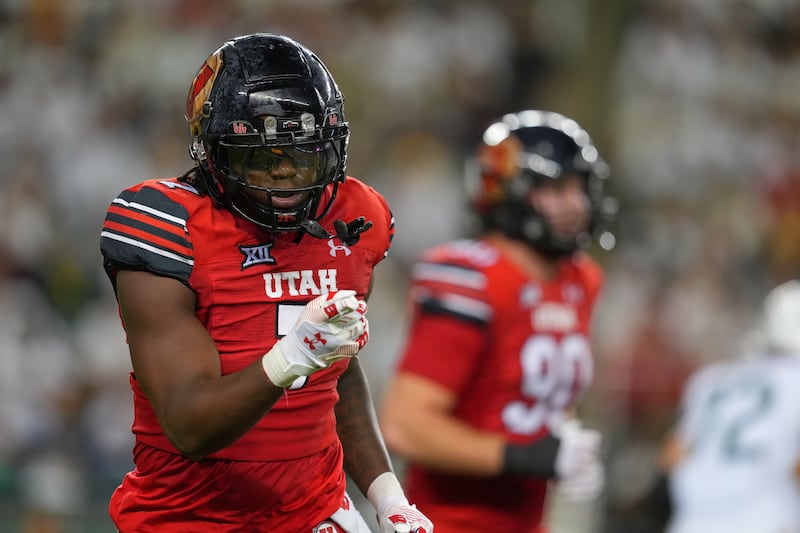
The Utes, following a season where they went 11-2 and, like BYU, finished the year ranked in the top 15 nationally, will have more of a roster overhaul than their rival.
Utah is No. 74 nationally with a 39% returning snaps percentage, including 37% on offense (74th in the country) and 42% on defense (59th).
That is squarely in the middle of the pack in the Big 12, coming in ninth in the 16-team league (more on that in a minute).
Here’s how Utah’s returning snaps percentage breaks down by position:
Offense
- QB snaps — 99%, 11th nationally
- RB snaps —64%, 31st nationally
- WR snaps — 39%, 62nd nationally
- TE snaps — 22%, 83rd nationally
- OL snaps — 22%, 108th nationally
Defense
- DL snaps — 23%, 100th nationally
- LB snaps — 60%, 34th nationally
- DB snaps — 46%, 56th nationally
There are clear areas of continuity from last season for the Utes, while others — including both lines — will see plenty of turnover from a year ago.
The most advantageous returns come at quarterback, with Devon Dampier and Byrd Ficklin both returning for the Utes. That gives Utah a 99% returning snaps percentage at the most important position in the game, good enough for 11th nationally.
Wayshawn Parker’s return at running back also gives the Utes a steady, proven backfield with a year of experience together.
Like BYU, Utah is experiencing its share of turnover at wide receiver and tight end, and the Utes must replace their entire starting offensive line after offensive tackles Spencer Fano and Caleb Lomu were both first-round draft picks, and Jaren Kump and Michael Mokofisi inked free-agent deals.
Utah’s defensive line also will see significant change, none more so than the loss of defensive end John Henry Daley, who followed Kyle Whittingham to Michigan.
There are key returnees at linebacker and in the secondary, though, led by Johnathan Hall, Rabbit Evans and Jackson Bennee.
Trey Reynolds is also back at linebacker, while Scooby Davis returns to help stabilize a cornerback room that saw Smith Snowden also leave for Michigan.

Big 12 returning snap percentages, per CBS Sports
The Cougars have a sizable edge over the rest of the Big 12 in terms of returning snaps percentage, leading the league overall and both offensively and defensively.
Here’s how each Big 12 team ranks in CBS Sports’ returning snaps percentage data:
- BYU — 63% overall (No. 3 nationally), 60% offensively (No. 11), 65% defensively (No. 4)
- Texas Tech — 52% overall (No. 21), 55% offensively (No. 20), 49% defensively (No. 42)
- Houston — 50% overall (No. 30), 50% offensively (No. 35), 51% defensively (No. 34)
- TCU — 45% overall (No. 48), 39% offensively (No. 68), 51% defensively (No. 31)
- Arizona — 44% overall (No. 51), 48% offensively (No. 46), 40% defensively (No. 67)
- UCF — 42% overall (No. 57), 32% offensively (No. 92), 53% defensively (No. 26)
- Kansas — 42% overall (No. 58), 31% offensively (No. 94), 52% defensively (No. 29)
- Kansas State — 40% overall (No. 69), 49% offensively (No. 38), 33% defensively (No. 100)
- Utah — 39% overall (No. 74), 37% offensively (No. 74), 42% defensively (No. 59)
- Cincinnati — 33% overall (No. 94), 36% offensively (No. 82), 32% defensively (No. 105)
- Arizona State — 31% overall (No. 101), 27% offensively (No. 98), 34% defensively (No. 90)
- Baylor — 30% overall (No. 107), 24% offensively (No. 118), 36% defensively (No. 80)
- Colorado — 21% overall (No. 127), 34% offensively (No. 86), 8% defensively (No. 134)
- West Virginia — 19% overall (No. 130), 27% offensively (No. 100), 11% defensively (No. 131)
- Oklahoma State — 10% overall (No. 134), 4% offensively (No. 137), 15% defensively (No. 128)
- Iowa State — 10% overall (No. 135), 4% offensively (No. 138), 16% defensively (No. 126)
Texas Tech, the Big 12 defending champions and the only conference team to make the College Football Playoff a year ago, come in second behind BYU as the only other league program to rank in the top 25 in returning snaps percentage.
After that is Houston, who comes in at No. 30 and is considered a team on the rise under third-year coach Willie Fritz.
It’s notable, though, that the Big 12 has the four lowest-rated power conference programs in returning snap percentage in Colorado, West Virginia, Oklahoma State and Iowa State.
The Cowboys and Cyclones also rank as the bottom two nationally in returning offensive snap percentage.
Nagel explained that returning snaps isn’t necessarily a predictor of success — other factors, like injuries, can impact a team’s season, and as defending national champion Indiana showed, a major overhaul of talent can result in immediate success.
The same goes for the Red Raiders, who built one of the best transfer portal classes last year and have done so again, making them the early Big 12 favorite in 2026.
“More often, returning snaps help explain why some teams might start faster than others. They don’t guarantee wins, but they do point to stability: fewer unknowns in execution, more familiarity on both sides of the ball and a roster that has already logged meaningful game reps together. That kind of continuity tends to shorten the adjustment period in August and September,” Nagel wrote, in defending the relevance of returning snaps percentage.
“Think of it less as a prediction tool and more as a baseline. It doesn’t tell you who will break out — but it does help explain who has the cleanest runway to do so. In a sport defined by roster churn, that starting point still matters.”