

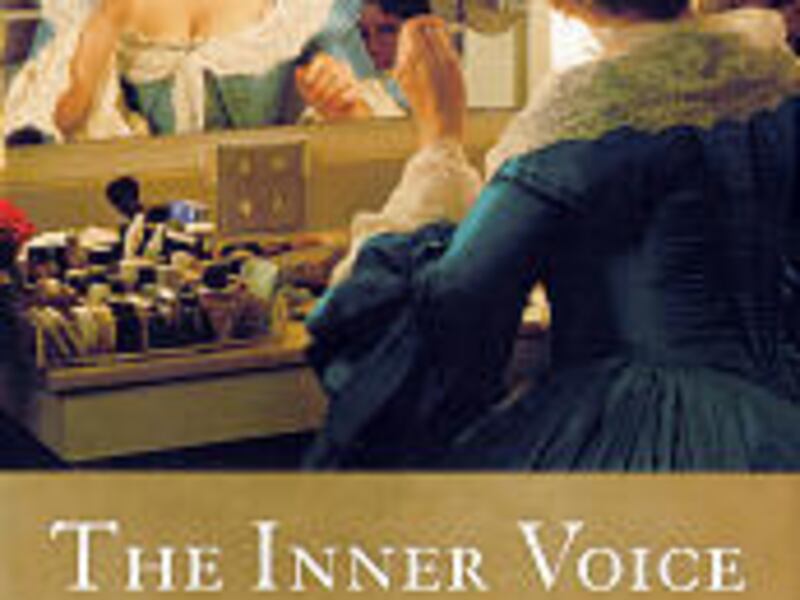
THE INNER VOICE: THE MAKING OF A SINGER, by Renee Fleming, Viking, 222 pages, $24.95.
Renee Fleming, probably the world's most celebrated operatic soprano, has written a compelling book about her talent and her craft — "The Inner Voice."
Calling it "the autobiography" of her voice, Fleming describes the development of her career with exuberance — and she throws in some singing lessons along the way. The book is in no sense an instructional manual, but anyone with even a mild interest in singing — whether it be solo, in groups or choirs — could probably gain valuable insight from reading it. She recognizes that her voice is her major asset and that to maintain her career she must take proper care of it.
The daughter of two singing teachers, Fleming studied at Juilliard and learned from a succession of wonderful teachers who helped bring her to the peak of her career. She is convinced that any artist must exercise discipline to overcome the fears that invariably come with performing before large, even international audiences.
Fleming tells of her early love of jazz, which she thought would be the genre she would embrace all her life. She pictured herself as Billie Holiday, cradling a silver microphone "with a gardenia pinned behind one ear." Fleming recalls that jazz helped her let go of her fears as she developed "the friendly patter" between numbers and enjoyed the freedom to improvise.
Ultimately, Fleming decided against "the music of free will" and opted for more discipline and order. It seemed her destiny to sing the classics — the music of Berio, Puccini, Berlioz and Stravinsky. She soon discovered that singing Mozart was the most demanding of all.
As she worked to perfect her talent, she suffered a white-knuckle setback — cold sweats, a tightened throat, stiff muscles and an uneasy "fluttering sound." But she worked through her fears as she learned to control "the involuntary muscles" that provide the support for good singing. She learned to support her sound with breath, to use her diaphragm and to expand her lungs to their capacity.
Her biggest accomplishment was refining all this down to her own personal technique.
Fleming also describes the many interesting people she has known and the places in which she has worked — and she does it all without sounding like a name-dropper or a self-impressed celebrity. Her popular image as "the girl next door" appears to be the real Fleming. While acknowledging her singing talent, she remains self-effacing.
Most interesting is her description of an interview she did for CBS's legendary "60 Minutes," during which she was shaking inside. Panicked, even terrified — she calmed down in time to make a positive impression on millions of TV viewers. She can look at that television tape now and think, "No one could have suspected that I had been in the bathroom only five minutes earlier, looking in the mirror and saying, 'I can't do this. . . . I can't do this.' "
She also suffered severe stage fright during rehearsals for "Streetcar Named Desire" in which she played Blanche DuBois. With a psychiatrist, she worked through this fear and left it behind her.
Only at the end of the book does Fleming speak of her daughters, at least one of whom may follow in her mother's footsteps. She also glosses over her painful divorce.
The only thing that could improve her book would be a broadening of its scope — after learning about her profession, the reader longs to know more about Rene Fleming the woman.
Maybe she will do that book next.
E-mail: dennis@desnews.com