

Utah officials are taking the wraps off a stunning "state secret": describing extensively for the first time one of the region's historic and archaeological treasures — the state-owned Wilcox ranch in Range Creek.
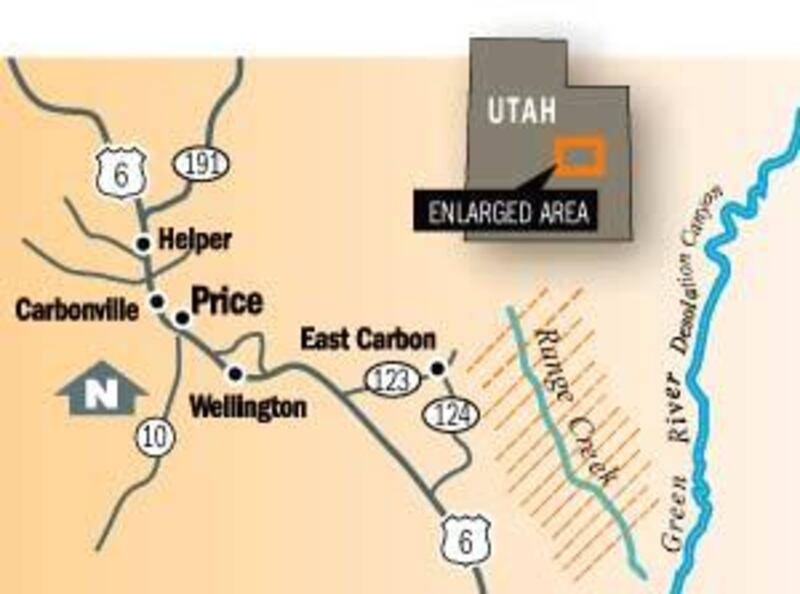
Earlier this year Utah quietly took possession of the property, located behind the Book Cliffs near the Carbon-Emery county border approximately 130 miles southeast of Salt Lake City. Work from an archaeological survey there has been publicly discussed, but now officials are spelling out the discoveries being made.
"It's just a great concentration of archaeological sites," said Kevin Jones, Utah's state archaeologist. It has "very, very dense evidence of habitation, big villages, fabulous rock art, granaries and things like that."
Indeed, the only way to describe the historic ranch and the prehistoric finds being made there and nearby, according to Duncan Metcalfe, curator of archaeology at the Utah Museum of Natural History, "is to say it is of national significance."
An estimated 2,000 to 5,000 archaeological sites, most in excellent condition, are located on the newly acquired property; more are being discovered up and down the canyon. About 1,350 acres are part of the immediate Wilcox ranch, a verdant farmstead straddling remote Range Creek, a tributary of the Green River, while another 3,000 acres are on a nearby plateau.
The property was initially purchased by the Trust for Public Land, a conservation group, from longtime rancher Waldo Wilcox for about $2.5 million. With key funding appropriated by Congress, spearheaded by former Rep. Jim Hansen, and the rest coming from the Utah Quality Growth Commission and Sportsmen for Fish and Wildlife, the ranch was subsequently acquired by the state.
According to state experts, the Range Creek property is not only an incredible archaeological resource, it is also a wildlife haven, with wild turkey, eagles, hawks, bears, cougars, elk, deer, bighorn sheep and other important species. The creek itself could be developed as a blue-ribbon trout fishery.
The Utah Division of Wildlife Resources manages the land, and it is protected by a conservation easement controlled by the state Department of Agriculture and the Utah Division of Forestry, Fire and State Lands.
'No place like it left'
What makes Range Creek almost unique in the West is that most of the archaeological sites obtained by the state are pristine because the Wilcox family vigilantly protected the land from pothunters and vandals since acquiring it more than 50 years ago. Though public roads provide access to the canyon in places, passage through much of it has been off-limits to the general public because the property is gated and privately owned.
That has kept Range Creek much as it has been for hundreds of years.
"The sites are not damaged at all" on the ranch property, said Jones. "There are not names scratched in the rock art panels. Nobody's dug holes in the pit houses." Bullet holes do not mar the cliff walls, and trash does not litter the landscape.
"I didn't let people go in there to destroy it," the 74-year-old Wilcox told the Associated Press. "The less people know about this, the better."
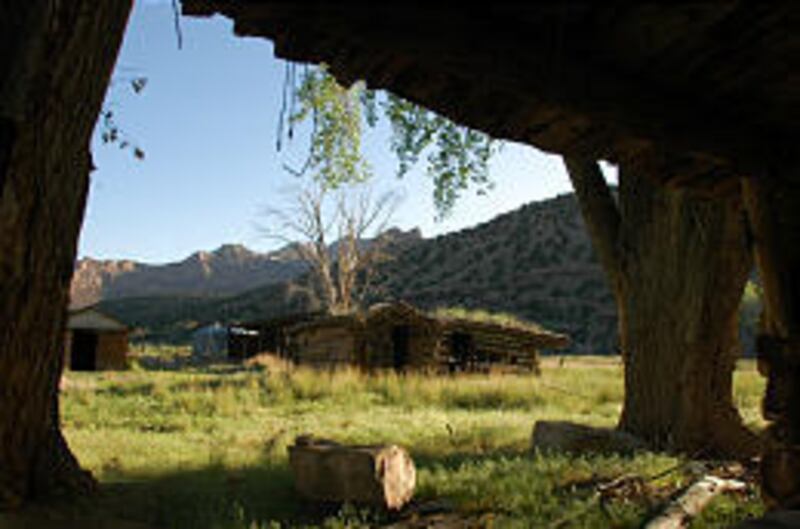
"The way I kept it," Wilcox said, a visit is like being the first white person there. "There's no place like it left." Even near his former ranch complex — a picturesque Western setting with a few homes, several weathered log outbuildings and pasture — one can see skeletons exposed under dry ledges, he said.
In addition to the villages and other treasures on the land itself, the parcel controls access to more than 100,000 acres of nearby federal land, much of it under study for wilderness status. Part of the Desolation Canyon Wilderness Area is accessible above the mouth of Range Creek, near its confluence with the Green River.
Remarkable discoveries
Much of Range Creek, with its year-round stream, open canyon floor and dramatically steep and colorful cliffs, is believed to have been inhabited a thousand years ago by pre-Columbian cultures that archaeologists call the Fremont and the Anasazi. Three radiocarbon tests carried out so far date village and rock shelter sites to between 1000 A.D. and 1200 A.D. An analysis of projectile points and pottery, using dates of known styles, shows the same range.
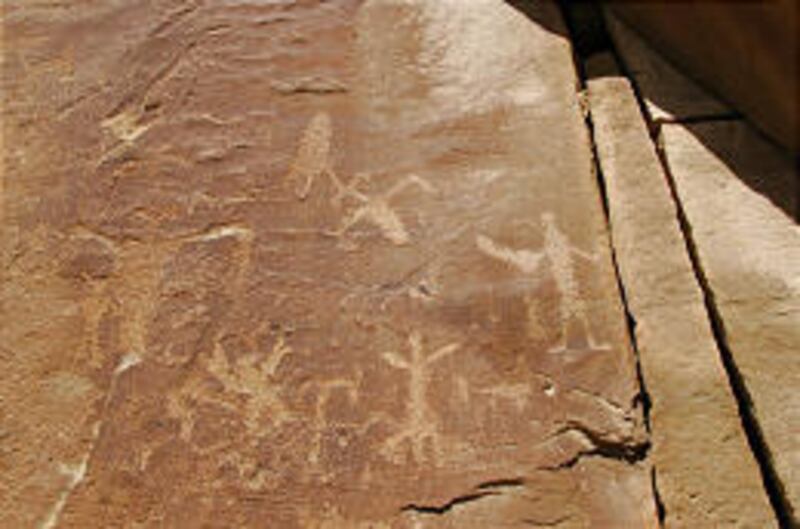
The finds include individual pit houses, villages, arrowheads, shafts, granaries, pottery, basketry and scattered rock art, the latter often representing otherworldly human figures, pecked spirals and sheep figures. All are found in areas that are at times green and pasture-like and at others mostly barren, with sparse desert vegetation, such as cactuses and brambles.
But always life-giving Range Creek is nearby.
Teams of volunteers and archaeologists have been documenting the sites, so far recording about 200. Of these, 50 are in the lower area beyond the ranch boundaries, and many of these have been raided and damaged by vandals.
Most of the rest are basically pristine, said Metcalfe, the University of Utah archaeologist, who has been in Range Creek working on the site for most of the past two months.
The reason the location is so valuable, he added during cell phone interview Thursday afternoon while he was briefly in Price, is that sites on the newly acquired property "are literally untouched." No excavations have taken place, and the sites have not even been subjected to test holes. Instead, workers have gone through the region documenting where villages, shelters, granaries and other sites are located.
"We've been involved entirely in finding them," Metcalfe said. Some are in caves, some in the open. Sites range from single houses to villages with 15 pit houses.
Some granaries were "put in some of the most inaccessible places you've seen in your life," he added. Sometimes natural rock shelves were used on cliff walls. Other times, the ancients built shelves by hammering wood cribbing into the walls, structures that remain there today.
Granaries were found 90 feet or 120 feet up rock walls. "The amount of effort that went into the construction of these is enormous," Metcalfe said.
At least 20 doctoral desertions may be written about finds there, and twice that number of master theses, he said.
The sites are the way that those of the famous Nine Mile Canyon, about 20 miles away, must have been like 150 years ago, before they were vandalized, he said. It is significant that Wilcox "took such pride in not letting people vandalize them."
For the future
Jones said the state is developing a management plan for the gated property, involving wildlife managers and other partners. They are working on ways "that we can have good public access to it."
Officials want people to visit, but they want the visits to be regulated, so that looting and damage do not occur. "We have to be creative and figure out ways to do that," he said.
Public meetings will be held to come up with a plan, which could involve guides, opening on certain days or permits.
Meanwhile, Jones said, "I'm very excited. It's probably the most important thing that I'll be involved in (during) my career as the state archaeologist."
And there are so many prehistoric sites in Range Creek that Metcalfe said he hopes to work in Range Creek until he retires.
And, he added, "I'm not that old."
Contributing: Paul Foy, Associated Press; E-mail: bau@desnews.com; rayb@desnews.com