

Absent a miracle, authorities say it's unlikely they'll find lost Boy Scout Garrett Bardsley alive in the Uinta Mountains.
"At this point, it's a recovery operation," Summit County Sheriff Dave Edmunds said. "He's out there in the woods, but the fact of the matter is there are three bodies out there that haven't been found in decades.
"Unless you literally walk right up on someone who is non-responsive, you're not going to find them."
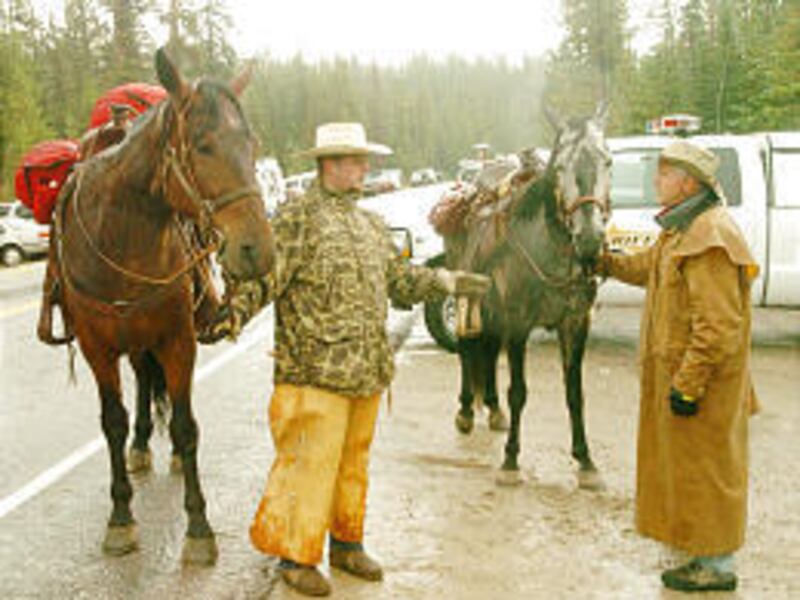
Volunteer searcher Mike Keat said he was slogging up the muddy three-mile trail on Monday, toward the campsite where the Utah County boy was last seen, when he saw a discouraging sign: the boy's mother was coming down the mountain on the back of a mule as her husband ran a few yards ahead, thanking volunteers for their help.
Searchers said an article of clothing had been recovered, and the search was all but over.
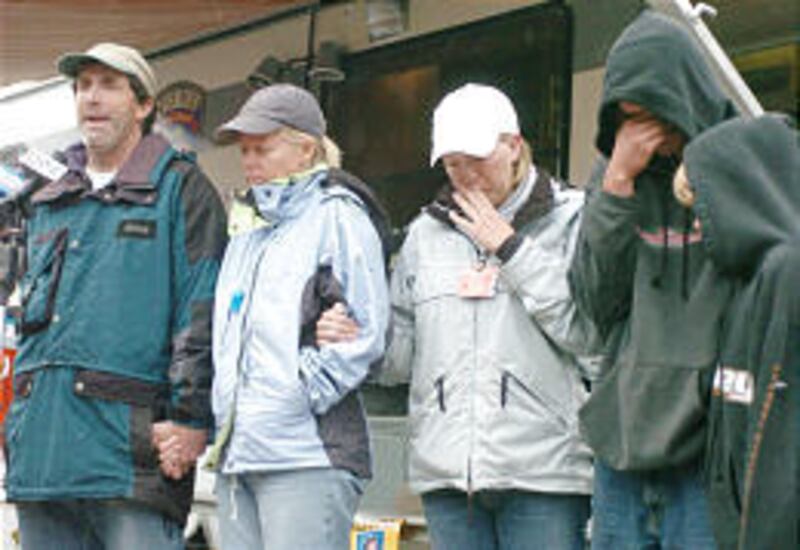
"This is such a tragic loss," Garrett's father, Kevin Bardsley, said through tears a few hours later. His wife, Heidi, who cut short a cruise to help find her son, stood stunned beside him.
"We haven't given up hope. We don't want to leave Garrett on this mountain," Kevin Bardsley said. "We want to bring him home."
"They are absolutely devastated," Edmunds said.
Garrett got lost Friday about 8 a.m. when his father sent him back to camp after the boy's shoes got wet while fishing in a pond near Culberant Lake. When Kevin Bardsley returned to camp about a half hour later and didn't find his son waiting with the other Scouts from Salem's
Troop 694, the group began frantically searching the area. The Summit County Sheriff's Office was called about 11 a.m.
It is still unclear how the Elk Ridge 12-year-old became disoriented. The Scout group was camping in a meadow that police said was about a quarter of a mile away, on a well-established path from the pond where the Bardsleys were fishing.
"That's the thing that's got us stumped, is how did he get lost?" said Brock Wilson, a family friend who helped Garrett's mother down the mountain. "His dad's probably blaming himself, but there's nothing he could have done about it. It could have happened to any of us."
Another family friend, who asked not to be named, said Kevin Bardsley saw Garrett walking the wrong way and pointed his son in the direction of the camp. "It's not like he just pointed to the woods and said, 'Find your way back, son.' It couldn't have been more than 150 paces from where they were fishing," he said.
About 150 volunteers showed up for the search Monday. Some came with horses, four-wheelers and climbing gear to help search, but by early afternoon Edmunds was telling them to go home.
Edmunds said search crews had already combed over 36 square miles, looking under logs, peering into small caves and wading through streams. Several helicopters, a plane and search and rescue crews from 10 counties have also aided in the search.
A submersible machine equipped with a video camera has been dispatched to search the pond where the Bardsleys were fishing, but it will be days before it can be flown into the remote Culberant Lake area, which is only accessible by helicopter, horse or foot. The Scout group came in on pack mules and horses.
It is unlikely the boy fell into the water, Edmunds said. He guessed Garrett wandered a few feet from the trail and got lost, then panicked.
"This is some of the most rugged, dense terrain in the lower 48 states," he said. "You can walk a few feet, and without a map or a compass, you wouldn't know where you are."
Edmunds said they haven't seen any signs of predators in the area, and there are no indications of foul play.
Many of the volunteers who showed up Monday, such as Keat, an electrical engineer from Salt Lake City, took the day off to help search land they know well. Keat hiked carefully with his dog, who spent his time sniffing under bushes and around trees.
"I have kids of my own that have got lost skiing, and I just had to help out," he said.
Keat said he once got lost for four days in the Wyoming mountains and survived because he carried warm clothes, matches and food in a backpack.
Garrett, who is 5 feet tall and weighs 115 pounds, had no such luck. When last seen, he had on a hooded sweatshirt, sweatpants and tennis shoes and carried no food or matches. In the three days he has been lost, the temperatures in the area have dipped into the 30s, and rain and hail has pelted the rocky slopes.
On Monday, gray clouds hung low over the Uintas' peaks, which reach more than 11,000 feet.
"In the summer, it looks mild out here, but this country can get scary fast," said Randy Taylor, who has worked for the Wasatch-Cache National Forest for 43 years. "The weather can change in an instant."
Even though Taylor knows the Mirror Lake area as well as anyone, he said he has been lost for hours on several occasions. Hikers should never walk alone, he said, and if they are lost, they should "hug a tree."
"Don't move, in other words," he said.
While it seems unlikely Garrett will be found alive, Edmunds said a boy was once found in the Uintas after 11 days. Less than a month ago, a Boy Scout from West Valley got lost in the Uintas during a backpacking trip and hiked alone for two days before he was found. That Scout carried a map, compass and camping gear, however.
"The likelihood of finding a responsive individual at this point is extremely low," Edmunds said, "but miracles do happen."
Contributing: Associated Press
E-mail: jhyde@desnews.com