

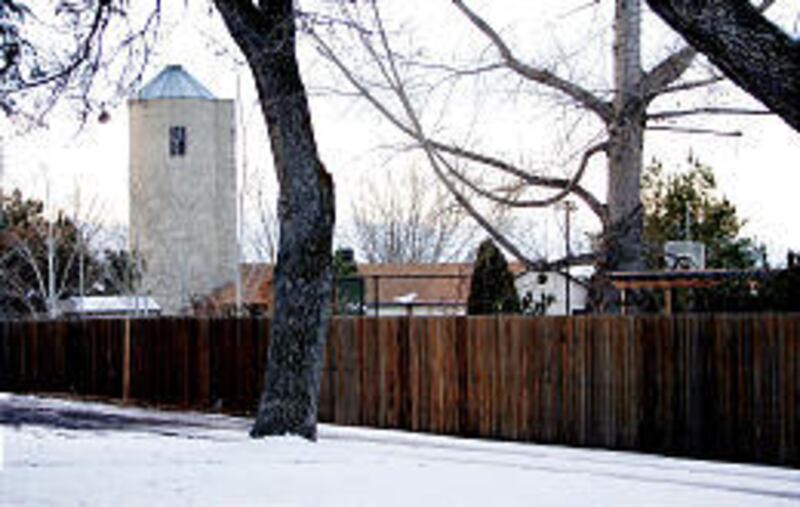
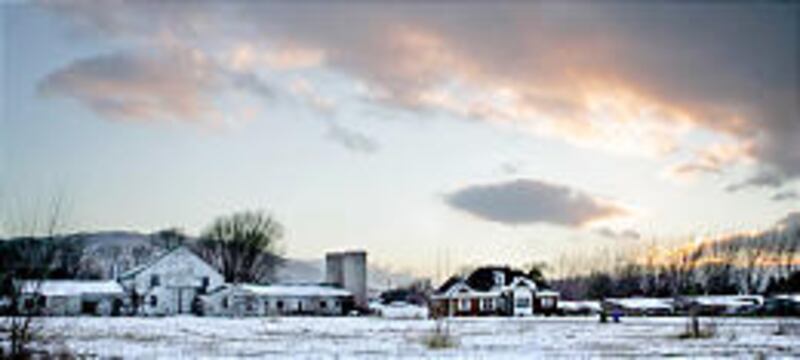
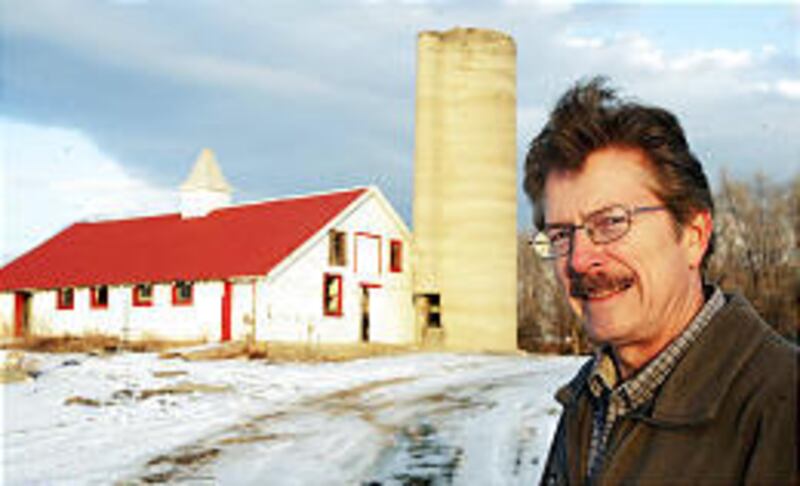
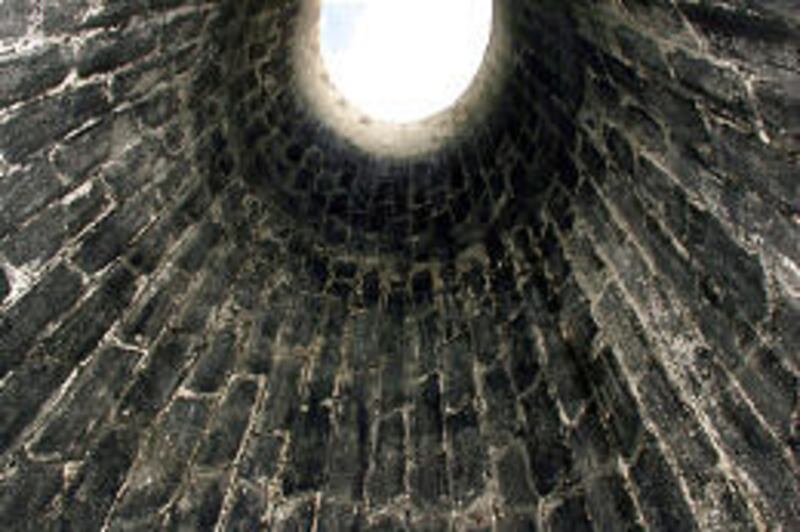
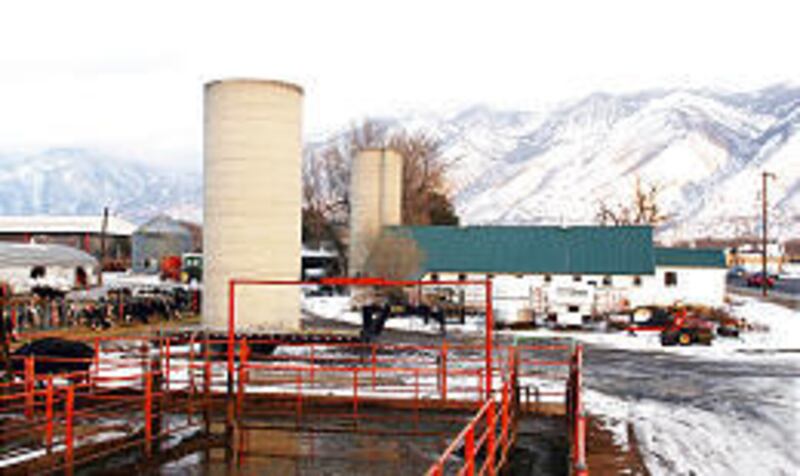
DRAPER — Rustic grain silos, which have dotted Draper's landscape since the '30s and '40s, are disappearing rapidly as new developments spring up, and some residents worry that the city's heritage is being demolished with them.
Todd Shoemaker, a Draper resident and a junior high school history teacher of 30 years, has been dubbed "the silo guy" by acquaintances who know he is passionate about saving part of the city's past.
Though roughly 30 silos remain in Draper, an estimated 50 silos have been torn down, he said.
So Shoemaker, who grew up in Draper, has begun a crusade to stop developers from bulldozing more silos. They're located at every entry point to the city, and they allow residents and newcomers to feel the rural flavor of the area, he said.
He gestured to a pair of silos just off the Bangerter Highway, where a horse was grazing.
"It's so bucolic, it invites you to Draper," Shoemaker said. "They give some little feeling of what Draper was like."
The city has the opportunity to use the silos to its economic advantage, he said.
Shoemaker isn't alone in his thinking.
Preservation is more about economic development than saving old structures, said Bill Moedl, a member of Draper's Historical Preservation Commission.
Deciding what the silos will be used for should be the first thought, he said. They can and should add value to the land.
"(Silos) could be incorporated into the development and could become a visible symbol of Draper's past or a branding of what Draper represents in people's minds," he said.
Moedl, Shoemaker and others say they envision the Chamber of Commerce using several of the remaining silos as an informational tool and as a tourist attraction.
Kiosks in front of the silos could highlight the history of that particular part of Draper. They could also list announcements and information about public events.
In addition, community art could be displayed on a rotating basis at the various silo locations, and public benches and restrooms on site could accommodate cyclists and walkers who use nearby trails.
"There are developers out there and creative people who could buy into this if they felt it had the support of the city," Moedl said.
Unfortunately, the preservation committee doesn't yet have a good example of a preserved and refurbished silo to show developers and property owners, he said.
While individuals have shared their ideas of using the silos as a tourism tool with members of the City Council and the planning commission, the city doesn't plan to purchase land with silos at this point, said David Dobbins, head of community development.
Dobbins said he recommends that Shoemaker and members of the preservation commission discuss their idea with silo owners first to gain impetus for the project.
Mayor Darrell Smith agreed.
"When it comes time to develop, I don't think many people do much thinking about the historical implications of the buildings on their land," Smith said. "What Todd (Shoemaker) and the Historical Preservation Commission can do is get the word out; get it in (property owners') thinking and in their planning as they talk to developers."
He commended Shoemaker and members of the Historical Preservation Commission for seeking to salvage part of the city's heritage.
But, for practical purposes, people need to pick and choose what is saved, he said.
"I'd like to see some of (the silos) preserved, but I think (Shoemaker) knows he's not going to see every silo preserved," Smith said. "You have to use common sense; you don't preserve everything you'd like to."
Some of the silos have more historical implications because of their location or because they are near other historical buildings, he said.
Smith pointed to himself as an example of someone faced with balancing preservation and development. His land has been in his family for five generations since Absalom Smith helped settle Draper.
The mayor, who has a silo on his property, said he and his brothers have considered redeveloping part of their property at some point in a way that will maintain the land's "historical flair." He said he's made that intent clear to interested developers.
At the same time, Smith pointed out that he chose to tear down a 150-year-old barn that his ancestors had built.
"It was in bad condition, so we couldn't really restore it," he said.
Some of the beams from the barn were reclaimed and have been used in the construction of Draper's new library.
Other silo owners aren't interested in preservation.
Scott Day, co-owner of Days Dairy Farm, which will soon be relocating to Payson, said he doesn't see a point in saving the silos on his property.
They haven't been used for more than 30 years because they're inefficient and out of date, Day said.
Despite the fact that his ancestors built the silos, he's not too attached to them, he said. Day finds more sentimental value in a photograph that shows what Draper used to look like before shopping centers covered 12300 South.
While city officials are required to notify the Historical Preservation Commission whenever the city receives a demolition request, often the commission doesn't hear about it until it's too late, Moedl said.
The Historical Preservation Commission aims to educate property owners and developers about the value of their historical buildings and to advocate preservation, he said.
But in doing so, members of the committee must respect private landowners' rights, Moedl said.
Katie Shell, a member of Draper's historic preservation committee, agreed.
"Everybody needs to understand that we are not forcing anyone to keep or preserve anything," Shell said. "Any power that we have comes by the strength of our argument."
In order to strengthen that argument, Shell said she hopes to create incentives that will encourage developers to use the silos as part of their development plans.
The next step for the Historical Preservation Commission is to help developers understand their goals by clarifying them in writing, she said.
"It is really hard right now to even get people to listen," Shell said.
E-mail: sbills@desnews.com