

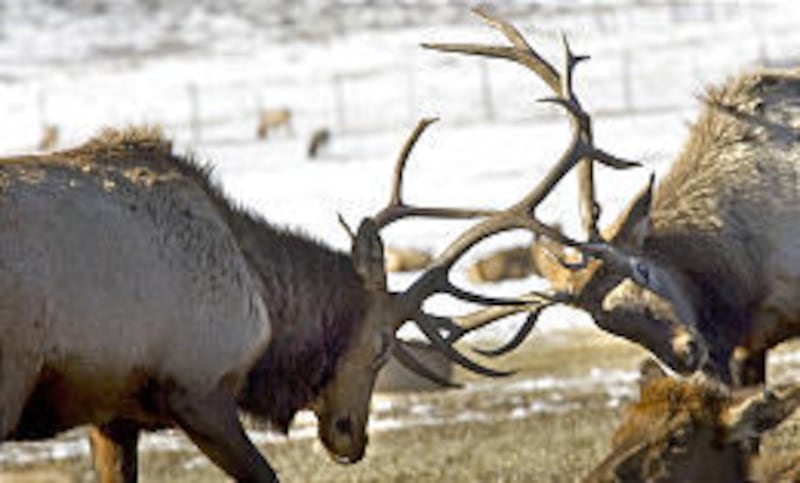
It's a fact that the male species of deer, elk and moose shed their antlers each years and that there are those who make it an annual event to search for the fallen horns.
Those planning to hike the mountainsides in search of antlers should know that there are laws that must be followed.
According to Utah law, a person may possess antlers or horns from legally taken animals, as well as "shed" antlers and horns.
A shed antler or horn is one that has dropped from a big game animal — moose, elk, deer or pronghorn antelope — as part of its life cycle. Shed antlers have a rounded base, commonly called a button or burr. The horns shed by pronghorn antelope are a hollow sheath. Instead of antlers, pronghorns have horns and are, in fact, the only big game animal that shed their horns.
It's also a fact that "picked up" horns, and even skulls, are eligible for entry in the record books.
At one point, the world record black bear came from Sanpete County and was found by Alma Lund and Merrill Daniels back in 1975.
The world record grizzly was also a "picked up" skull found in British Columbia in 1970.
Also, at one point, the record books showed the elk listed at No. 7 was shed antlers found in 1943, and the No. 9 Wyoming moose was antlers picked up in Montana in 1957 and the No. 3 buffalo was picked up in 1977.
Shed antlers and horns may be possessed at any time. There are no restrictions on their barter, trade or sale.
In contrast, antlers or horns that are attached to a skull plate must have been taken legally or purchased from someone who took the animal legally. The person who purchases antlers or horns attached to a skull plate must keep a transaction record that includes the name and address of the hunter the antlers or horns were purchased from, the hunter's permit number and the date of purchase or sale.
Antlers, horns and heads of legally taken animals may be purchased or sold only between Feb. 15 and July 31 annually. The transaction record allows the Division of Wildlife Resources to identify animals that have been taken legally. This requirement makes it easier to identify big game animals that were taken illegally for the trophy value of their antlers or horns.
A deer sheds its antlers during February and March. Elk shed later than deer and at higher elevations.
This year, heavy snows blanket the high country. In many areas of Utah, much of the mid-elevation sagebrush steppe zone is dead or dying from years of drought and other factors.
This has forced elk and deer to concentrate at lower elevations.
Winter range crowding increases the animals' stress as they compete for food and space. The animals' low energy reserves are taxed even more by human activity. Careless shed antler and horn hunters can tip the delicate energy balance, contributing to big game winter kill.
Probably the worst threat comes from irresponsible off-highway vehicle use. Off-road travel is illegal and should not be practiced at any time, especially when gathering antlers. The DWR has received reports of OHV riders chasing deer and elk through trees to knock off their antlers. This practice is extremely damaging and illegal. Anyone caught harassing wildlife will be prosecuted to the fullest extent of the law.
When you're collecting shed antlers and horns, please pay attention to the body language of the animals you see. If they appear to be nervous or begin to move away, give them more space by backing off or traveling in another direction.
Shed gathering can be a great family outing. Please remember the following as you gather shed antlers and horns this year:
Avoid picking up antlers that are attached to a skull plate. Instead, mark the area and contact your local DWR conservation officer.
Respect the space and needs of wintering big game. Give them lots of room.