

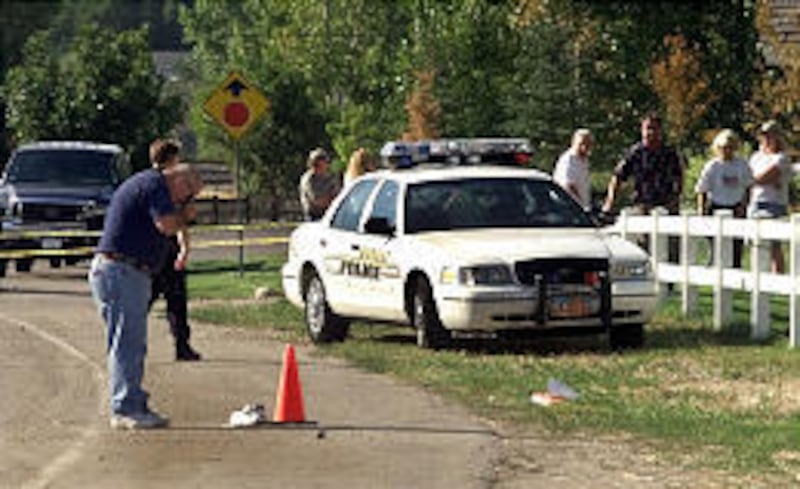

Like any mother, Annette Warburton of Murray said she sends her kids off to school expecting them to come back. But on Aug. 31, 2001, her 13-year-old son, Craig, did not come home.
While walking home from school with his friends on Murray Parkway, a road where the posted speed limit is 30 mph, Craig was struck in a crosswalk by a street racer that police later estimated was going 75. He died at the scene.
At the Capitol, Warburton on Wednesday introduced lawmakers of the Transportation Interim Committee to a picture of her son. "Craig loved life," she said.
Warburton joined Sen. Karen Hale, D-Salt Lake, and others in updating the joint House and Senate committee on what studies show to be a growing problem of street racing in Utah and across the country.
Stacey Knight, with the Intermountain Injury Control Research Center at the University of Utah, said a study of traffic citations in Utah shows that the number of citations for street racing has more than doubled between 1992 and 2002, from 150 to about 350.
Knight said street racers, who tend to be young males, are twice as likely than an average driver to receive DUIs, three times more likely to be cited for reckless driving and four times more likely to be driving on a suspended, or revoked, license.
Advocates against street racing say current penalties are not getting the message across. Rolayne Fairclough with AAA of Utah said with fines of $107 to $250 for speeding through stoplights on city streets at speeds up to 130 mph, most racers don't take much notice.
Current law makes street racing a class-C misdemeanor with maximum penalties of up to 90 days in jail and fines of up to $750.
Some states have addressed the problem with increasing penalties. In Arizona, a person convicted twice within 24 months faces a fine of up to $2,000 and up to one year in jail.
In states like California and Hawaii, vehicles can be impounded or even forfeited. Arkansas has banned the use of nitrous oxide from street vehicles, a substance used to dramatically boost acceleration in street racing.
Some lawmakers believed Utah's law was adequate and questioned whether enforcement or the law was the issue. "If we could get law enforcement and get judges to throw the book at them, we would go after them with what's in the law now," said Sen. Carlene Walker, R-Sandy.
Other lawmakers said the problem is serious but cautioned against overreacting.
"This is not new," said Sen. Scott Jenkins, R-Plain City, who added young men have been street racing since the '50s. "I'm not even sure they're going any faster."
Doug Binstock with the Rocky Mountain Raceways said he doubts racers were hitting 130 mph back then. "You put your head in the sand, then you will be like Florida where you have death after death."
Advocates urged lawmakers to take the issue seriously.
"Racing is a deliberate choice with life and death consequences," Warburton said. "Craig did not have a choice."
E-mail: gfattah@desnews.com