

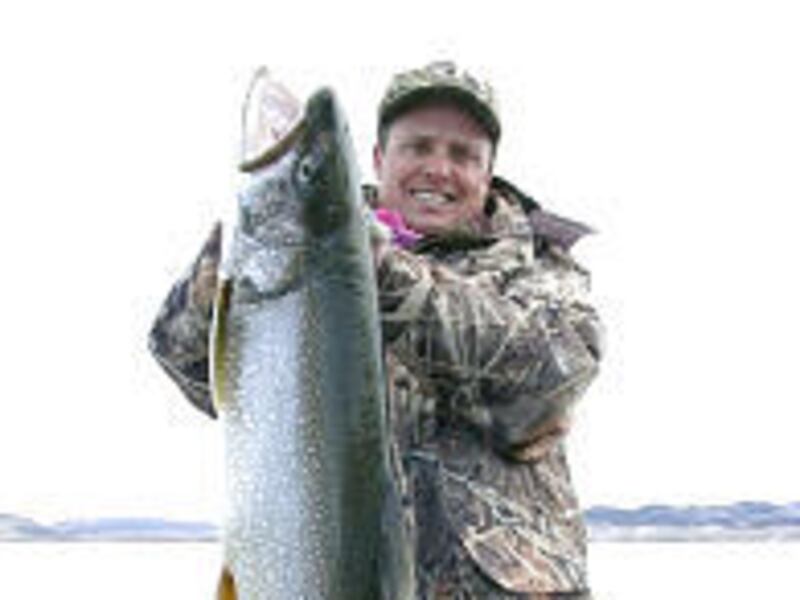
Have a boat and like to fish? Consider going after the 1- to 5-pound lake trout at Flaming Gorge Reservoir. The fish are easy to catch, plentiful and are considered very tasty.
The reservoir, in fact, holds too many of the smaller lake trout, which is why the limit was increased this year to eight fish. Only one of those fish can be longer than 28 inches.
Lowell Marthe, acting Flaming Gorge project leader for the Division of Wildlife Resources, is encouraging anglers to take home limits of small lake trout to help the fishery.
Biologists from Utah and Wyoming believe there is an overabundance of lake trout less than 28 inches in the reservoir. In the future, that could mean trouble for the fishery when these small lake trout mature and switch from their current diet of crayfish and aquatic insects to a diet of fish.
The kokanee salmon population at the reservoir is currently in a down cycle, and additional predation by lake trout could keep kokanee numbers from rebounding.
Unlike their large relatives, small lake trout are exceptionally good to eat. Their flesh is often similar to rainbow trout and kokanee salmon in color, texture and flavor. Many have a hard time distinguishing between small lake trout and rainbow.
The small lake trout are also easier to catch than the larger fish.
From late April and through May, anglers will find concentrations of fish in the Wyoming end of the reservoir. Licensed Utah anglers can buy a $10 reciprocal stamp and fish the Wyoming portion of the reservoir.
From the confluence area to Buckboard and south to the bottom flats off the old river channel and points coming out into the reservoir will hold the highest population of fish.
Currently the fish are relatively shallow, in 30 to 50 feet of water.
A good technique is to troll flat bottom areas using small plugs or spoons off a downrigger or jig when a concentration of fish is detected on graphs. Good colors for spoons and plugs include chartreuse, orange and white. Good colors for jigs include whites, browns and chartreuse.
If fishing is slow, try tipping the jig with a small piece of sucker meat.
As the summer progresses, the small lake trout will move south to cooler, deeper water and spread out onto many of the deeper points in the reservoir. Later in the summer, anglers should fish in depths of 60 or more feet. Fishing jigs and plugs on downriggers or lead core line are good ways to catch deeper fish.
In addition to the lake trout limit, anglers are allowed to keep four trout, rainbow or cutthroat, or kokanee salmon in aggregate, but not more than three of these fish may be kokanee salmon. As previously stated, the kokanee population in the reservoir is on a down cycle.
The thinning of the lake trout could eventually means larger and more kokanee. One problem with kokanee is they do not do well when caught and released.
This is especially true when the water temperature warms.
Anglers should be aware that burbot, or ling, have entered the reservoir through the Green River in Wyoming after being illegally introduced to the drainage.
New fishing regulations state that anglers must keep and kill any burbot they catch. Burbot have only been caught in the northern portion of the reservoir, but they're expected to move south with time. Anglers should familiarize themselves with what burbot look like in case they catch one.