

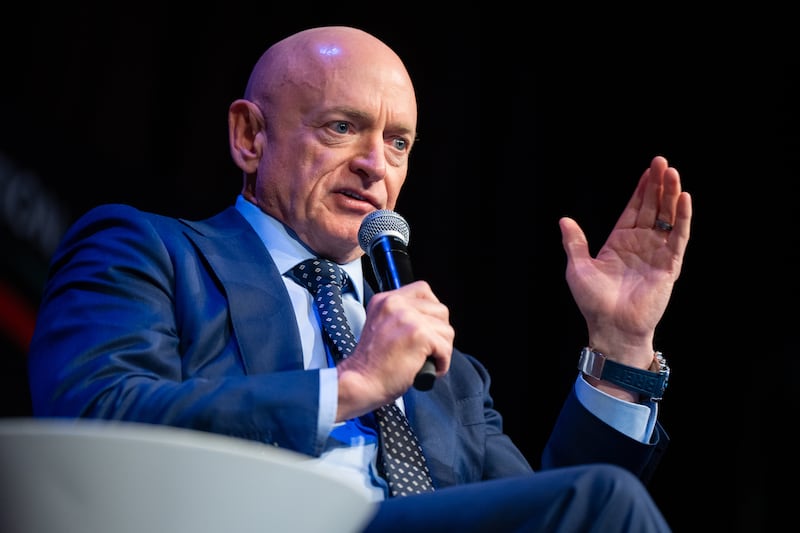

An Arizona senator is trying to fight school choice at the federal level, and says other states shouldn’t look to his as an example on education funding.
Arizona was an early adopter of school choice and has a robust school voucher program, but Arizona Sen. Mark Kelly said he doesn’t think other states should adopt the Grand Canyon state’s approach.
“I’m a product of great public schools. I believe in the American dream because I lived it, and I know it starts with a good education,” he wrote.
“Every child, in every ZIP code, deserves a fair shot. That’s not a policy position — it’s an American value,” he said.
But advocates say the state and federal school choice programs give parents more say in their children’s education, and gives kids options if they don’t fit into the typical mold.
Arizona’s Universal Education Savings Account allows parents to use the public funds allocated for their child’s education toward private school tuition, tutoring, charter schools and any other kinds of education-related expenses.
Why is Sen. Mark Kelly opposed to ESA program?
Kelly said that such programs undermine the public education system by diverting funds, noting that “last year alone (the ESA) cost Arizona taxpayers nearly $1 billion.”
He also argued the program faces significant challenges, including issues of misuse and lack of accountability.
“Arizona’s experiment with universal school vouchers should be a cautionary tale for my Republican colleagues,” the Arizona senator said. “Here’s the truth: most working families aren’t benefiting and the program is a magnet for waste, fraud and abuse.”
Kelly, who said he is “undecided” on whether he will run for president in 2028, made a case against the federal policy of implementing a national private school voucher program, championed under the Trump administration’s “One Big Beautiful Bill” Act. This $26 billion initiative will expand a private school voucher system at the national level.
Misuse and oversight concerns in ESA funding
Earlier this year, 12 News, in its investigation of public records, found that some Arizona parents misused ESA funds, spending over $10.3 million on banned items like luxury goods and vacations.
Although the report alleged 20% of ESA transactions involved improper purchases, Arizona State Schools Chief Tom Horne released a report countering this narrative.
According to the state, only about 2% of purchases were unallowable.
Kelly claimed that Arizona taxpayers are funding “things they have no business paying for,” adding, “Families of students with disabilities have been hit especially hard.”
Kelly was named in Time magazine’s annual list of the 100 most influential people for 2026 for his video directed at troops saying they are not required to follow illegal orders, as he positioned himself as a strong critic of the Trump administration.
In Wednesday’s opinion piece, Kelly wrote, “If we want to keep that dream alive and keep improving education, we must keep public funds in public schools that serve all kids.”
But American Federation for Children’s CEO Ryan Cantrell, in a statement, pushed back against the Democrats’ attempts to take away the ESA program.
“Parents, students, taxpayers and families across America won a historic victory with the passage of the Education Freedom Tax Credit,” Cantrell said.
“The EFTC empowers taxpayers and families to direct K-12 education dollars where they see fit, and 29 states have already embraced it.”
He added that the opposing senators should listen to families instead of teachers’ unions “who will be celebrating this attempt to turn back the clock.”
Debate over school choice and education tax credits
Currently, Arizona voters are considering dueling ballot measures to reform the ESA program.
The Arizona Education Association and Save Our Schools Arizona introduced the Protect Education Act, proposing measures like income caps and bans on luxury purchases. Meanwhile, Fortify AZ, supported by the American Federation for Children, offers an alternative focusing on accountability without income limits, according to Arizona Capitol Times.
Both these measures would create eligibility requirements and address administrative issues to manage the program better.
Cantrell also championed the education freedom tax credit, which is a part of the Trump administration’s Working Families Tax Cuts Act. This federal initiative will allow taxpayers to claim up to a $1,700 federal tax credit for donations to approved scholarship granting organizations.
With the goal of making education more affordable, these SGOs offer scholarships for education-related expenses at private or public schools. This tax credit will be available starting January 2027.
“Parents, students, taxpayers, and families across America won a historic victory with the passage of the Education Freedom Tax Credit, and now Sen. Mark Kelly and 29 of his Democrat colleagues want to take it away from them,” said Cantrell.
“The fact is school choice is wildly popular and here to stay. We are confident this misguided effort will achieve nothing but remind parents where their representatives stand.”