

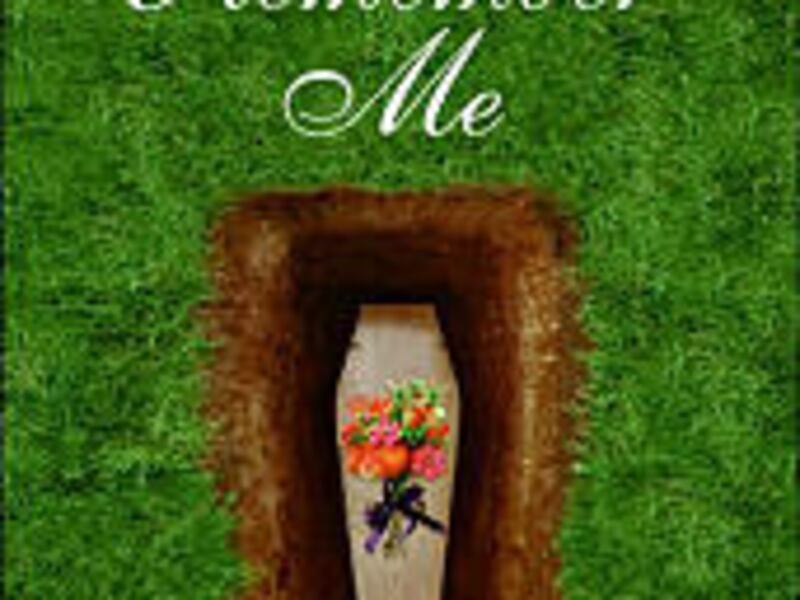
"REMEMBER ME: A LIVELY TOUR OF THE NEW AMERICAN WAY OF DEATH," by Lisa Takeuchi Cullen, Collins/HarperCollins, 211 pages, $24.95.
At $63,000 a pop, mummification is the priciest means of shuffling off this mortal coil examined in this engaging book — and that doesn't include the $50,000 to $500,000 needed to outfit yourself with a decent mummiform, or mummy case. It is not, however, the strangest, not even when you consider that the center — and apparently only venue — of mummification in the United States is Salt Lake City.
The "strangest" honor would have to go to plastination, a made-up word for a process that sounds like mummification but is not quite. It involves preserving the corpse by infusing it with a mix of plastics. The process, and the reasons for choosing it as one's final resting condition, are odd — even in this collection of oddities — but a German named Dr. Gunther von Hagens seems to be making a good living off it.
Lisa Takeuchi Cullen's "Remember Me" grew out of an assignment for Time magazine, for which she is a staff writer, about funeral trends among baby boomers. She is no Jessica Mitford, whose 1963 book "The American Way of Death" muckraked the funeral industry. Cullen explores, rather, the changing ways that Americans choose to mark the end of their earthly existence, and the merchants — she calls them "end-trepreneurs" — who facilitate their choices.
The style is brisk, occasionally bordering on chirpy. Her conclusion that "death is a big, huge bummer," though sounding flip and shallow, belies what is in general good, solid journalistic writing, enlivened by brief, witty analysis and personal/family asides. She intersperses minibiographies of the deceased — and, one might put it, the predeceased — to tell what brought them to their decisions concerning funeral arrangements.
There are 22,000 funeral homes in the United States, 89 percent family-owned, many for generations. The National Funeral Directors Association is feeling a rumble of change caused, like so much in North American life, by the aging of baby boomers.
The number of cremations continually increases. One NFDA survey shows that 62 percent of boomers want a "personalized" funeral; another that 71 percent of respondents do not want a traditional funeral; and 14 percent specifically request "a party in my honor."
Funeral directors have always had terrific stories, and they will only get better as the withering of customs and traditional families continues to chip away at restraints on our speech and behavior.
The author's travels while schlepping her infant daughter Mika — she calls it "covering the dead beat as a new mom" — take her to the country's first "green cemetery," in Westminster, S.C., where "bodies are buried in their natural state: no embalming, no upright tombstones, no fancy caskets."
As the woman running the place puts it, green cemeteries are more than simply "a bunch of granola-crunching hippies doing pagan things." Apparently so: The funeral industry is already sniffing around to see if it could be the next big thing to exploit.
The perfect apparel to wear to this party might be a biodegradable shroud. "Look beautiful — in the last thing you'll ever wear!" the shroud's manufacturer crows.
That chapter is certainly interesting, but it is matched by what is involved in turning your loved ones — or, to be accurate, their cremated remains, or "cremains" — into diamonds. A company called LifeGem transforms the carbon of people into the carbon of diamonds. Despite steep prices — $2,500 to $14,000 for diamonds ranging from a quarter-carat to full carat — business is good.
Burial at sea is a steady seller, and there are several options. Your cremains can be mixed into a massive bolster of concrete and dropped into the water to help create an artificial reef.
Or they can be dropped from an airplane, commonly into the sea, but also over other areas, though there are limits. A request to be scattered over the deceased's favorite bar didn't fly.
Before ending her book by flying to her native Japan to attend her grandfather's very traditional funeral, Cullen strays into related areas: The Frozen Dead Guy Days festival in Nederland, Colo., that honors (in an aggressively commercial way) a cryonics visionary; and FAVs — fantastic afterlife vehicles, such as lobster-shaped caskets — and who is attending mortuary school these days (it's not just a generational matter anymore).
As to the last, there can be fittingly curious perks: Says one Manhattan student, "You always get a subway seat when you're carrying a book with the big fat title 'Embalming."'
Roger K. Miller, a journalist for many years, is a freelance writer and reviewer for several publications and a frequent contributor to the Deseret Morning News.