

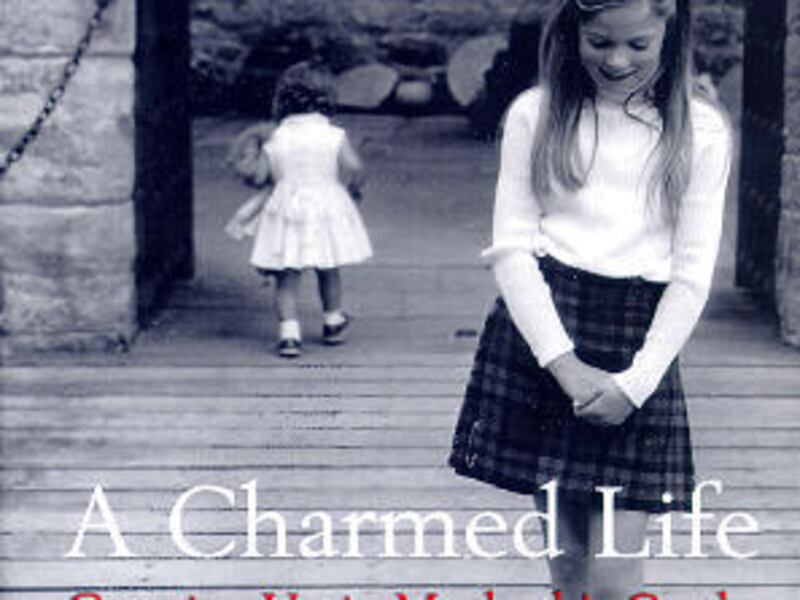
A CHARMED LIFE: GROWING UP IN MACBETH'S CASTLE, by Liza Campbell, Thomas Dunne Books, St. Martin's Press, 323 pages, $24.95.
Liza Campbell, a journalist and writer, was the last child born at the Scottish Cawdor Castle, the family seat of the Campbells, as featured in Shakespeare's "Macbeth." Her father, Hugh, was the 25th thane (or master) of Cawdor and owned three vast Welsh and Scottish estates, including 100,000 acres of land.
Thus it was said that she had "a fairy-tale childhood," to which she responded, "Yes, but a dark fairy tale." She writes that "Cawdor Castle has the romantic cachet of being one of the few addresses featured in a Shakespeare play that can also be found on an AA road map."
Campbell believes Shakespeare's "Macbeth" originated from a true story that was told over and over until facts and imagination ran into each other and it became impossible to tell "which is which." After all, Macbeth was also "thane of Cawdor" and it was that appointment that lead him to "treachery."
(It's important to know that Shakespeare's story, though based on real characters and a real castle, was heavily fictionalized. In fact, the castle itself was built many years after the events of the play. Macbeth lived from 1039-57 and the castle dates to the year 1380. And Macbeth assassinated King Duncan of Scotland in the play, whereas the king was actually killed in battle.)
But the treachery Campbell spends most of her time explaining is that of her own father, who became consumed with drink, drugs and extramarital affairs — and when combined with a bad temper he created a kind of family hell in Macbeth's castle that his daughter will never forget.
When he died of cancer, she felt "a sense of deliverance" — "His angry presence no longer loomed. The noisy silences of his moods were over. The power he once wielded had gone. By the time he died we were all wrung out. As a father he had provided us with an emotional rollercoaster ride, and however much any of us wanted to get off, none of us could."
Unfortunately, it was not over. She would soon discover "a grand finale from beyond the grave, a concealed dirty bomb, timed to detonate after his death."
You'll have to read the book to find out what she means.
The writing is so ingratiating that the reader quickly likes the writer and feels enormous empathy for her life with such a strange and even dangerous father. She wrote that "Anyone who has lost a parent knows that when one dies it does not mean the end of the relationship. They live on in your head. ... "
Shakespeare was onto something.
E-mail: dennis@desnews.com