

Here's a learning strategy No Child Left Behind hasn't tried yet: Super Energy Clapping Hands.
But it really works, says Pingping Li. "You'll be smarter, and your grades will get better and you'll be able to concentrate," she told a group of second- and third-grade students at the Montessori Community School in Salt Lake City when she taught them the Chinese exercise on a recent afternoon.
Clapping hands is a form of qigong (pronounced chee-gong), and qigong is like tai chi in slow motion, so deliberate and slow that it looks like bodies moving through water. But the clapping hands form is more lively, which makes it perfect for bodies that would rather wiggle and skip.
The idea of any of the qi (or chi) exercises is to learn to move your own qi (Chinese for "energy") freely through your body; in this way, according to the theory of Chinese medicine, any blocked areas will be cleared, and your body and mind will be healthier.
When you clap your hands vigorously, according to this theory, it stimulates pressure points on your hands that correspond with organs and systems in the rest of your body. The chanting that accompanies it, says Li's mother, HuiXian Chen, connects the universe with the mind of the chanter.
Li and Chen run the Wisdom and Peace Wellness Center in Vacaville, Calif. Chen was introduced to qigong 25 years ago in China when she was diagnosed with terminal cancer and given a 25 percent chance of recovery. She quit her job as an English professor, began studying with qigong masters, got well, and eventually began teaching at the Oregon College of Oriental Medicine.
Two years ago, one of her qigong students in Vacaville wondered if qigong might calm down her difficult class of second-graders. So Chen started doing clapping hands with them a half-hour a week.Her student, Janet Matthews, who is a teacher at Foxboro Elementary, did 10 minutes of clapping hands with the children the other four days a week.
"They became better students," reports Matthews. "They weren't fighting with each other all the time; they were more unified as a class; they were less likely to be unkind." The next year, Matthews and Chen did clapping hands again.
In this class, Matthews says, "their self-esteem skyrocketed. And their performance knocked the socks off the state tests." The students' energy was 'internal,' she says. "Not hyper. It was a sparkle."
Matthews says that clapping hands and other forms of qigong have also improved her own physical health. "I had arthritis to the point where I hardly walked," but she says she now feels fine.
Chen's daughter Li came to Salt Lake City earlier this month to do an all-day clapping-hands workshop with adults. She also spent a couple of hours at the Montessori Community School working with a small group of 7- and 8-year-olds.
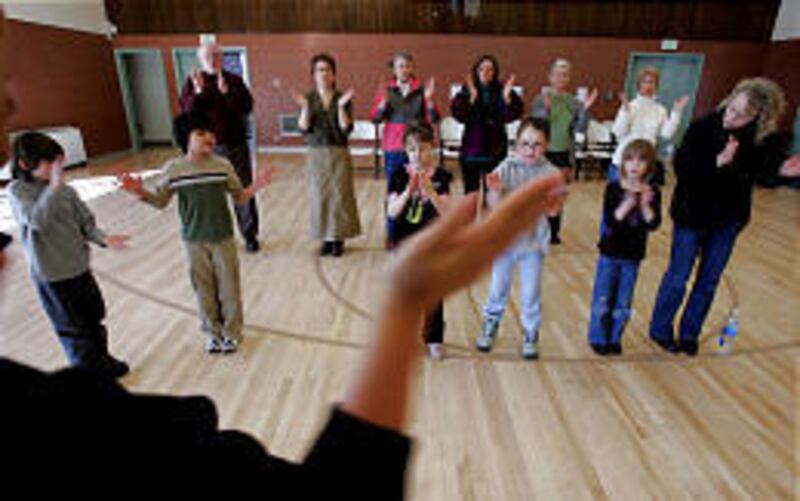
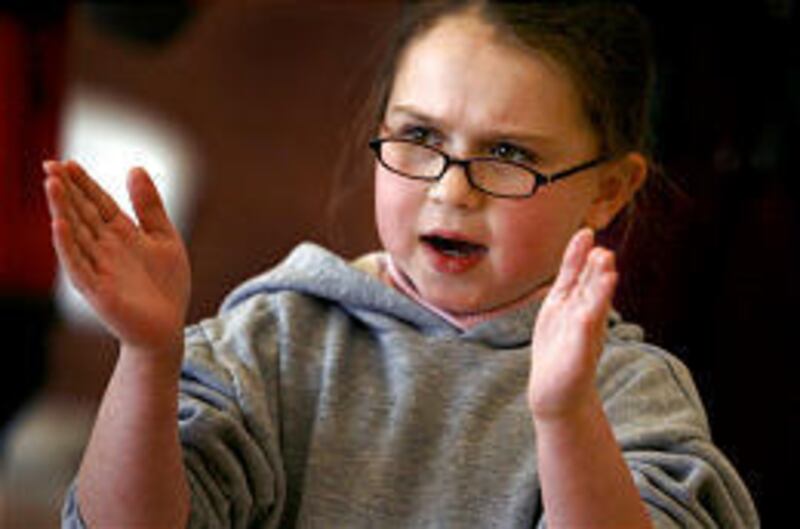
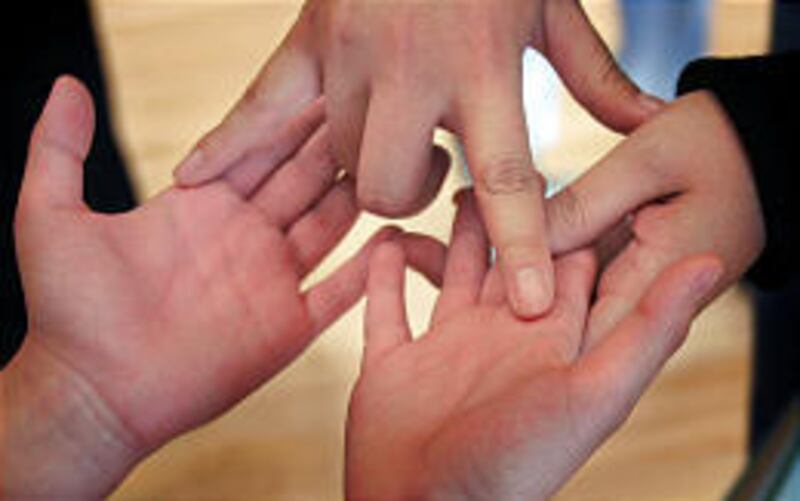
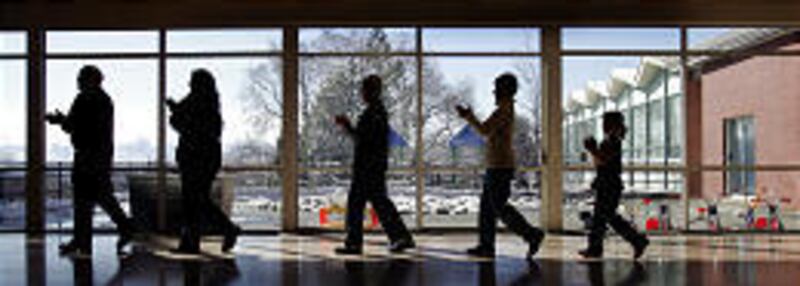
First she taught them four chants. In English they mean "super energy is all around us; mentally connected with it, whole body is cleaned" — but in Chinese they sounded much more exotic. The children chanted while moving their arms down their chest, then down their back. Then they chanted while marching around the auditorium. Then the clapping began: first, a clapping movement with the fingertips touching, then clapping with the fingers interlocked, then an exercise that Li warned might be a little painful: slapping the wrist with the palm of the other hand. "These two points are connected to your heart," Li told the children, "so this is good for your heart."
Then the heavy-duty clapping began, coupled with marching and chanting. Parents and other grown-ups were invited to join in. When it was all over, Li showed everybody photographs of hands that had apparently done a lot of vigorous clapping. Many were covered with dark spots; proof, Li said, of the toxins that had been released.
"So keep clapping every day," she told the students.
E-mail: jarvik@desnews.com