



MINNEAPOLIS — Some people might question the wisdom of building a museum inside a flour mill that exploded once and caught fire twice. But, as real-estate agents say, it's all about location.
It's fitting that Minneapolis' Mill City Museum is housed within the ruins of the old Washburn "A" mill — the forerunner to General Mills — because it helped to make Minneapolis the "flour milling capital of the world" from 1880-1930.
And it's fitting that the museum is located next to St. Anthony Falls — the only falls on the Mississippi River — because it supplied the mills with water power to grind wheat into flour.
And it's fitting that the museum offers a view of the old Pillsbury "A" Mill across the river — another major mill that helped give Minneapolis the "Mill City" nickname.
The numerous mills that sprang up along St. Anthony Falls industrialized flour production and had a major influence on how Americans got their daily bread. The surrounding Great Plains grain belt supplied up to 175 railroad cars of wheat a day, to be made into flour and shipped all over the world.
This was also "the cradle of processed foods," according to Laura Salveson, manager of the Mill City Museum. When you eat a bowl of Wheaties or Malt-O-Meal cereals, pop open a tube of Pillsbury dough, heat a frozen pizza or open a can of Green Giant veggies, you're experiencing the Mill City's influence.
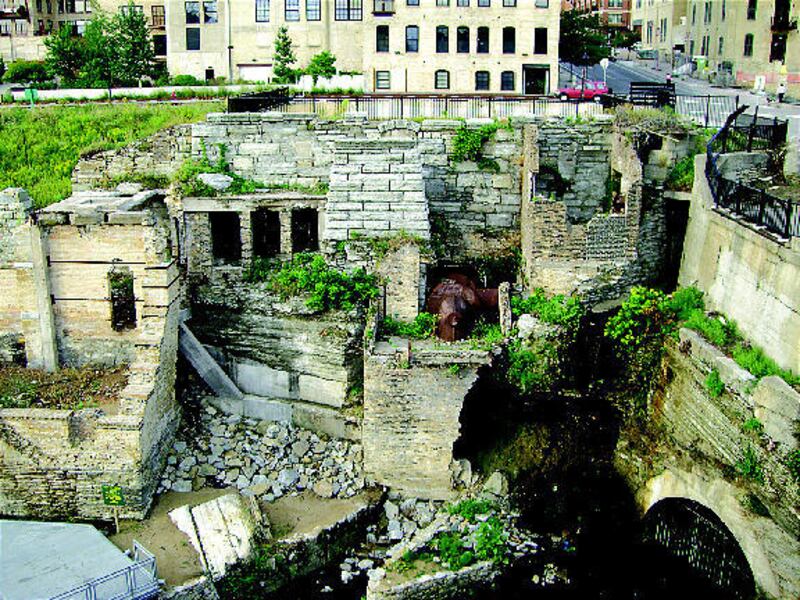
The Mill City Museum pays homage to the milling industry and the humble wheat kernel that made it possible. If you walk along the biking trail near St. Anthony Falls, you can see the backside of the museum rising from fire-blackened mill ruins. You can also see the remains of other early mills along the Mississippi's banks.
The original Washburn "A" Mill was built in 1874 by Cadwallader C. Washburn. At peak production, it ground enough flour to make 12 million loaves of bread in a day, according to the Minneapolis Historical Society. But all that flour was hazardous.
In 1878, the mill blew up in a dust-flour explosion that killed 18 people and destroyed other nearby mills.
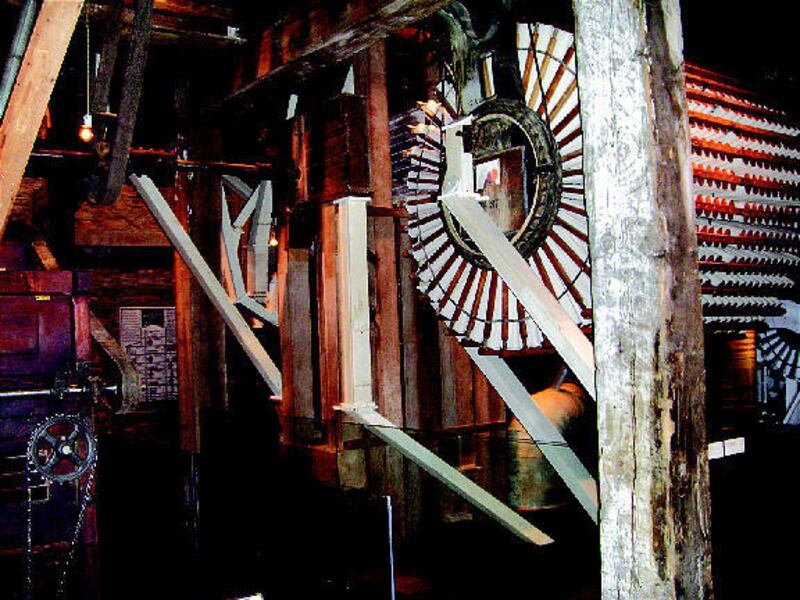
When Washburn rebuilt the mill, he replaced the grinding stones with automatic steel rollers, establishing the first automatic roller mill in the world, according to General Mills' historic archives. The new mill could grind Minnesota's hard red spring wheat into flour that rivaled the whiteness and baking properties of winter wheat flour.
The new mill also included giant dust collectors to keep a flour-dust explosion from happening again. But that didn't stop the mill from catching fire in 1928.
Again rebuilt, the mill continued operations until General Mills closed it in 1965. It was left vacant until 1991, when another fire gutted most of the building. Instead of tearing down the fire-blackened ruins, the city built a glass-walled museum within it.
"So what you have is a building built on the ruins of an older building," said Salveson.
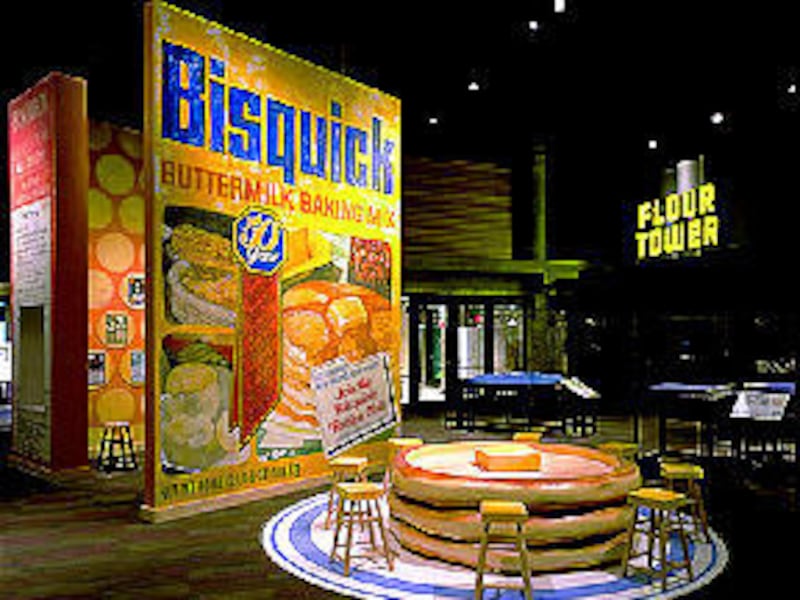
The museum features exhibits on wheat farming and milling machinery. The main attraction is the Flour Tower, a giant freight elevator with stadium seating. It travels up and down eight floors of multimedia presentations that show the milling process with assembly lines, conveyor belts and so on.
At the top, guests can go to the rooftop observation deck for a view of the Mississippi River, St. Anthony Falls and other Minneapolis landmarks.
At the top of the adjoining grain elevator, the "Gold Medal Flour" sign still shines at night. Across the river, the sign "Pillsbury's Best Flour" marks the Pillsbury "A" Mill, begging the question of how Washburn and his rival, Charles A. Pillsbury, would feel knowing their companies have merged, since General Mills bought the Pillsbury Co. in 2001.
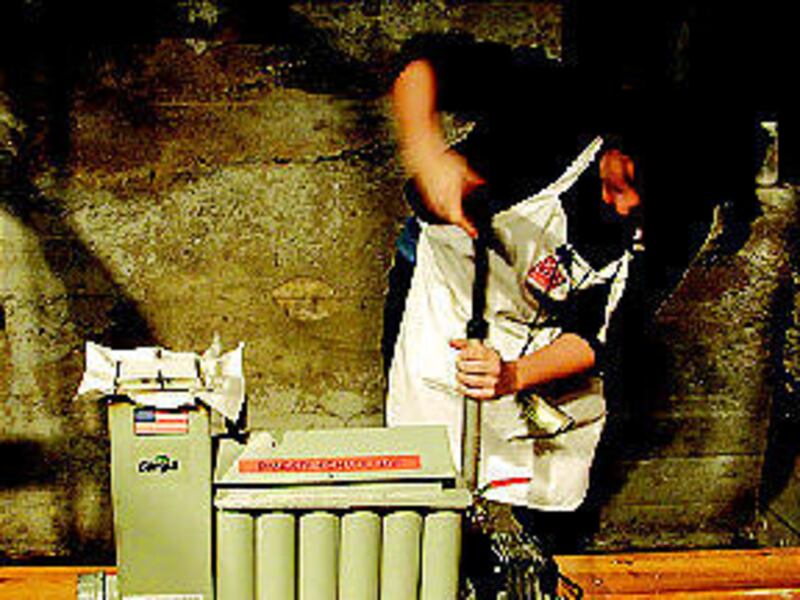
Schoolkids are drawn to the museum's dust-flour blast demo: a science experiment showing how a miniature mill can be blown up with the combination of flour in a confined space, oxygen and a spark — possibly from static electricity or a cigarette.
The baking lab is a kitchen/classroom where cooking instructors demonstrate their skills and offer samples of fresh-baked goods every day. The water lab shows how a river is harnessed to generate power, which was critical before the advent of electricity.
There are exhibits tracing early efforts at brand-recognition down to today's television ads. In 1872, Charles Pillsbury began adding four Xs on its Pillsbury Best flour packages — one more X than the three Xs that millers traditionally used in grading flour.
In the 1880s, Washburn and his eventual partner, John Crosby, began calling their flour "Gold Medal" after it won the gold, silver and bronze medals at the International Millers' Exhibition in Cincinnati.
There are black-and-white advertisements from the Minneapolis-based Malt-O-Meal Co. saying their cereal is "For grown-ups down to the little shaver." And there are foreign-language Pillsbury commercials that illustrate how the Doughboy has gone international.
After World War I, flour production in Minneapolis began to decline as milling no longer depended on water power. Companies such as General Mills and Pillsbury began putting more emphasis on other products such as breakfast cereals and baking mixes.
General Mills shut down the Washburn "A" mill in 1965, moving its offices to the Minneapolis suburbs. Today, Kansas is the leading state in flour production, closely followed by California, according to the North America Milling Association.
If you go
What: Mill City Museum
Where: 704 S. Second Street, Minneapolis, Minn. (just north of the Hubert H. Humphrey Metrodome)
When: Tuesday-Saturday, 10 a.m.-5 p.m.; Sunday, noon-5 p.m.
Cost: $8 for adults; $4 for children (under 5 are free)
Phone: 612-341-7555
Minnesota . . . the flour giant
It was once the world's flour-milling capital. But beyond that, Minnesota has influenced how America eats in a surprising number of ways:
• It's the nation's largest source of green peas and sugar beets.
• It's second in sweet corn, oats, wild rice and turkey production.
• It's third in soybeans, flaxseed and spring wheat.
• It's fourth in cheese.
• It's fifth in sunflowers, rye, honey, butter, milk and ice cream.
• Two of every five frozen pizzas sold in the United States come from Minnesota labels: Red Baron, Tony's, Freschetta, Totino's and Jeno's.
• One of the world's best-selling cookbooks is the Betty Crocker Cookbook, produced by Minneapolis-based General Mills.
• The automatic toaster and the mini-doughnut machine were invented in Minnesota.
• The fictitious Betty Crocker, the Jolly Green Giant and the Pillsbury Doughboy all hail from Minnesota.
• The best-known cookoff, the Pillsbury Bake-off, has a million-dollar grand prize
• During World War II, University of Minnesota professor Ancel Keys developed the emergency K ration for soldiers.
• In the 1960s, Pillsbury researchers developed high-protein Space Food Sticks to feed astronauts.
• Nordic Ware of Minneapolis invented the bundt pan. The round, hole-in-the-middle pan was largely unknown until the 1966 Pillsbury Bake-off, when the Tunnel of Fudge Cake caused bundt-pan sales to soar.
• The nation's largest, single-store community-food co-op is the Wedge in Minneapolis, giving its 8,000 members a place to buy natural and organic foods.
• Other well-known Minnesota-based companies: Watkins (makers of flavorings and extracts), Gold'n Plump Chicken, Target and Malt-O-Meal.
Sources: Minneapolis Star-Tribune, Nordic Ware, General Mills
E-mail: vphillips@desnews.com