

APALACHICOLA, Fla. — They call this part of the Florida Panhandle the Forgotten Coast, and on a cool February day it's easy to see why.
Miles of dazzling white beaches stand deserted except for an occasional beachcomber. Hotel rooms are easily available at bargain rates. Restaurateurs look gratefully at those who don't have reservations when they walk in the door.
There is a reason for this, of course. It's cold here, compared to the beaches of Miami or Sanibel Island in southern Florida. There, winter is high season, with full hotels, crowded restaurants and jammed highways. Here, summer is the tourist season, and winter means quiet and solitude.
We hit this part of Florida during a cold snap, so despite the brilliant sun, the temperatures reached only the high 50s, and lows were around 40. The severe cold was the first thing the locals mentioned, followed quickly by apologies.
Of course, if your home is in the Far North (we live in Montana), there's a word for weather like this — spring! We needed no apologies. We were too busy enjoying ourselves.
We had not set out to make this our destination. We had been visiting relatives near Pensacola and decided to drive U.S. 98 along the Gulf Coast. We arrived in Apalachicola, in the belly of Florida's Panhandle, in late afternoon, and found ourselves transported back a century.
Beautiful old houses, with broad porches for relaxing in the days before air conditioning, line the city streets. A park established in 1832 beckoned, its grounds filled with live oaks, their branches draped with Spanish moss.
We wandered the park, admiring its bandshell and grounds, then explored nearby neighborhoods and their gracious Victorian homes. Nearby was the Chestnut Street Cemetery, which dates to 1831. It is slowly decaying, but still legible are the headstones of Confederate soldiers and sailors who defended Apalachicola from a Union blockade in the Civil War, as well as those of townspeople and visitors who died decades before the war began.
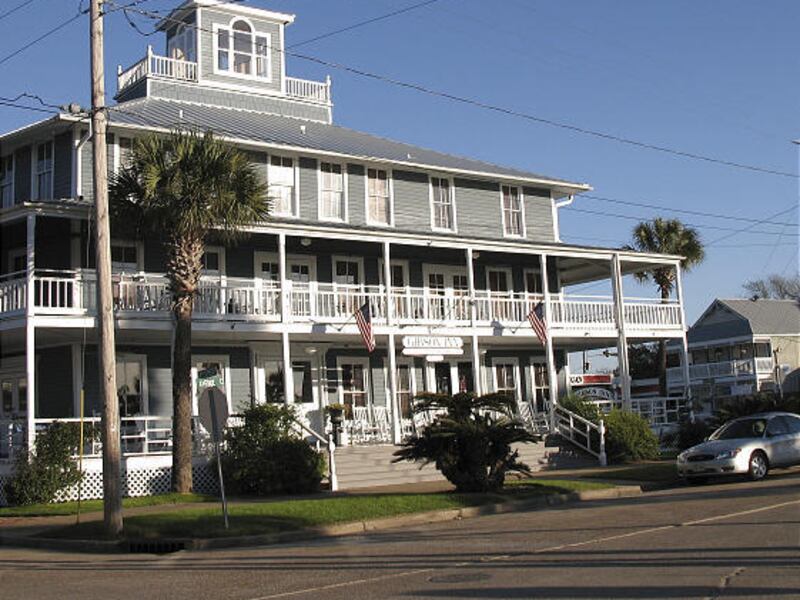
The hotel we chose, the century-old Gibson Inn, echoed the Victorian graces of the neighborhood; rocking chairs lined its first floor porch. Only a block from Apalachicola's historic waterfront, it was built in 1907 and underwent a three-year restoration in the early 1980s, earning a listing on the National Register of Historic Places.
Apalachicola began as a seaport in the early 19th century, shipping cotton from inland plantations to New England and Europe. It quickly became the third largest port on the Gulf Coast.
The Union blockade during the Civil War and the postwar decline of cotton effectively ended that chapter of local history. After the war, the focus shifted to lumber from the area's lush cypress forests, and then to seafood — particularly the harvest from the area's rich oyster beds.
Today, oysters are still a mainstay; state fisheries officials say the county's 7,600 acres of oyster bars produce 10 percent of the nation's oysters. The vast shallows of local bays are crammed with oysters, and small boats dot the water in the morning as oystermen use long tongs to bring the shellfish to the surface.
We didn't realize the abundance until we visited nearby St. George Island State Park, where an oyster boat was on display. When we asked a park volunteer working on the display how difficult it was to find oysters, he smiled, walked to water's edge, and plucked a huge oyster from the shallows. He quickly shucked it and offered us the delicacy.
It was then we realized the long rocky bar exposed by low tide just offshore was not covered by rocks at all — but by oysters.
We passed on the raw oyster — surely an acquired taste — but oysters quickly became our local diet.
Dinner took us to Boss Oyster, a ramshackle-looking restaurant on the Apalachicola waterfront that gathers its own oysters fresh from the bay and serves them in intriguing combinations. Try, for example, Oyster St. George, baked oysters topped with asparagus, garlic, shallots and Colby cheese, or Oyster Greektown, with garlic, parsley, feta cheese and Greek olives.
Not far from Apalachicola itself is St. George Island, a 28-mile-long barrier island that invites beachgoers. The sand of Gulf beaches here is a dazzling white powder that demands sunglasses, and during the summer it draws visitors from across the South for sunning, swimming and fishing.
This time of year, however, the beaches are nearly deserted, except for strolling beachcombers collecting shells.
The easternmost nine miles of the island are state park bounded by broad, undeveloped beaches. The park was almost washed away by Hurricane Dennis in 2005, but new facilities eventually opened for public use. But the new bathhouses, picnic shelters and boardwalks were empty for our visit.
We wandered the beach for hours, meeting only a handful of people, as we sought the perfect seashell, filling plastic grocery bags with candidates. Back home in Montana, they would fill our planters and flowerbeds and ensure that the Forgotten Coast never would be.