

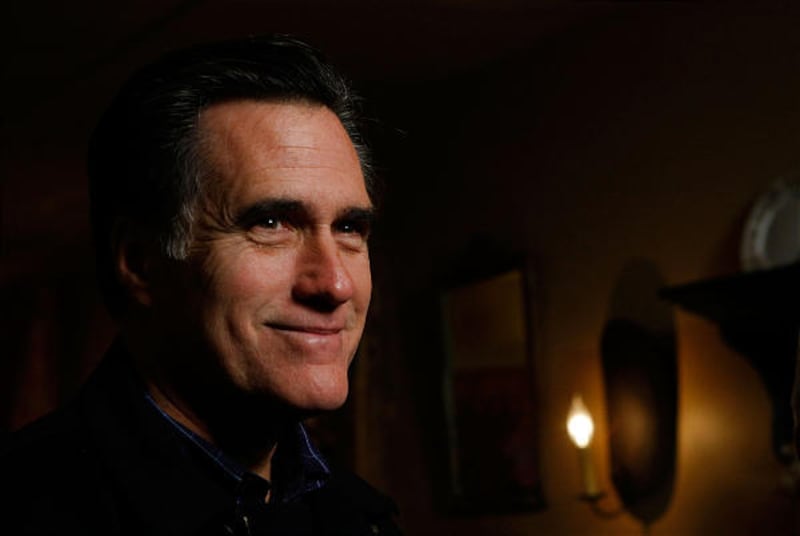



Mitt Romney's strategies in dealing with the "Mormon question" had their first test in the Iowa caucuses with mixed results as rival Mike Huckabee harvested most of the support from evangelical Christians in an evangelical state.
But the "Mormon question" is nothing new for LDS presidential candidates, who have wrestled with it for 164 years. Their Mormonism was a campaign issue to varying degrees in the elections of 1844, 1968, 1976, 1992 and 2000. LDS candidates in each of those years chose very different methods to address concerns about their religion, with none bringing much success.
On one hand, Joseph Smith, founder of The Church of Jesus Christ of Latter-day Saints, literally sent missionaries to campaign for him nationwide in 1844. Quite differently, Mo Udall chose to distance himself in 1976 from LDS policies that then banned blacks from the priesthood.
Somewhere between those extremes, George Romney — Mitt Romney's father — had to argue in 1968 that being a Mormon did not make him racist (because of its policy then on blacks and the priesthood). Orrin Hatch gave his own "JFK-style" speech to evangelicals in 2000.
And which LDS candidate actually received the most presidential votes in a general election?
It appears to have been Populist Party candidate Bo Gritz in 1992 (because most other LDS candidates have disappeared in primary election seasons). He still received less than 1 percent of the vote, showing how very short LDS candidates have fallen in their quest for the presidency.
So Mitt Romney's decision this year to give a speech to address head-on concerns about his faith merely adds another chapter to a long-running quandary for LDS politicians trying, essentially, to show America that they are not too weird to be president.
Here is a look at those past campaigns:
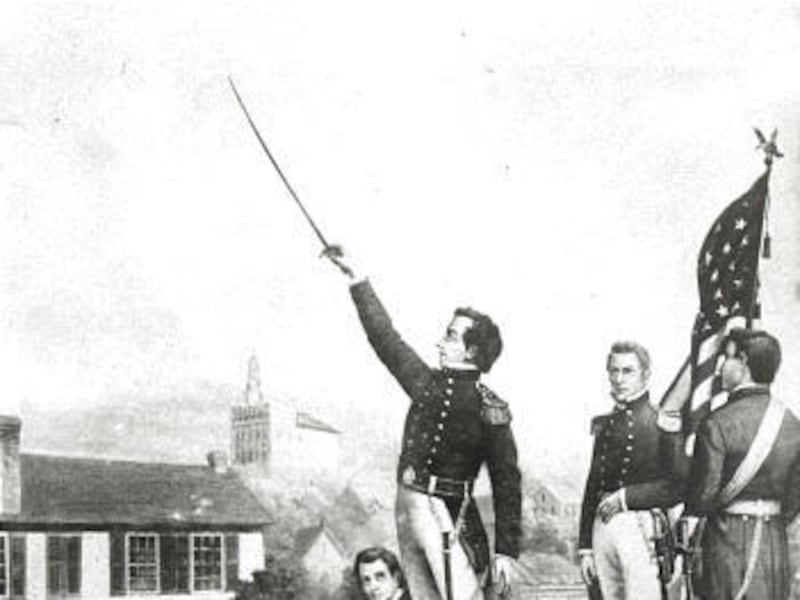
• Joseph Smith, 1844. Smith was not only the first Mormon presidential candidate, he was the first Mormon. He taught that Jesus Christ restored his church to the earth through Smith as a prophet. The church was heavily persecuted in Smith's time and driven by mobs from state to state on the then-western frontier.
Historian Richard Poll wrote an academic paper about Smith's 1844 campaign that said Smith likely developed the idea to run after church leaders wrote to other likely candidates inquiring how they might help Mormons if elected.
Henry Clay, John C. Calhoun and Lewis Cass responded, but none supported the kind of federal intervention that Mormons sought. Former President Martin Van Buren and Richard M. Johnson did not respond at all. So local leaders at the then-LDS headquarters in Nauvoo, Ill., passed a resolution endorsing Smith as a candidate on Jan. 29, 1844.
Poll wrote that Smith came up with a unique method of campaigning: calling for volunteer missionaries to visit every state, as Smith said, to "advocate the Mormon religion, purity of elections and to call upon the people to stand by the law and put down mobocracy." He vowed if elected to "protect the people in their rights and liberties."
Missionaries indeed went to all 26 states existing at the time and carried copies of Smith's platform (which also had been sent to President John Tyler, his Cabinet, members of Congress and Supreme Court justices). An emissary was sent to observe and possibly lobby for Smith at the forthcoming Whig and Democratic conventions.
Smith's platform called for elimination of slavery by compensating slave owners for their loss. He called for financing the government through tariffs and for creation of a national bank. He called for bringing Oregon and Texas into the Union.
But the missionary force could not persuade enough Americans to rally to protection of the church or Smith's cause. Persecution in Illinois intensified, and Smith was murdered by a mob there on June 27, 1844. Mobs would force the church out of Illinois and toward the Great Basin in 1846.
• George Romney, 1968. The former governor of Michigan and former head of American Motors managed to become the Republican front-runner in the early part of the 1968 race.
It was eight years after John F. Kennedy had proved a Catholic could become president, arguing that a candidate's religion should not matter. But at the time, the LDS Church did not ordain blacks to the priesthood (which would change in 1978), which prompted questions about whether that made Romney racist.
Life magazine reported that Romney told a ministerial association, "If my church prevented me as a public official from doing those things for social justice that I thought right, I would quit the church. But it does not."
Romney told the magazine U.S. News and World Report, "My church teaches me the Negro is my brother, and that the Negro can attain the celestial kingdom, just as I can." Also, he told a press conference, "All of us are equal as children of God, and equal citizens, and I accept this without reservation."
Romney would also point to his record as having actively opposed segregation and prejudice in Detroit and as a promoter of civil rights on issues ranging from race riots to desegregation of industries and public housing. Many in the press said that seemed to insulate him at the time from questions about blacks and the LDS priesthood.
Polls in 1967 even showed him as the leader among rank-and-file Republicans. But on Aug. 31, 1967, he made a statement that most historians (and journalists at the time) say sunk his campaign, and it had nothing to do with being a Mormon.
When a radio interviewer questioned why he was changing his earlier strong support for the Vietnam War, he said, "When I came back from Vietnam (in November 1965), I'd just had the greatest brainwashing that anybody can get." He later decided he had been misled about the need for the war.
Among the media critics that attacked his new position that he had been "brainwashed" was Time magazine, which immediately declared that it was "so inept an explanation of his shifting views on Viet Nam that it could end his presidential ambitions." Many made fun of his use of the word "brainwashed" and quoted military officials saying they never brainwashed anyone. Others who traveled with Romney said they had not been brainwashed.
Romney withdrew from the race on Feb. 28, 1968. At the party's convention, he finished sixth, with 50 votes on the first ballot (44 from Michigan and six from Utah — showing fellow Mormons wished him well). Eventual winner Richard Nixon named Romney to his Cabinet as secretary of Housing and Urban Development.
• Morris (Mo) Udall, 1976. Udall was a well-respected Democratic congressman from Arizona, a former pro basketball player and a Mormon who had not been active in the LDS Church since his teenage years. The question of blacks and the LDS priesthood hurt him nevertheless.
Udall had narrowly finished in second place in a string of primaries in 1976. But he was gaining ground on Jimmy Carter in Michigan, which was seen as a chance for Udall to break through, finally win one, and maybe stop Carter's momentum.
But black Detroit Mayor Coleman Young, a Carter supporter, told a gathering of black Baptist ministers that while Carter had tried to open the front doors of the church to blacks, Udall's church "won't even let you in the back door."
Udall biographers Donald W. Carson and James W. Johnson wrote that Udall responded by saying that "he had split with the Mormon Church over its policies toward blacks 30 years earlier. Udall called for Young to apologize and for Carter to repudiate the accusation. Neither did."
Udall supporters also noted that Carter attended a church in Plains, Ga., that still barred blacks.
Udall lost the Michigan primary by three-tenths of a percentage point and Carter went on to ultimate victory.
Interestingly, Udall (who lost an eye as a child) would joke about his chances during the campaign by saying, "I'm a one-eyed Mormon Democrat from conservative Arizona. You can't find a higher handicap than that."
• Bo Gritz, 1992. The former Green Beret colonel, who at the time was a recent Mormon convert living in Nevada, was the Populist Party's nominee. As a third-party candidate, he never had a serious chance of winning. But he managed, apparently, to gain more votes in a general election than any other Mormon ever had, with the help of fellow church members.
He gained national attention by helping negotiate an end to an 11-day standoff in northern Idaho between federal agents and white separatist Randy Weaver. He called for opposing "The New World Order," ending all foreign aid, abolishing the income tax and ending the Federal Reserve System. He said the country's laws "should reflect unashamed acceptance of Almighty God and his Laws."
He found some support in areas with high numbers of fellow Mormons. For example, 10,000 of what press reports described as "enthusiastic supporters" gathered to listen to him at the Huntsman Center on the University of Utah campus.
Gritz received about 100,000 votes nationally in the general election, about 1 percent of the vote. But in heavily LDS Utah, he received 3.8 percent of the vote and in Idaho 2.1 percent.
Two years later, Gritz announced that he had asked the LDS Church to remove his name from its membership rolls. He said that came after his stake president refused to renew his temple recommend because Gritz did not plan to file an income tax return.
• Orrin Hatch, 2000. The U.S. senator from Utah was never considered a top contender by the press because he entered the race so late that almost all financial support and endorsements already had been snagged by other candidates.
Still, the question of whether a Mormon could even compete arose. Hatch confronted it by giving his own "JFK-style" speech to a meeting of the Christian Coalition in Washington, D.C.
That group had stood for most other GOP candidates who addressed it that day, but initially gave Hatch a cool reception with light applause as only half the audience stood to greet him. Hatch addressed how polls said 17 percent of Americans would not vote for a Mormon for president.
Hatch said, "I thought we got rid of that kind (of thinking) when John F. Kennedy ran for president of the United States as a Catholic," which brought some gasps and scattered applause.
"If the Savior himself came down here right now ... he would miss 17 percent of the vote himself," he said. He then essentially shared his belief in Christ, saying, "I know that Jesus is the Christ. I know that he lives. I know that he died for you and me. ... God bless America, and God bless all of you."
He then received an enthusiastic ovation from the crowd, and many of its members praised him to the press. But it did not help Hatch's moribund candidacy.
He finished dead last in the first-in-the-nation Iowa caucuses and dropped out.
He delayed that announcement a day because a big snowstorm closed the Capitol in Washington. He joked at the time, "I said to Elaine (his wife), 'Maybe I shouldn't resign because this snowstorm is a sign from God.' And Elaine responded, 'No, Orrin. The Iowa caucuses were a sign from God."'
E-mail: lee@desnews.com