

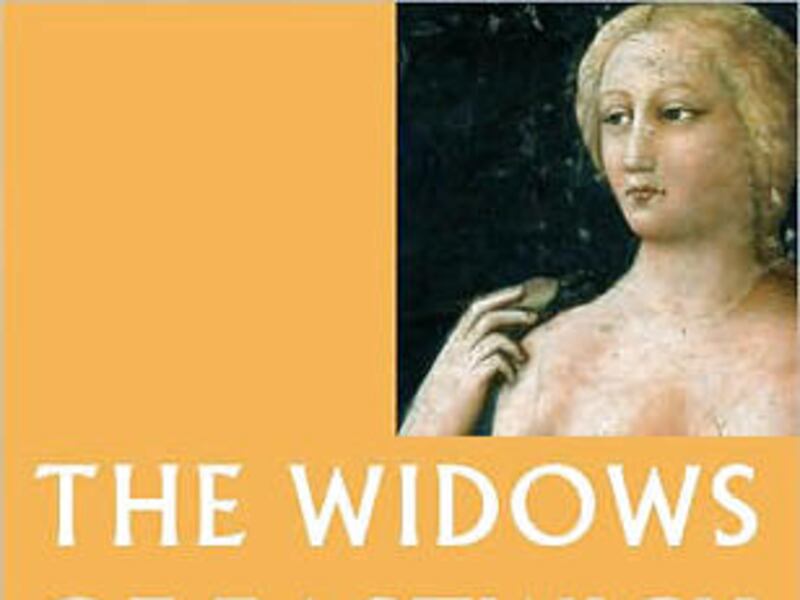
"THE WIDOWS OF EASTWICK," by John Updike, Knopf, 308 pages, $24.95
More than 30 years after Darryl Van Horne moved into the old Lenox mansion in Eastwick, R.I., and began carrying on with three divorcees who happened to be witches, the coven returns to the scene of high times and crimes.
"The Widows of Eastwick" is John Updike's sequel to his popular 1984 novel, "The Witches of Eastwick," on which the silly 1987 movie with Jack Nicholson, Cher, Susan Sarandon and Michelle Pfeiffer is only partly based.
The sequel finds the trio of witches aged between 68 and 74, living apart from and out of touch with one another for years. Recently widowed Alexandra, an amateur sculptor in New Mexico, decides to take a package tour through the Canadian Rockies.
"Her instinct, as with so many a wife suddenly liberated into solitude, was to travel," Updike writes. The journeys continue for more than 90 pages as the other witches lose their husbands, with Alexandra joining Jane, the sharp-tongued cellist, for a jaunt in Egypt; Sukie, the writer, completes the reunion as the three visit China.
This opening lets the women get reacquainted, share the travails of aging and catch up on their years apart. "With their reunion their powers were returning as prickings, foreshadowings, a girlish relish in malice." At Mao's tomb, Sukie makes the dead man wink.
Meanwhile, Updike rolls out a lot of travelogue-type material on the three destinations and pokes curmudgeonly fun at tourists, non-Americans who speak English badly, Americans abroad who can speak only English and other well-scarred targets. Then he gets down to business.
After their travels, the witches decide to spend the summer together in Eastwick, where they find themselves wearied by the town's changes, haunted by old lovers and hunted by someone avenging a death that followed one of their spells in the early days. Van Horne has vanished but his odd scientific theories and an acolyte who can use them have a literally shocking effect on the coven.
They try a new spell to fix one witch's medical problems and to do some good for a couple of hard-luck cases in the town, but a witch doesn't survive the hexing. I won't say which because readers who get through the Cook's tour deserve to enjoy the bit of suspense Updike provides.
Like the first novel, "Widows" is entertaining for the matter-of-fact way it presents witchcraft.
Where "Widows" differs sharply from its predecessor is in the absence (with one ugly exception) of the hard- and soft-core sex. The new novel also has little of the rich nature writing with which Updike seasoned the first. There are occasional strange flights of imagery that seem strained: "News that the damnable trio were back in town percolated from ear to ear like rainwater trickling through the tunnels of an ant colony."
Yet Updike also can offer a whole writing class in a single sentence, like this gem, set in a diner: "The booths at the back tended to be taken over by the old-timers, who treasured silence and nursed mugs of coffee and old political grievances that could still be warmed, in trios and quartets, into loud indignation."
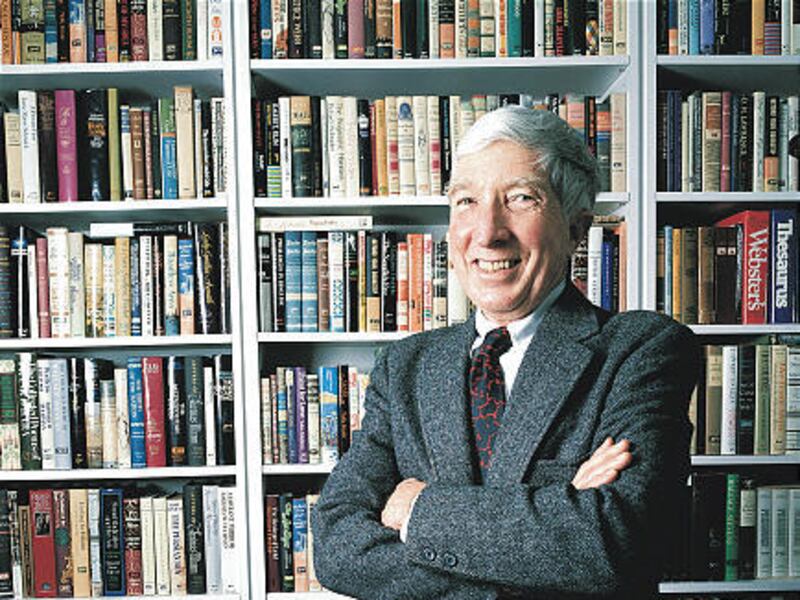
The new novel is most remarkable for detailing the pains, shames and fears of aging with a poignancy and sympathy that testify to Updike's gifts as a writer, his own 76 years on the planet and the 23 novels he has now given it, along with short stories, poetry and criticism.
Perhaps his greatest act of sympathy was to bring these aging ladies together again so those pains might be chatted through, even forgotten for a while, and those fears eased in the sharing, the guilt over maternal shortcomings made less singular, and the joy of past conquests rekindled in memory to take the chill off those old bones.