

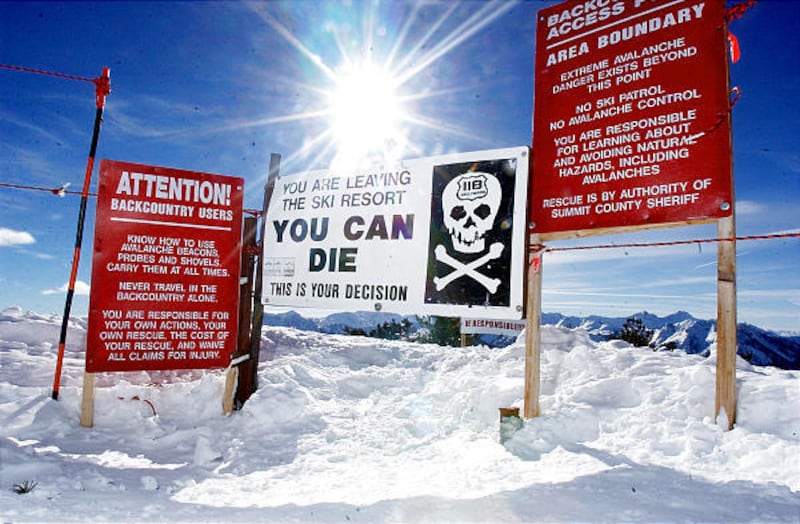
Recently, a 27-year-old Utah woman died at an area hospital after an inbounds avalanche at Snowbird ski resort had buried her for nearly an hour. This was a highly unusual event because Utah ski resorts routinely perform avalanche control, with Alta's and Snowbird's efforts considered by experts to be among the best in the nation. Still, all who recreate outdoors in the winter need to be aware of the potential risks of snow slides.
First, one needs to understand the physics of avalanches. Being hit by one could be likened to being struck by a flow of wet concrete traveling 60 to 80 mph. Once it settles, the snow can weigh 10 to 15 pounds per square foot, depending on its moisture content. These factors make it unlikely that avalanche victims can dig themselves out of the snow.
Given all that, it is vital that winter recreation enthusiasts read avalanche advisories and heed the warnings. Daily updates are available at www.avalanche.org, the Web site of the Utah Avalanche Center.
Experts also recommend wearing avalanche beacons, which transmit and receive signals, and carrying shovels and probes to help locate and rescue buried skiers, snowmobilers or snowboarders. Other specialty equipment is available, including devices that help to safely extract breathable air from the snow and airbags that, when activated by the wearer, can help keep a skier or snowboarder on the snow's surface during a running avalanche.
While a lot of media attention is given skiers and snowboarders who become trapped in avalanches, snow slides killed more snowmobilers than skiers between 1995 and 2001. Snowmobilers in the backcountry should take extra precautions.
Currently, the Utah Avalanche Center says the state's avalanche danger is high. This does not mean Utahns should shy away from outdoor activities. It means they should follow the advice of experts about particularly treacherous areas or confine their skiing and snowboarding to inbound areas of ski resorts where avalanche risk is constantly assessed and addressed.