



NORTH SALT LAKE — Jack Johnston had been laid off from his job as a vice president of Sea World in Orlando, Fla. His 5-year-old son had just been diagnosed with leukemia. "I was left without income, insurance and very little money in the bank," he says.
In fact, he was so broke, he went to a local supermarket to see if he could buy old hamburger before it was thrown away. It was illegal for the store to sell it, he found, but through the kindness of the butcher he received enough meat once a week to feed his family.
That year the one thing his wife wanted for Christmas was a one-of-a-kind Santa doll. Johnston knew there was no way he could afford to buy one, "so I decided to make one myself."
Johnston, who now lives in North Salt Lake, came away from that bleak period in his life with two ideas firmly in place. First, "I knew that if ever I was in a position to reach out and help others, I would." Second, he knew doll-making was his destiny.
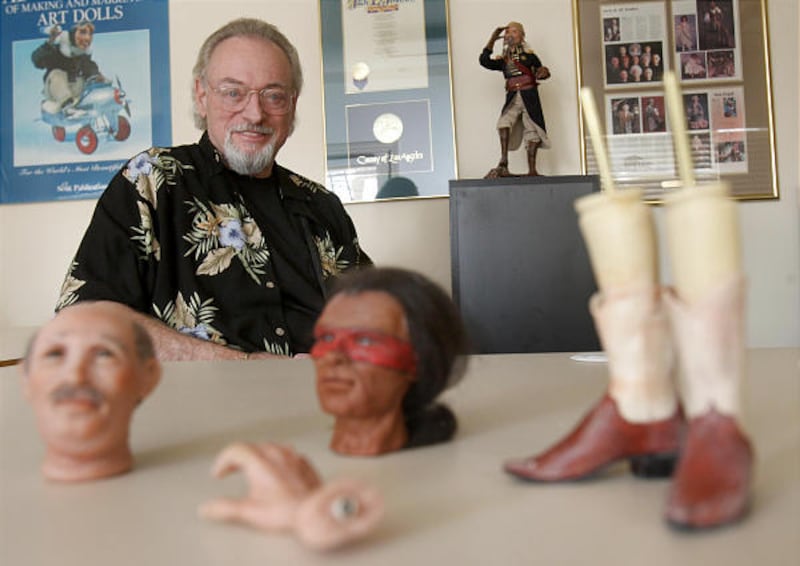
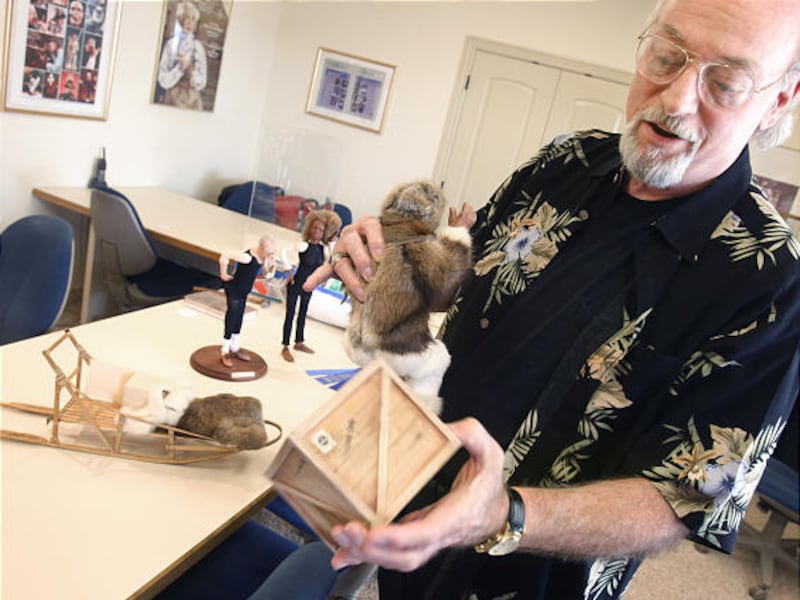
Some 18 years later, Johnston has risen from an unknown to one of the doll-making industry's brightest stars. He is passionate not only about making dolls himself but also teaching others how to do it. He has formed a nonprofit guild for professional doll makers. He has developed a polymer clay that has revolutionized the industry.
For those achievements, and others, Johnston has been named as the 2008 recipient of the Crystal Award for Industry Leadership, sponsored by Jones Publishing Inc. and considered the highest honor in the doll-making world.
He does feel honored to get the award, not only for what it represents in the industry but also for what it represents in his life. "Making dolls has taken me in great directions," he says.
He hardly could imagine what that journey would be when he made his first doll.
Johnston did graduate from Brigham Young University with a degree in fine arts before he spent 25 years as a marketer in the resort industry. He did spend a lot of time as a boy studying the illustrations of Norman Rockwell and drawing similar characters. But dolls were a whole new world.
"When I decided to make a doll for my wife, I got a magazine that told how to do it. That first one turned out pretty good, so I decided to make some more. I took them to a craft show and they sold."
One of the first people to buy his dolls was Paula Hawkins, then a senator from Florida. "She wanted 18 of the Santas." That commission earned him "enough money to get by. I realized that maybe I could make a living making dolls. I started doing it, and I've never stopped."
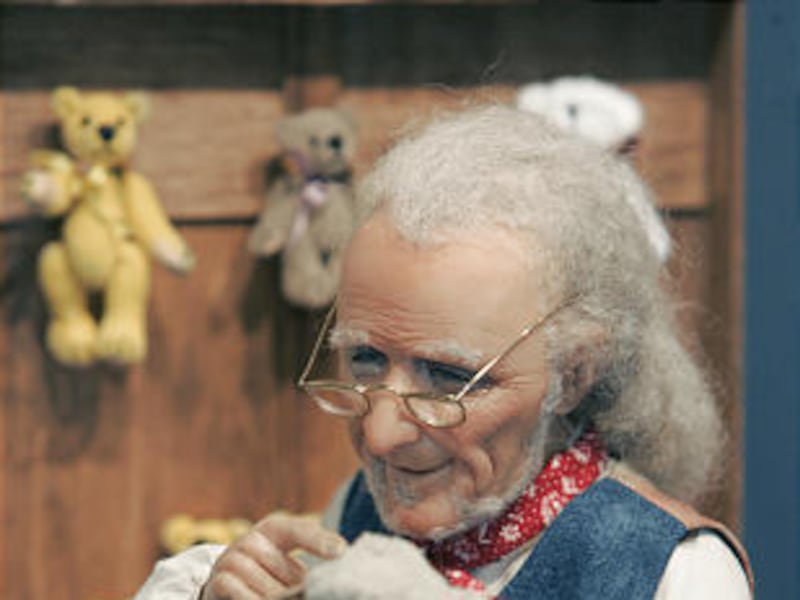
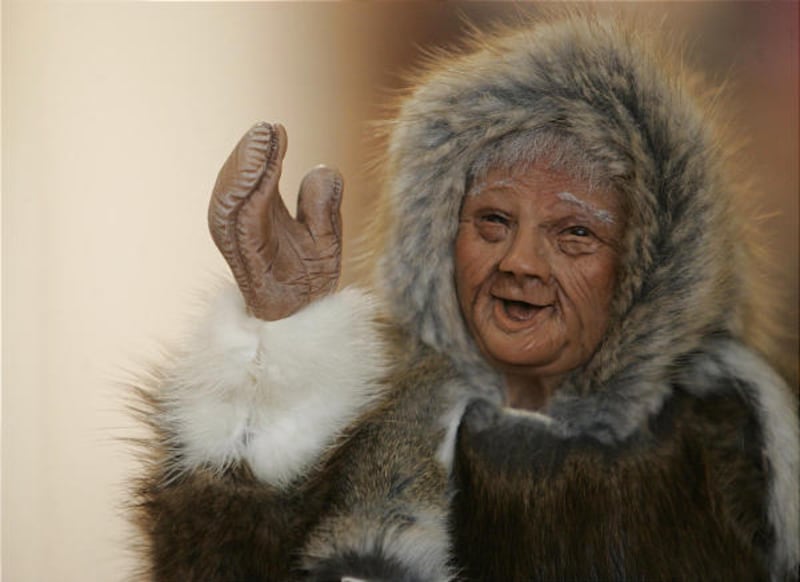
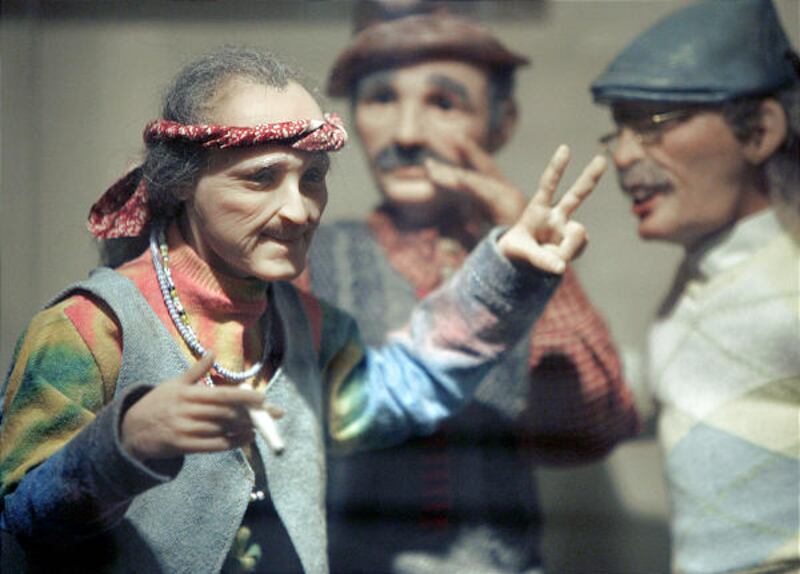
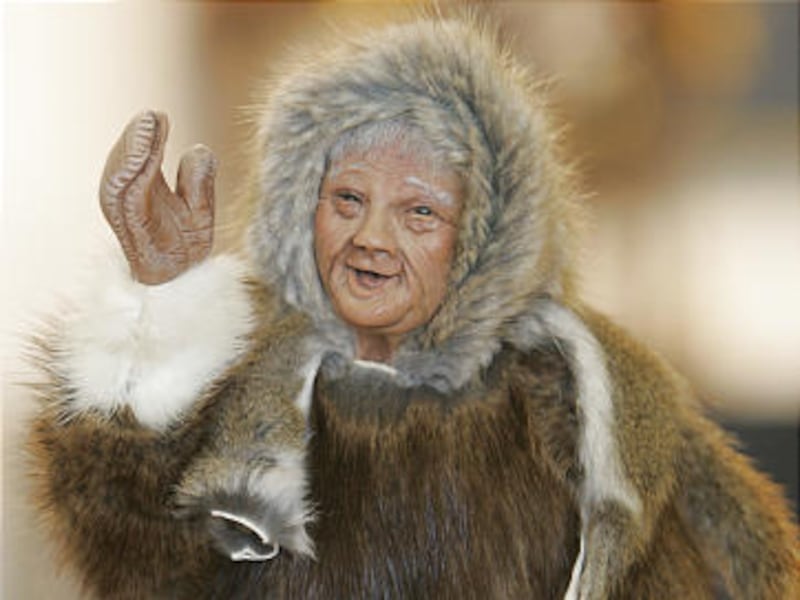
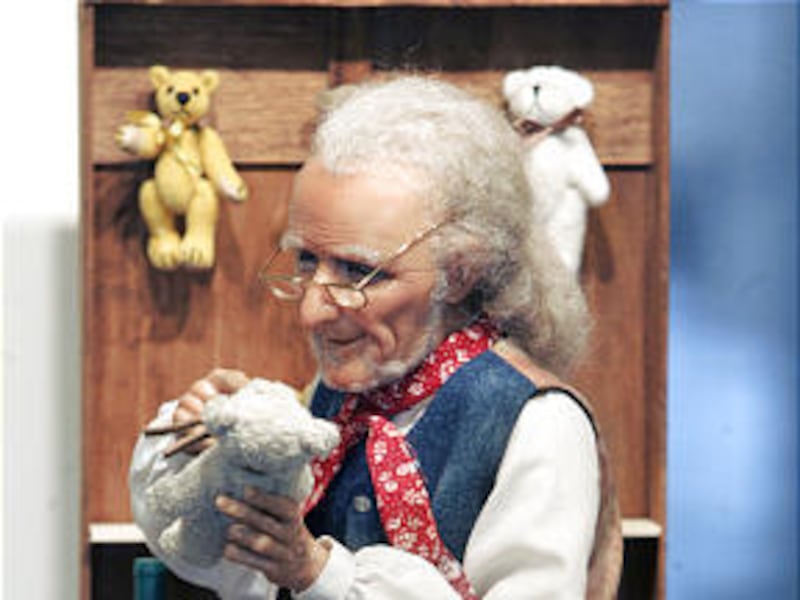
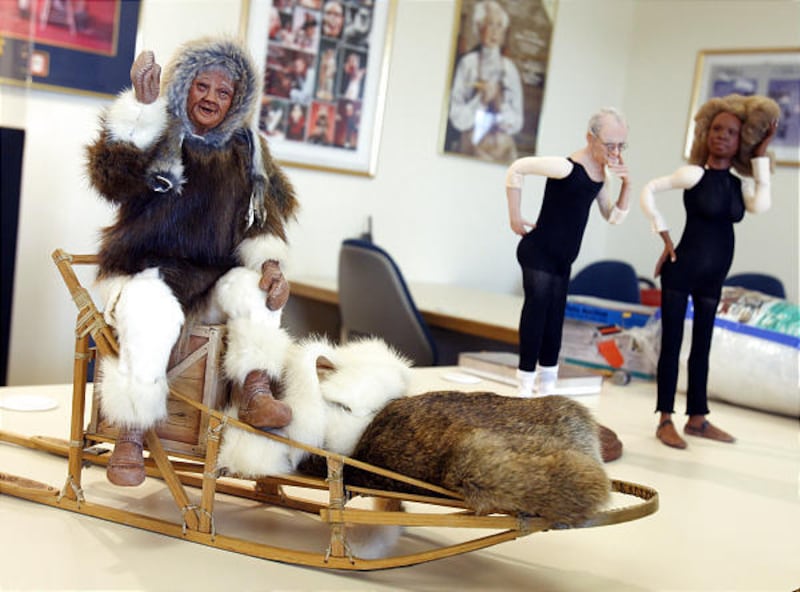
His first dolls were Santas, but he has since branched out into all kinds of character dolls. Artdolls, he calls them. There are violin players and cowboys. There are aviators and warriors. There are Victorian ladies and fishermen. There are Inuit sledders and teddy bear-makers. He was asked by Bob Marley's mother to make a doll of her late son.
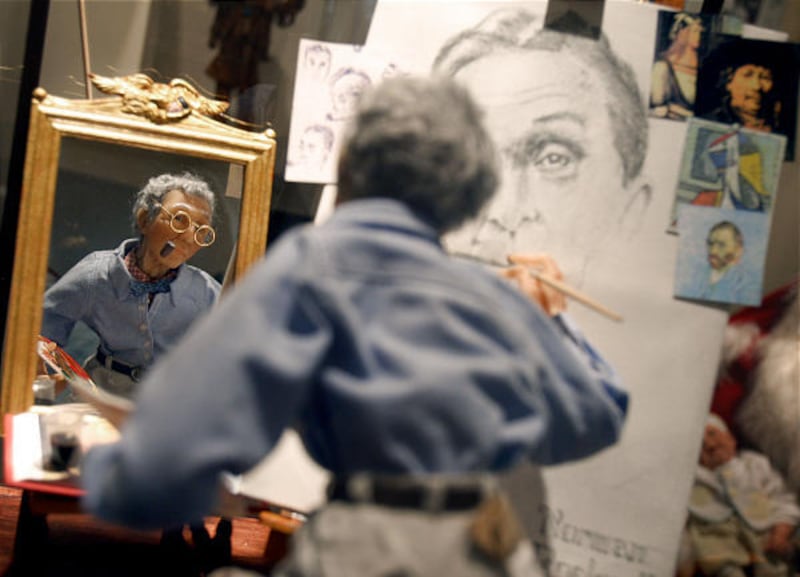
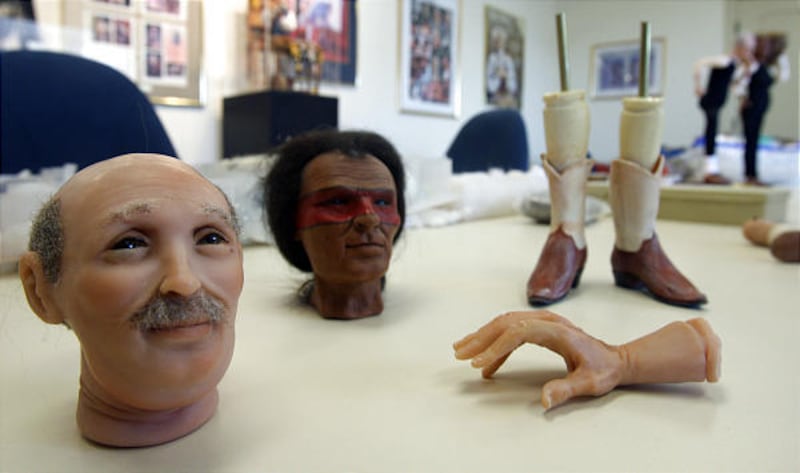
His dolls are made of polymer clay with cloth body and fabric clothes. But he sometimes includes more than just the doll. A vignette with Mark Twain sitting in his home office is now in the Enchanted Mansion Museum in Baton Rouge, La. A vignette with Abraham Lincoln talking with a freed slave boy holding an American flag was done for Sen. Orrin Hatch, R-Utah, and now sits in the Senate chambers in Washington, D.C. A "Norman Rockwell Triple Self Portrait" that recreates the Rockwell illustration of the artist looking in a mirror to paint his own picture is now in the Franklin Mint Gallery in Philadelphia, and was reproduced and sold as a limited edition by Franklin Mint.
"Attention to detail is what makes my dolls work," he says. "I tell my students that three things make a successful doll: It has to be gestured. It has to be good quality. And it needs exquisite detail. Detail makes all the difference in the world."
Faces are his favorite thing to work on. "They are not hard to do," he says. "Ears and hands are the hardest. The first year, I couldn't do hands, so all my dolls wore mittens."
The fact that they were Santas helped, he jokes. "But I realized that if I ever wanted to get to the next level, I had to make good hands. I don't think I was any good until I got to about my 150th pair."
Johnston's dolls, which are for collectors, not for play, typically sell for thousands of dollars. Doll collecting is huge these days. "Everyone has something they like to collect," he says, "for a lot of people, it happens to be dolls." They like the whimsey. They like the memories of childhood. They like the artistry.
"Every household has some kind of doll," he says, "but there are maybe half-a-million to a million serious collectors out there."
Many collectors have varied collections, "but there's one guy that has about 30 of my dolls. He has a room dedicated to Jack Johnston dolls."
Some of his dolls are also sold as prototypes to doll manufacturers, who then reproduce and sell the dolls.
Early on in his doll-making career Johnston discovered he had an affinity for and an enjoyment of teaching. "I travel around America teaching classes. I visit every state every year." He's on the road about 250 days a year, teaching and attending toy and craft fairs. He offers sessions at his North Salt Lake studio about four times a year.
He has also written six books and produced 11 DVDs. "That was a real need in this industry," he says. It didn't take him long to discover that the industry needs a couple of other things.
One was a better polymer clay. "None was being made just for dolls," he said. In earlier years, porcelain was the material of choice for doll makers. But it has some disadvantages, not the least of which is that it has to be fired in a kiln, and that can be very expensive.
Polymer clay, which can be cured in your household oven, has been around since 1938 when it was used in Yugoslavia to make helmets, he said. It has been used in doll-making since the late 1980s. But that clay was white and had to be painted.
Johnston got with a chemist and came up with a clay in four flesh-colored variations. "We made a thousand pounds, and it sold out in two weeks. We now produce about 24,000 pounds of ProSculpt clay a year." The clay is manufactured in Chicago, and sells around the world, he says.
Johnston also realized that there was a need for a professional doll-making organization that could act as an educational and promotional group, as well as encourage certain standards of doll-making. He founded the Professional Doll Makers Art Guild, which today is the largest guild in the United States.
Sharing expertise and experience in this way and in the classroom has been very gratifying for him, Johnston says. Several of his students have gone on to great heights in the industry. He taught Marie Osmond. Other names that will be recognized in the doll world, he says, are Mark Dennis and Reva Schick.
But one of his favorite experiences was in Canada's northern-most province, teaching Inuit elders how to make dolls. "The culture had been making dolls for thousands of years, but they had been using such things as ivory and seal skin, and those things are no longer allowed. They were basically living in a welfare state because the government had to subsidize their living. But if they could learn to make dolls with modern materials, they could again earn money."
When he first stepped off the plane into minus 3 degree weather, Johnston wondered what he was doing. But it turned out to be a wonderful experience, he says. "I taught 15 Inuit elders, and they taught other members of the tribe. They are doing fairly well, I've heard, and the economy is changing."
Those are the things that make him feel like he is giving something back.
Sculpting dolls can be very rewarding, he says. "Making the dolls come to life and tell a story is the challenge of all doll makers. It is tremendously rewarding to see your dreams come to fruition with the completion of a doll."
But, he adds, "The satisfaction of seeing one of my students achieve greatly in the doll world is as much of a thrill as doing it myself."
E-mail: carma@desnews.com