

If you have the feeling this year's presidential political campaigns are missing something, you're right.
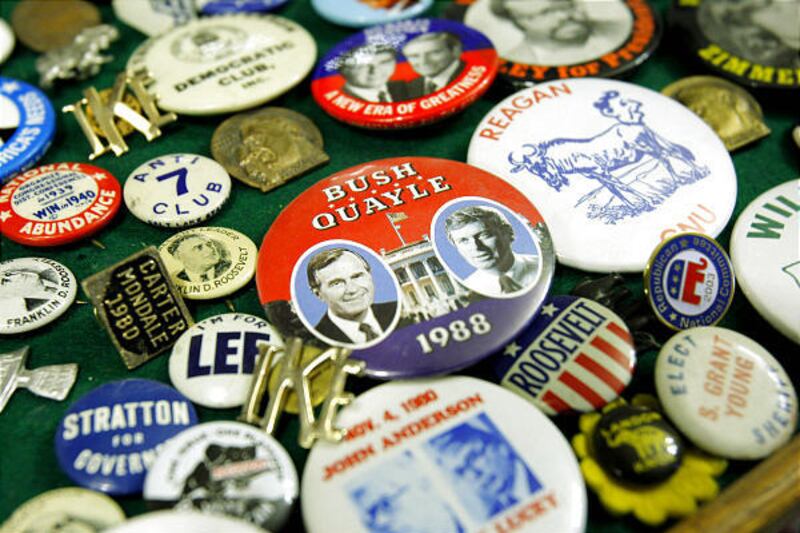
While there hasn't been a shortage of campaign bumper stickers this year boasting support for Mitt, Mac, Barack or Hillary, campaign buttons for the respective candidates have been much harder to find, despite their long history and tradition.
The button is not only a durable and versatile means of showing support for a candidate, it has also proven to be a popular collector's item. But budget restraints brought on by campaign finance reforms are making the buttons — once mass produced in the millions — go the way of the whistlestop speech from a train caboose.
"If you can only spend 'X' number of dollars, instead of buying buttons you want to buy as many television ads as possible," said Ron Wade, a long-time Texas campaign memorabilia collector and dealer.
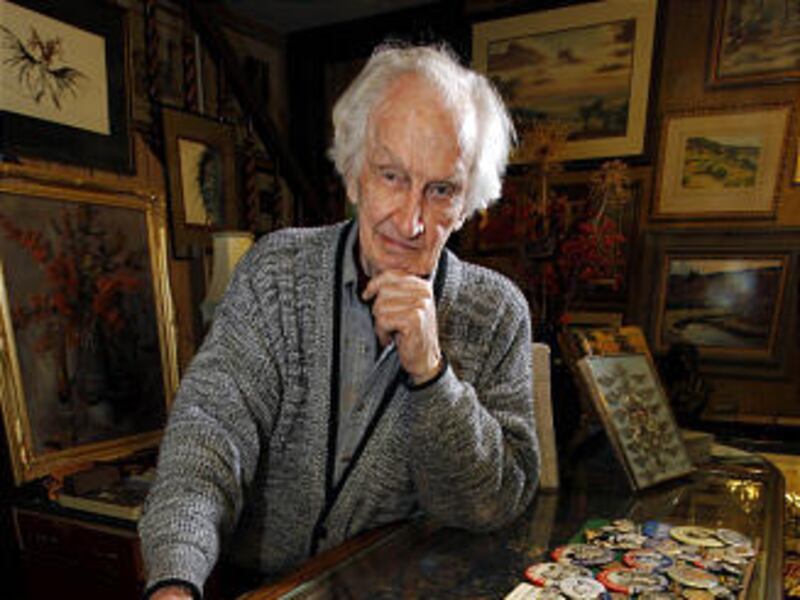
Nyal Anderson, owner of the Beehive Collectors Gallery at 368 E. 300 South, said buttons are always on the brain during campaign season and are always good sellers. He has a list of 20 to 30 people he calls — mostly history buffs interested in politics — looking for specific items to add to their collections whenever new items come in.
"People like to own a bit of history that they can hold in their hand," he said. "During an election year, they pay more attention to what they want to get."
Most buttons produced for this year's campaigns are made for profit, instead of promotion — and that's good news for collectors, Wade said.
Former President Richard Nixon paid for tens of millions of buttons to be made. Consequently, they're still quite common and aren't worth more than a couple dollars. But when party activists have to pay out of pocket to create a "California for Obama" button, only a few thousand are created, thereby increasing the likelihood that they'll be collectible, he said.
Wade runs the Web site www.ronwadebuttons.com, where he not only buys and sells collectible buttons but also designs and makes them himself. At his site and others like buttonsonline.com and campaignbuttons-etc.com, shoppers can look through dozens of designs and buy a single button for $3 or $4 or order 1,000 or more for about 20 to 30 cents each.
"Supporters of campaigns will not be denied," Wade laughed.
This year Barack Obama is the top seller by far, and Wade said he can't seem to make enough of them.
Local campaigns are able to diversify their spending more and are more likely to use buttons.
Salt Lake businessman Gregg Chamberlain has been making buttons for campaigns for years. Last year he donated 3,000 to Ralph Becker's mayoral bid. Most candidates do order more stickers, he admitted. Even in large orders, buttons are still a lot more expensive than stickers costing 13 cents to produce.
Even if they hadn't been donated, the Becker campaign would have used some buttons, said David Everitt, Becker's campaign manager and current chief of staff.
"Nothing beats them for durability. Besides, they're links to campaigns of the past. What marks a campaign is its buttons," he said.
The fervor with which supporters wear a campaign button is what determines its success, he added. He said he was pleased to see Becker buttons in a variety of settings from early on, including on dog collars.
At the national level, most candidates have an authorized vendor of merchandise so they can control their image, but they never see a dime of the proceeds. Campaign merchandise has become big money — if one can reach the right market on time. People make a living following candidates around hawking buttons and other items to supporters, Wade said.
According to an article on campaign buttons in The Contemporary Review from 2000, the stickers that are in vogue now have been used since their debut in the 1952 election. Once again, it was Nixon who helped them catch on by producing 9 million buttons.
Before modern campaign finance restrictions were implemented, candidates often accepted unrecorded donations, said Tim Chambless, professor of political science at the University of Utah. Nixon often received money in "brown paper bags," making his war chest deep and untraceable. Consequently, Nixon was able to spend millions on things like buttons and stickers — especially in 1972.
"He really pushed the limits," Chambless said.
Television ads debuted in 1952, ratcheting up the price of campaigns. Before television, objects like buttons were a favorite method for spreading a message.
According to an article by Wade on About.com, the first and most famous use of memorabilia was the "log cabin campaign" of William Henry Harrison in 1840. The idea of a candidate being born in a log cabin (although untrue) was so popular that someone loaded a cabin onto a train car and carried it around with the candidate as a prop. The image became so connected with Harrison that all kinds of objects, including primitive buttons, were produced with a picture of a log cabin to promote the campaign. They were so prevalent that collectors can still find many today — almost 170 years later.
The rarest buttons and merchandise are those from the James Cox candidacy of 1920 against Warren G. Harding. Cox supported the post-World War I internationalist policies of Woodrow Wilson, which were so unpopular that Cox's candidacy was deemed lost before it began. Consequently, very little money was spent. Today, Cox buttons sell for between $35,000 to $100,000, Wade said.
The idea of using buttons to support candidates began with George Washington. Originally, brass coat buttons commemorating important events were common in the military. Because Washington was a military man, he had several made for his first inauguration, the most famous of which read, "G.W. — Long Live the President." The next president to have buttons worn in support was Andrew Jackson, another military hero. A few years later, Harrison's campaign kicked off the widespread use of memorabilia.
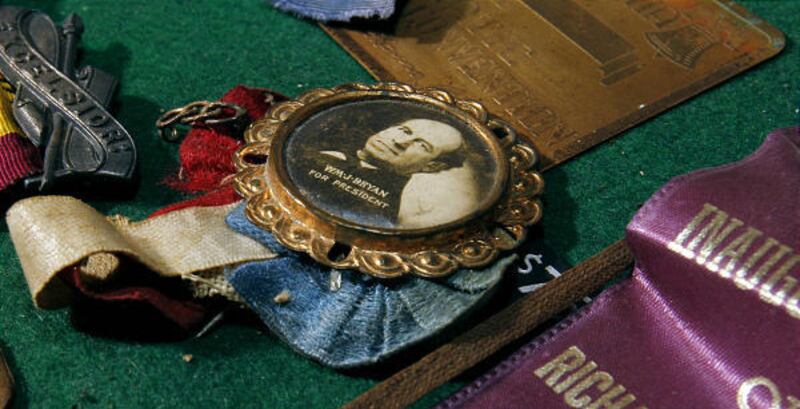
The first "buttons" with real pictures were tintypes of Lincoln, available because of innovations in photography. These were metal pictures punched with a hole to be worn with a ribbon. The invention of the modern button by the Whitehead and Hoag Co. in 1894 made buttons as we know them today available for the 1896 campaign of William McKinley against William Jennings Bryan.
The Whitehead and Hoag design had four parts: a metal front and back, a piece of paper sporting the image, and a layer of celluloid over the top. The 1896 election proved a springboard, bringing the modern button into popular culture and making it the icon it is today. A faster, cheaper version was developed in the 1920s that was one piece of lithographed metal with only one or two colors. Thousands could be made at one time out of one sheet of stamped metal. The range of colors and designs possible with the four-piece version was more popular, however, and plastic replaced the celluloid in the 1960s, making them safer.
The Daughters of the Utah Pioneers Museum has two 1896 Bryan buttons and one of McKinley on display on the main floor. It also has four 1896 women's suffrage buttons featuring photographs of Lucretia Mott, Elizabeth Cady Stanton, Anna Howard Shaw and Susan B. Anthony. They were donated by Zina Young Card, a leader of the Utah suffrage movement.
E-mail: akirk@desnews.com