



At an age when most major league prospects are either under contract or preparing for another year of college, one promising pitcher left Brigham Young University, entered the Missionary Training Center and shut out baseball.
He didn't take a glove. He didn't do one push-up. And for two years, he didn't throw a baseball.
In fact, Jeremy Guthrie never talked about the sport, or the fact
that his talent made a professional baseball career a real possibility.
The only people who knew were his mission president and a companion who
found out through other means.
Yet just two months after Guthrie returned home from Spain in
2000, the velocity on his pitches had returned to pre-mission levels.
\"I was being blessed,\" he said. \"It wasn't anything I could have planned for.\"
Once he accepted a mission call, the only definitive plans
Guthrie could make concerned how he would serve. The same was true for
Matt Lindstrom, a Ricks College pitcher who went on a mission to
Sweden. The decision to become a missionary for The Church of Jesus
Christ of Latter-day Saints left Guthrie and Lindstrom, like so many
other major league hopefuls, without any guarantees in a profession
where such service is often viewed with wariness. But both men are now
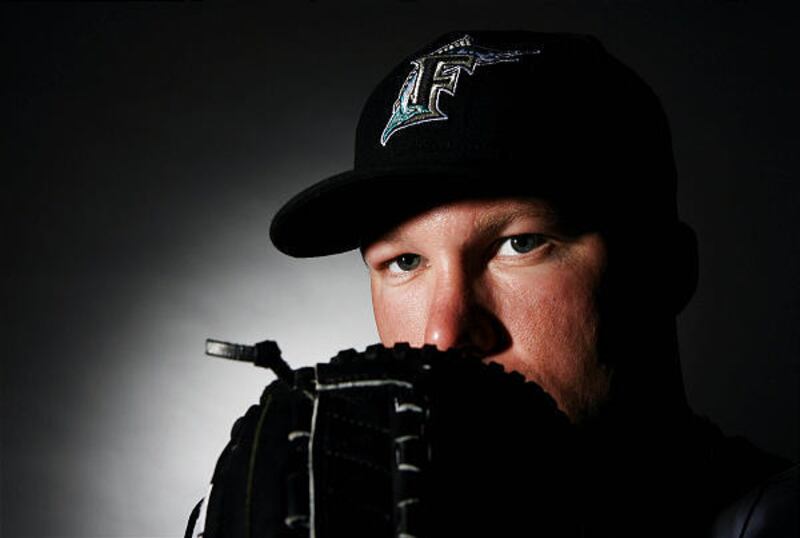
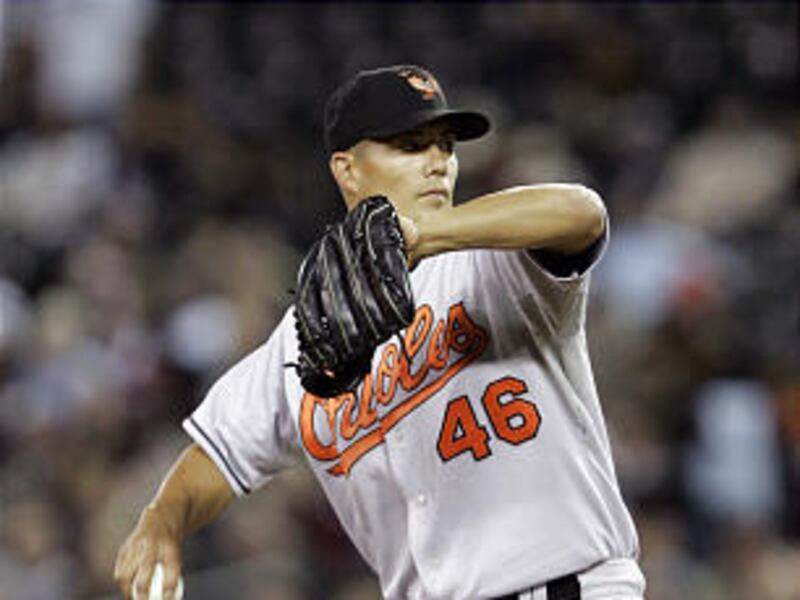
established major league players — Guthrie with the Baltimore Orioles
and Lindstrom with the Florida Marlins — and despite the inherent
challenges, both reflect on their decision and experiences with
grattitude and conviction.
When Guthrie left Ashland, Ore., in 1997 for Provo, Utah, he had been
on the radar of baseball scouts for some time. The New York Mets
selected him out of high school in the 15th round of the first-year
player draft.But the goal to serve a mission was already in place, and Guthrie
joined the BYU baseball program in part because it would allow him to
reach that objective.
According to his former coach at BYU, Gary Pullins, Guthrie's story is
typical of most players who serve missions. The decision usually comes
before the player steps on campus and has its roots in the home.
\"I think Jeremy knew even before he enrolled in college that he
was going to serve a mission,\" said Pullins, who led the BYU program
from 1977-99. \"Most of the players who go knew they were going to serve
a mission before they enrolled in school.\"
But Guthrie, a pitcher who Pullins said was \"oozing\" with talent,
started having opinions, at times unsolicited, thrown at him — some
advising him to consider baseball as his mission and some saying the
professional opportunity was too good to pass up. Guthrie held firm,
however, and said he received confirmation that a mission was the right
choice.
\"The goal was set prior to having to make the decision,\" Guthrie
said. \"I think what made it most difficult was a lot of feedback from
numerous people ... getting different opinions.
\"Ultimately, when I did make the decision ... I obviously felt very good about the decision and relieved.\"
Although Lindstrom wasn't drafted out of Madison High School in
Rexburg, Idaho, he did receive correspondence from major league clubs.
But like Guthrie, his resolve to serve had already been solidified, and
he informed those teams not to bother.
\"I told them, 'don't draft me because I'm not interested in playing until after my mission,\"' Lindstrom said.
Lindstrom did so knowing that the decision might adversely affect
his prospects in professional baseball. He was well aware of the fact
that the mission field was a long way from a major league career.
\"It didn't seem like it was going to happen because that route is odd and it doesn't happen very often,\" he said.
Lindstrom's conviction was the product of observance. When he was
12, his father began serving as a priest quorum adviser, and Lindstrom
watched those young men go on to serve missions and return as changed
individuals.
\"That kind of inspired me,\" he said. \"I wanted to be like those guys.\"
Even after a promising freshman season at Ricks College, where
the small-town product was able to bask in a little attention,
Lindstrom left for Stockholm, Sweden, to serve a full-time mission.
\"I knew I wanted to do that,\" he said. \"I'm grateful that I chose to do that.\"
LINDSTROM DESCRIBED HIS mission experience as \"irreplaceable.\" He
credits his service with helping him develop relationships and people
skills, and the fact that he was sent to the land of his ancestors was
a bonus.
\"That made it even more exciting to go over there and teach the people,\" he said. \"That's my heritage.\"
Guthrie said the work in Spain was difficult. He wasn't able to
teach as often as he would have liked, but the scarcity of listening
ears taught Guthrie humility and reliance upon gospel principles, which
in turn strengthened his own beliefs.
\"It made us realize that sometimes all you can do is pray and
have faith and work as hard as you can ... and hope for miracles,\" he
said. \"Obviously I grew in testimony and conviction of the gospel.\"
For Guthrie, his mission was an opportunity to take a two-year
hiatus from personal concerns. Being able to focus on others was a
respite.
\"That's something I don't think you can duplicate,\" he said. \"All
you're expected to do is go out and find people and teach them by the
spirit.\"
Upon their returns to the United States, both men found the shift
from outward to inward focus to be one of the most difficult
transitions.
\"Those two years, you're so unselfish,\" Lindstrom said.
But because Guthrie and Lindstrom both returned with promising
right arms intact, baseball was waiting for them, and it was time to
start focusing on the game they left behind.
The two men maintained similar perspectives on their future.
Guthrie returned 20 pounds lighter and with no expectations when
it came to his athletic career. But his ability quickly returned, which
he counts as a blessing. Guthrie resumed his career at Stanford
University in the fall of 2000, and the following year he married Jenny
Williams, whom he met at BYU and wrote to throughout his mission.
Lindstrom knew that most baseball organizations prefer to mold
young talent. Despite the personal growth he experienced on his
mission, in the eyes of scouts and general managers, he was behind.
\"I didn't really think it was going to happen,\" said Lindstrom,
who simply decided to resume his career at Ricks and see where it took
him. He said he came home \"throwing garbage\" — pitches that topped out
at a mere 85 miles per hour — but Lindstrom began lifting weights and,
like Guthrie, rediscovered his game.
At that point, both players faced the challenge of convincing
clubs that their service hadn't compromised their future, a difficult
task considering the long-standing baseball mind-set regarding returned
missionaries, according to Pullins.
\"The biggest challenge has absolutely nothing to do with their
playing skills,\" Pullins said. \"It's the plain and simple fact that so
many organizations make the assumption that if they're willing to give
up baseball for two years ... they perceive that baseball may not be
important to them.
\"Some of the professional people give up on them ... It's more
making it up in the view of the professional baseball people than it is
on the field between the white lines.\"
AFTER PLAYING ONE more season at Ricks College, Lindstrom was
drafted in June 2002 by the Mets in the 10th round. He's now in his
second full season with the Marlins, living a hectic major league
schedule that includes playing night games, rushing home to do a load
of laundry and packing a suitcase for a road trip the following day.
\"It's worth it,\" he said. \"It's what I love to do.\"
Lindstrom caught a break when he was traded to the Marlins prior
to the 2007 season, after which he earned a spot in the bullpen, thanks
in part to a fastball that at times reaches 100 mph.
Ironically, despite the existing trepidation in baseball about
returned missionaries, Lindstrom's time in Sweden may have helped his
baseball development. He describes himself as a late-bloomer and said
that while other pitchers were putting mileage on their arms, he was
benefiting from the time off.
\"I wasn't banging up my arm for two years,\" said the now
28-year-old right-hander who struck out 62 batters in 67 innings while
walking just 21 last year. \"I had time to rest.\"
Guthrie didn't exactly rest while at Stanford, where he set a
school record by throwing 157.2 innings as a junior. An all-American,
Guthrie was drafted in the third round by the Pirates in 2001, but he
elected to remain with the Cardinal for one more season. The following
year, he was a first-round draft pick by the Indians.
Guthrie's breakthrough didn't come until last season, when he was
waived by Cleveland and claimed by Baltimore. After cracking the major
league roster as a reliever, Guthrie eventually became a starter and
put together a stellar rookie season, throwing 175.1 innings with a
3.70 ERA and a strikeout rate of 6.31 per nine innings.
\"It was a blessing that I never would have expected,\" said the
now 29-year-old right-hander about last season. \"It went better than I
ever could have hoped for.\"
Like Lindstrom, Guthrie found that his mission experience served
to improve his baseball performance. It's all a matter of keeping his
life in the proper perspective.
\"It allows me to approach baseball in a way that is, for me, more
conducive to my success,\" he said. \"It keeps everything in focus, which
allows me to enjoy baseball.
\"The conviction that I have and my testimony is an anchor I will always have.\"