

Never, in 70 years, has the message changed: Alta is for skiers. Even on a day when pomp and ceremony would have been expected, skiers came first.
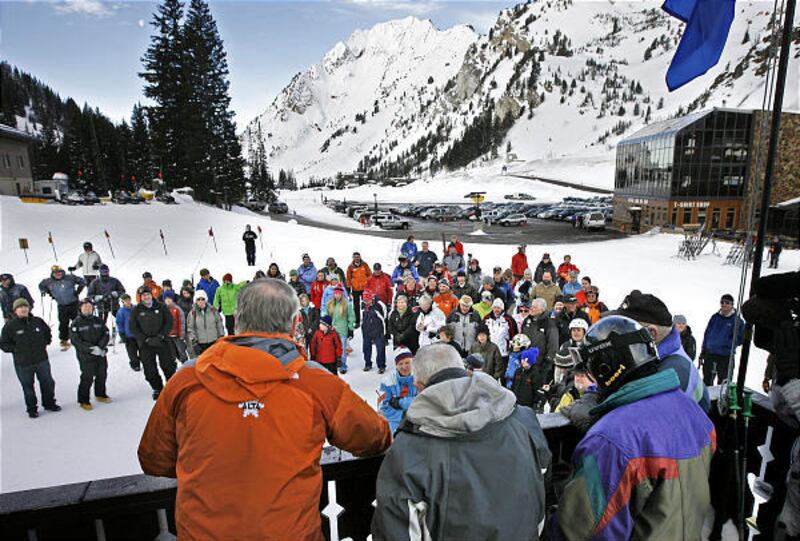
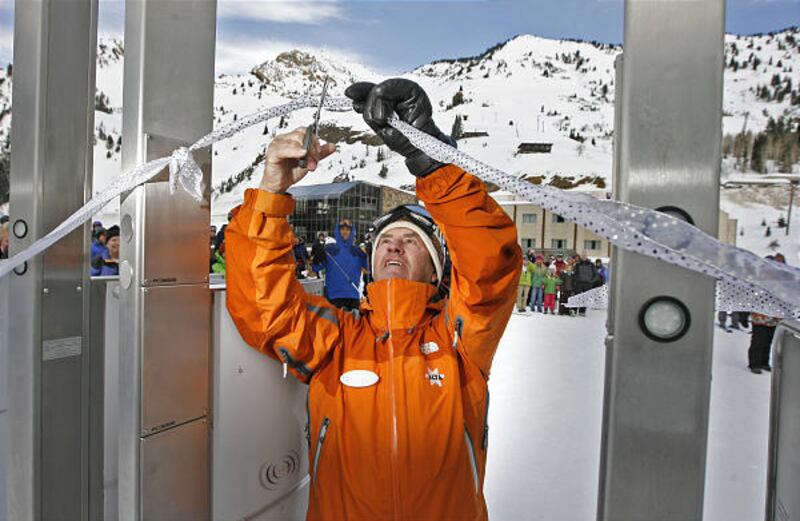
In celebration of Alta's 70th birthday, to the very day, speeches were kept short, thanks quickly given and, on time, ceremonies moved to the Collins Lift where a ribbon was cut and, on time, skiers began loading for the uphill ride. Just another ski day at Alta.
It was much the same back on Jan. 15, 1939. After much ado about faulty gears and pulleys and timber used to built the towers, skiers lined up and loaded onto what was then single chairs attached to a long cable.
It is believed that only one other ski resort in the world had a chair lift at the time. Sun Valley built the first two years earlier, copying a cable system used to unload banana boats. It replaced the hooks with chairs and ran it uphill.
And it was at this time the United States was in the grip of the Great Depression and the U.S. Forest Service was looking for projects for its Civilian Conservation Corps crews. One of those projects involved starting a ski area.
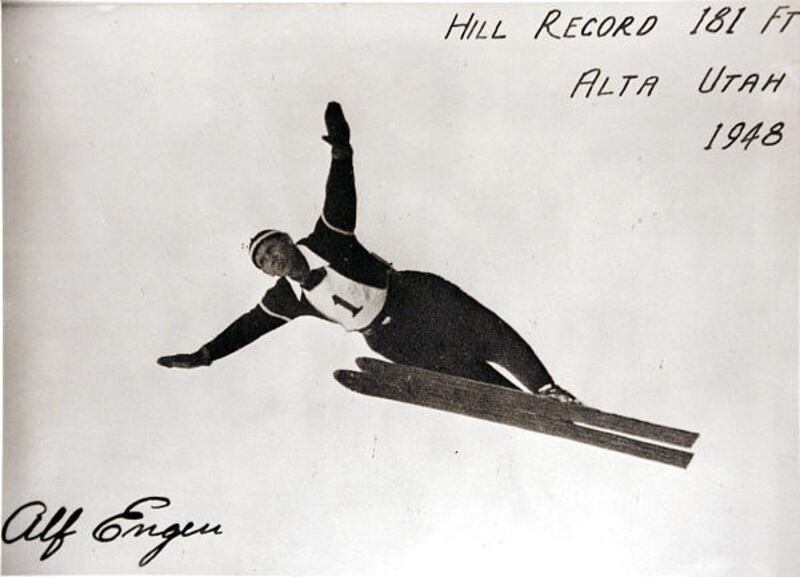
A forest service employee, Alf Engen, was familiar with the Utah mountains. Engen was a noted skier and went looking. On one particular day in 1935, he surveyed Big Cottonwood Canyon on cross country skis and then headed over Catherine Pass to Little Cottonwood Canyon and down into an area that is now the base of the Alta Ski Area. It was a barren area, stripped of its trees by miners to build buildings and mine timbers.
"He returned that summer to what he called a "dust bowl" of dismantled buildings and over-grazed mountain sides. But, past the dust and the rundown buildings and treeless mountains, he saw a ski resort — one that would become, he believed, one of the best.
It would, indeed, become one of the most recognized ski resorts in the world, known best for its bottomless powder and magnificent scenery.
"Dad said the area had the potential of becoming a fantastic ski area ... but there needed to be more trees to hold back the snow," recalled his son, Alan Engen.
Alf Engen would, in fact, lead one of the crews of CCC workers who would plant thousands of trees on the barren slopes. Engen would eventually return to Alta to run the ski school and would become one of the most respected and recognized skiers in the world.
Earlier, a young miner named George H. Watson, believing miners would return one day, began buying up old mining claims as mines were abandoned. The self-appointed mayor of this one-resident town would eventually sell, for the sum of $1, these deeds to the U.S. Forest Service for "recreational development."
The USFS then gave the Salt Lake Winter Sports Association, later to become the Alta Ski Lift Company, the go-ahead for the lift. The first uphill service at Alta was, in fact, a rope hooked to a tree about 100 yards uphill and then wrapped around the rear wheel of a Model A Ford. It was not an easy ride and was particularly hard on gloves.
When the idea of a lift came into play, the late Joe Quinney gathered together a group of Salt Lake City businessmen who started the company that put up the Collins Lift. Work began in the summer of 1938.
By November, the mountain and the skiers were ready, but the lift wasn't. Builders ran into all sorts of problems — cables, brakes, pulleys lining up, motors, gears. It wasn't deemed safe until the following January.
Early skiers also remember that the towers were too short and, in places, snow piled up over the cables. Deep trenches had to be dug so cables and chairs could move.
Occasionally, an unsuspecting skier would hook a tip in the deep snow and be thrown from his chair. Other times, cable brakes would fail and chairs and passengers would slide backward. Skiers learned to jump on these reverse rides, then return to the lift lines and patiently wait until all was repaired.
Skiers paid 15 cents a ride, or $1.50 a day, to sit down and be carried 2,630 feet up the mountain. That first year only 265 skiers took the adventure.
Back then, ski equipment, by today's standards, was also a bargain. For $5.95, a skier could buy flat-top hickory skis ($1 more for natural bases), $4.25 for leather boots, $1 for poles and $5.95 for Leggi Cable bindings, properly labeled "bear traps."
Runs in the early days were quick and usually involved few turns. Early skier reports said it was easy to get in 30 or more runs in a day — up the hill, straight run down and back in line.
Since the opening, reported Onno Wieringa, general manager, he figures more than 20 million skiers have taken the uphill ride to ski Alta.
They came to ski and skiing is what Alta offered.
His views follow those of early Alta legends in that "Alta is for skiers ... We call it a lift ticket, but I contend that what skiers are buying is skiing. The lift is just something to get them to what they are really buying — skiing."
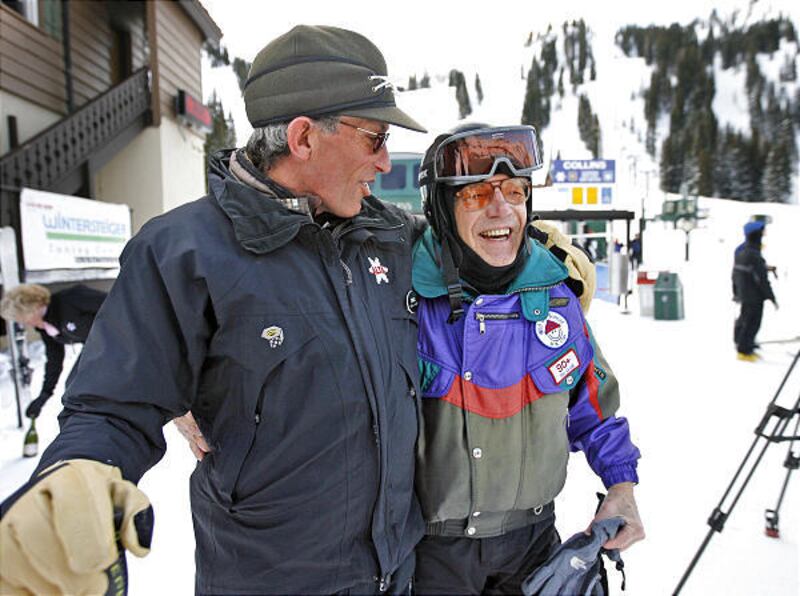
Which was the order of the day Thursday. About 100 people stood at the base, near the new Collins Lift. Most were in ski attire and ski boots, and were there to ski. Among them were members of the "Wild Old Bunch." Membership is limited to those skiers ages 70 and older. They meet twice a week at the base in Alf's Restaurant to share stories and then hit the slopes to rediscover the mountain for the umpteenth time.
Among them was Bob Murdoch, age 85. He believes he was among the first riders seven decades ago. He said he can't recall if it was exactly on the first day Alta opened, "but if it wasn't, it was soon after."
Three senior members — Al Kessler, George Jedenoff and Russ Stedden — are all members of the 90-plus group, with Jedenoff being the oldest at 96. They each listened impatiently to the speeches. After, Kessler and Jedenoff stepped into the Collins Lift line and went skiing. Stedden hopes to get back on skis this winter.
Jedenoff expressed the feelings of his two senior companions when he said he's skied, in his lifetime, 46 different resorts, "and Alta is the best."
Another member, Lorin Bullock, said he sold his business in Indiana in 1976 and moved to Salt Lake City, "to ski and be close to Alta."
There is, as evident on the 70th anniversary, a bond between the mountain and its skiers. There are no frills. Nothing too fancy. Skiing comes first and whatever is second can wait until the runs are over and the ski boots are off, which is what makes its skiers clutch to the area like an extended family.