


The situation was almost Shakespearean.
Two families from Afghanistan, friendly until two of the offspring fell in love and got engaged. Arguments and threats abounded until one brother, a father of two, was killed.
Emotions ran high in the courtroom of 3rd District Judge Randall Skanchy Monday as both families, separated by an aisle and a court bailiff, sat and awaited some justice.
For the Rahimi family, the death of Farhad A. Mullahkhel is in the past and must be let go. It wasn't a murder, they say. It was the culmination of fear provoked by threats and two violent deaths in their family's past.
For the Mullahkhel family, the death was cold-blooded murder — something that had been promised if their daughter ever left Nazir Rahimi. It left them devastated and has all but destroyed their family's patriarch.
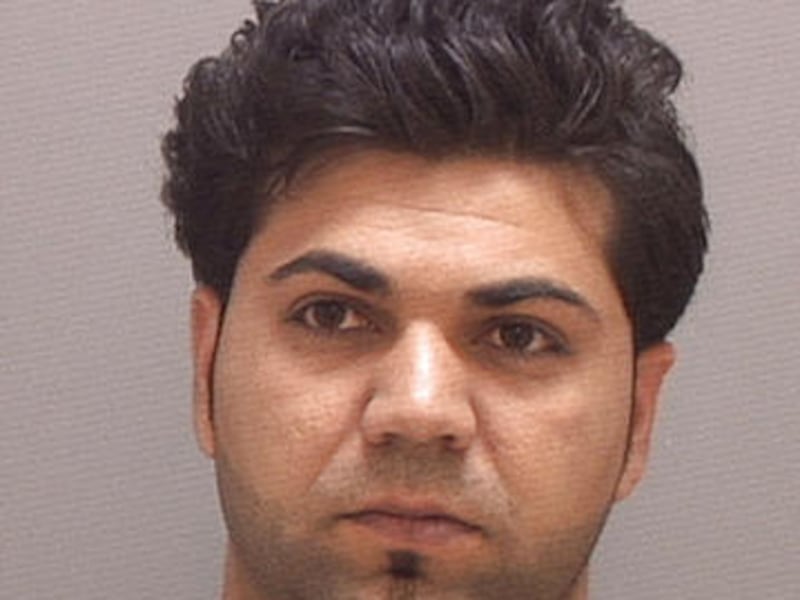
Rahimi was ordered to serve a zero-to-five-year prison sentence for the slaying and pay $8,000 in restitution.
No one disputes that on April 20, 2008, Rahimi, 27, stabbed and killed Mullahkhel, 19, following a bloody brawl that began at Rahimi's family home in Murray. But there is some dispute as to why. Member after member of Mullahkhel's family stood and openly wept as they talked of the loss of their relative and friend.
His father, Omar Mullahkhel, said time has not healed his loss or his wounds. He said he can't even express how the death of his son has ruined him.
"I feel I am a broken man," he said, speaking through constant tears. "I cannot find solace for my pain. (Farhad) was the joy of my life."
The emotions of the victim's sister, Bilqis, rose as she spoke until she prompted audible sobs in the courtroom benches. She said she listens to her mother cry for her brother "every day and night." She said her father has changed, adding that "happiness no longer lives inside of him."
She, like the others, said she hopes there is no mercy and no solace for Rahimi. She believes the doors of heaven will never open to him. Another brother, Abdul, swore his family would never forgive and never forget.
The sister who had been engaged to Rahimi, Nargis Mullahkhel, said he had threatened her life and the life of her brother. She said the slaying of her brother was the fulfillment of a vow Rahimi made to her.
"He said, 'If you ever leave me, I will take the life of your brother,' the one he knew I loved the most," she said.
Rahimi was initially charged with murder, a first-degree felony, following Farhad Mullahkhel's death, but later pleaded guilty to criminal homicide by assault, a third-degree felony. With that change, the amount of prison time he faced dropped from a potential life sentence to a maximum sentence of five years.
This change was possible, according to Rahimi's attorney, Ron Yengich, because Rahimi was not a heartless killer who pursued Farhad Mullahkhel out of hate and ego, as was described by the Mullahkhel family.
The night Farhad Mullahkhel was killed, he burst into Rahimi's home as Rahimi slept, joined by at least four others and armed with knives, Yengich said. He said although Rahimi was called a wolf in sheep's clothing in court Tuesday, Yengich warned that a wolf should never bite another wolf, suggesting the Mullahkhel family wasn't as innocent as they claimed to be. They say they went to the home of Rahimi to retrieve Nargis Mullahkhel's cell phone as the pair had broken off their engagement. Farhad Mullahkhel was stabbed as he fled Rahimi's home.
His voice a near-shout, Yengich stood in court and accused the Mullahkhel family of lying about his client and shirking the blame for their part in what he described as a vicious feud that lasted more than a year. He gave a detailed account of threats and attacks made by the Mullahkhel family against Rahimi and his family, starting when Nargis Mullahkhel and Rahimi started dating in January 2007.
Yengich said there are documents and records to show the Rahimi family was attacked outside of a mosque and told their house was going to be burned down by the Mullahkhel family. He said there is even evidence that they tried to hire a hit man to kill Rahimi for $10,000.
"Facts are facts and lies are lies," Yengich said. He pointed at the Mullahkhels on one side of the courtroom as he said, "The inability to take responsibility is in this family."
Yengich said when Rahimi was a young boy in Afghanistan, his two brothers were gunned down by Islamic extremists in his own home. And when Farhad Mullahkhel entered his home on the night of April 20, 2008, he feared they would hurt his family.
When given his chance to speak in court, Rahimi also cried almost hysterically as he asked for forgiveness for himself and his family. He said he didn't know what was happening that night, but he never hurt anyone before that day.
"I never harmed anybody," he said. "I never hurt anybody, ever. My brother was bleeding, I thought my brother was dead. They came with a knife. … I never meant to kill (Farhad)."
e-mail: emorgan@desnews.com