

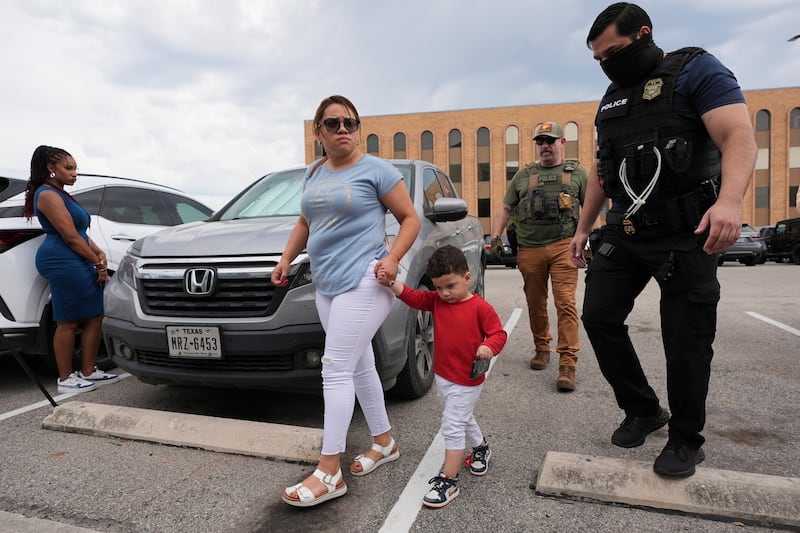

A report issued last week by the Brookings Institution has sparked deepening concern about what happens to children whose parents are among the 400,000 immigrants detained during the expanded immigration enforcement over the last year and a half.
The report analyzes detention data from the first 10 months of 2025. The Deseret News answers larger questions arising from the report’s findings.
1. How many children have been separated from their parents?
According to official government figures from the Department of Homeland Security, a total of 18,277 parents were detained in 2025 — connected with 60,000 U.S.-born children.
That figure is significantly higher than the 5,500 children who were separated from parents immediately upon crossing the border, during the first Trump administration in 2018.
Critiques of family separations during immigration enforcement were also raised under former President Barack Obama and former President Joe Biden, although at a much smaller scale.
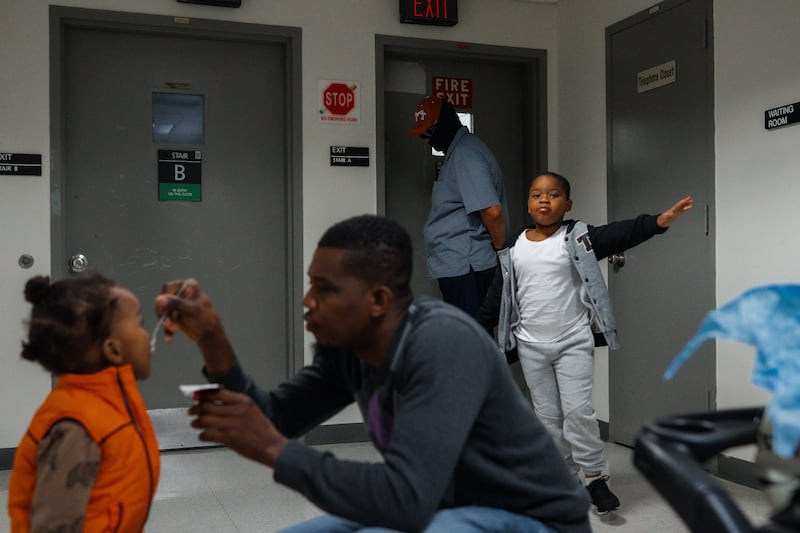
The Brookings report suggests that current government figures significantly undercount what’s taking place, according to study author Tara Watson, director of Center for Economic Security and Opportunity in the Brookings Economic Studies program.
Bringing together data from multiple sources — including the Census Bureau, Immigration and Customs Enforcement arrests, and the American Community Survey — Watson joined colleagues at Georgetown University and the University of Wisconsin-Madison in estimating how many people detained were likely parents based on their sex, age, nationality and whether they were married.
Based on that analysis, they estimated 27% of detainees were parents, with as many as 205,000 children having had a parent detained. That includes 145,000 children who are citizens, 22,000 of whom had both parents detained.
The report found that states farthest north from the southern border had the lowest level of parental separations. With an estimated 2.66 children affected per 1,000 people, the report suggests that 9,400 children in Utah have experienced some period of separation from a detained parent.
2. What are the most common circumstances where a parent-child separation is taking place?
In a small minority of cases, family separation may occur when children themselves are detained (1% of detainees, or 2,112 youth, were estimated to be under age 18).
By far, most separations happen when one or both parents are arrested and subsequently often detained by Immigration and Customs Enforcement officials.

That detention can range from a matter of hours or days to many months — and in some cases more than a year. In a minority of cases, Watson said, parents can be released to return home.
But at some point, deportation proceedings more likely take place, including when parents have children. A ProPublica analysis of the first seven months of 2025 found 60% of detained mothers of U.S. citizen children were deported, 17% remained detained and 24% were released.
3. What are the ages of children being separated?
Among the estimated 146,635 U.S citizen children who have had a parent detained, the researchers estimated age groupings as follows:
- 37% are under age 6 (53,480 children)
- 36% are between 6 and 12 years old (52,910 children)
- 27% are between 13 and 17 years old (40,245 children)
4. How do parental separations impact these children?
Extensive research literature documents a heightened risk of mental health challenges and different kinds of abuse when children experience any kind of separation from biological parents, whether from detention, incarceration, death or divorce.
“Separation is likely to be a traumatic event even if short-lived,” researchers note.
“There’s a huge psychological trauma associated with being separated from a parent, even for a short time,” Watson elaborated, “but especially, for a long or semi-permanent time, especially in this unexpected way.”
The New York Times reports on a 3-year-old whose mother, Samantha Lopez, was detained by ICE after a traffic stop as she was driving to her restaurant job.
Despite telling the agent she had a young child, this young mother was separated from her daughter. “When our daughter talks to her mom,” the father said, “she listens attentively and then starts to cry.”
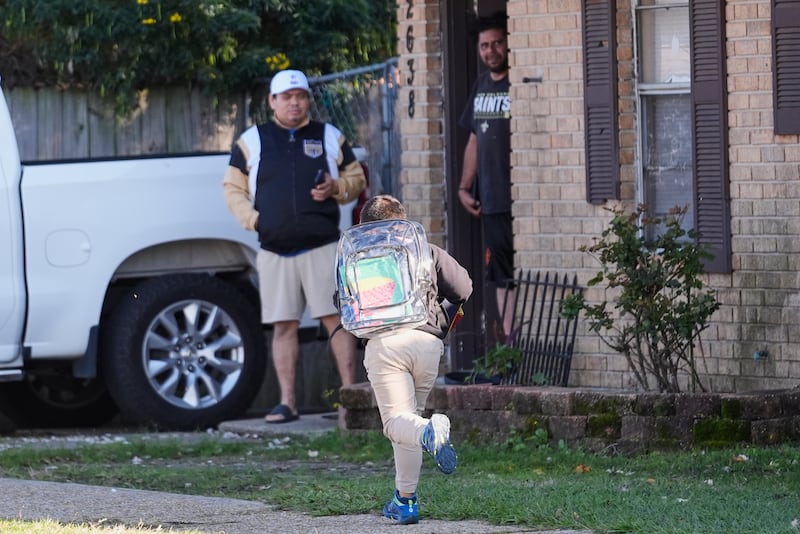
Such emotional trauma is common to any sudden separation. In other instances, more serious tragedies can take place.
“Parents may not actually have a safe person to leave their child with,” Watson told the Deseret News, emphasizing how reluctant people are to engage with the child welfare system, which would normally be watching out for these children.
The Brookings report calls child protection a “last resort” for many immigrant parents.
“The bottom line is that there is no systematic approach to protecting the children of those detained by ICE,” the authors conclude, describing the overlapping wave of incentives preventing open engagement and honest disclosure.
5. Why are these estimates more than double the U.S. government’s figures?
In order to get accurate estimates of children at home during an intense detention process, two things have to happen: DHS agents need to consistently ask adults whether they have children at home, and the adults must answer honestly.
According to this analysis, neither of these are happening in a reliable way. Although DHS agents are supposed to inquire about children, analysts cite many examples from interviews where this never took place.
Many detainees are also fearful of revealing they have children, worried about putting their family at greater risk. “In many of these cases, the government is unaware of children left behind,” the report notes, “and most parents prefer to avoid contact with the child welfare system even if they have only substandard care options.”
“At a minimum, DHS should collect and publicly report accurate data on the number of parents facing detention or deportation,” the report states, “as well as the number of U.S. citizen children who leave the country following a parent’s removal.”
The absence of this consistent data “obscures the true scale” of how many children are being impacted, they say.
6. Who takes care of these children during the separation?
“We know surprisingly little about what happens to children of detainees,” these researchers note. But based on interviews with child welfare agencies, they estimate that only a “small fraction” of children end up in foster care or other government-provided support.
Instead, most children stay with family, friends or trusted neighbors. ProPublica reported on a deported mother’s 4-month-old child left with a pastor in Florida and his wife to bottle-feed.
“In the cases where children are left behind,” Watson said, “they’re often staying with close family and close friends, but sometimes the parent really doesn’t have a great option to choose from.”
Often, the report adds, children are “left in the care of older siblings.”
7. How often are children being quickly reunited with parents?
Sometimes, a child may leave the country with a deported parent, but no systematic data has been published by the U.S. government on how often this takes place.
Reunion is taking place sometimes, but clearly not always. “In some cases, children affected by their parent’s detention are reunited with their detained parent,” these researchers note. “In the current environment, however, it is likely that detention leads to removal.”
8. How many families could be separated in the next several years?
When it comes to immigration enforcement, Watson said, “I don’t think that’s going to change radically in the next couple of years.”
With an estimated 13 million adults who are undocumented or have temporary status with only partial protection, the Brookings report notes these families include “more than 4.6 million U.S. citizen children living with a parent who is at risk of deportation.”
“Policymakers must reckon with the fact that many children are left without one or both parents as the result of immigration enforcement,” the report states. “This is unlikely to change in the near term, and … no government entity is responsible for their well-being.”
In terms of “harm reduction,” Watson highlighted the importance of “trying to do what we can to ensure the children that are indirectly affected by this are safe” — including, she said, ideally by having “systems in place to make sure they end up in good situations even when the best situation — to be with their loving parents — is impossible.”