

SALT LAKE CITY — The ticket into the alien world where fish live comes in the shape of a card stamped "certified."
With it, people can, within limits, go anywhere fish go ... or go anywhere other underwater life goes, as well.
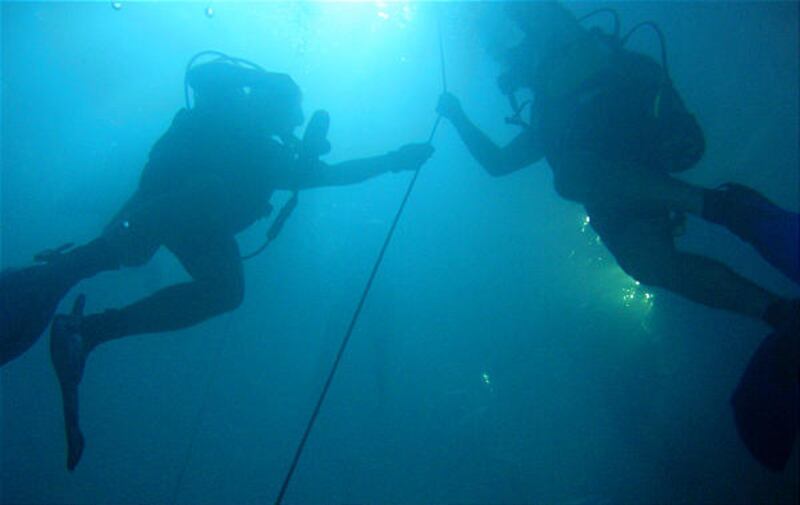
The card certifies the holder is able to swim underwater by means of SCUBA — Self Contained Underwater Breathing Apparatus — to include fins, mask, tank and breathing gear.
Or, as is commonly understood, go scuba diving.
To most, scuba is a word in its own right that simply means spending time underwater — with the fish.
What makes scuba unique in the sporting world is that it does require some training, which is recognized with presentation of the card.
People can buy a mountain bike and go riding, or buy golf clubs and go golfing, but they can't buy a tank and fins and immediately go diving.
Or, at least, it's not very advisable.
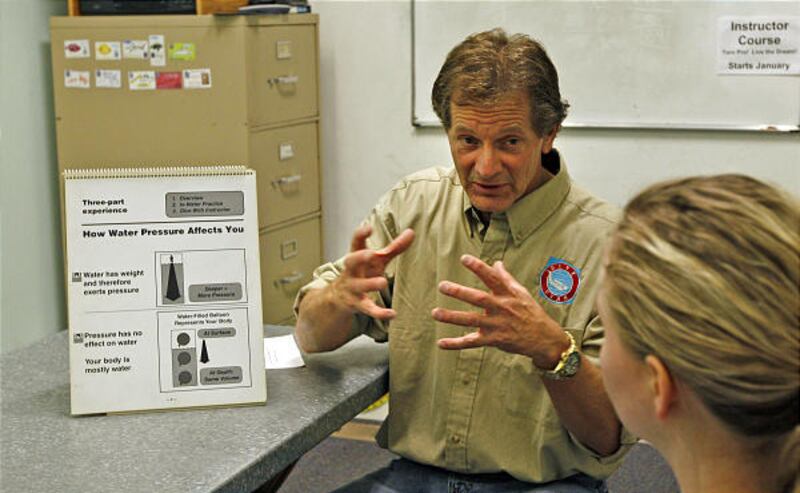
"Diving is like being a pilot. You need a license to fly, and you need to be certified to dive," said Dave Mohowski, master instructor and manager of Dive Utah, one of the diving schools in Salt Lake City.
Once certified, the card is good for life.
"The hope is, however, that the individual will continue to dive. ... We encourage people to remain active and keep diving," he said.
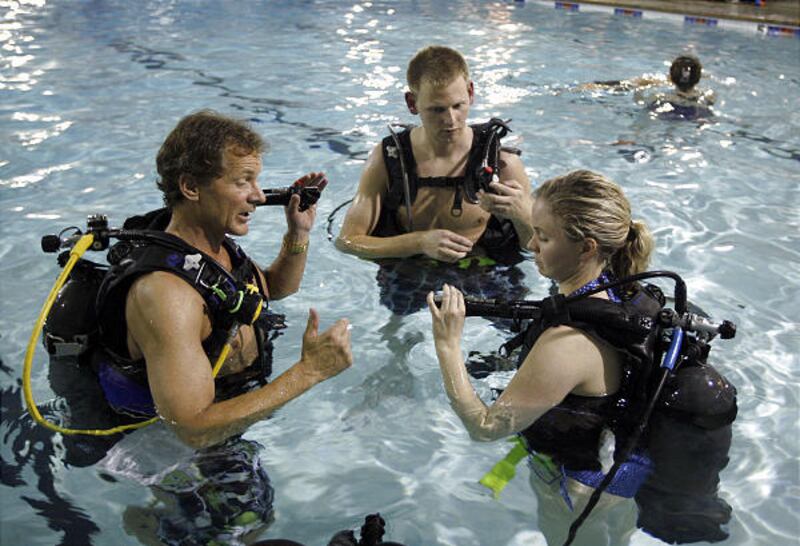
The first step for students is to get the open-water certification or entry-level card. This involves going to a class and a pool twice a week for two weeks.
It is there they learn the do's and don'ts of diving — vital information about depths, regulators, gauges, decompression sickness and nitrogen narcosis.
Then they enter the swimming pool, where they learn about diving tools such as mask, fins, depth gauge, buoyancy compensator, harness, regulator and tank.
At the end of the class and pool work, the student must show his or her water skills by completing a 200-yard swim, or 300 yards with fins and snorkel, and float for 10 minutes.
Those students who have the easiest time learning to swim underwater are those who are most comfortable in the water. That would include those who enjoy other water sports, such as swimming, wakeboarding, water skiing or tubing.
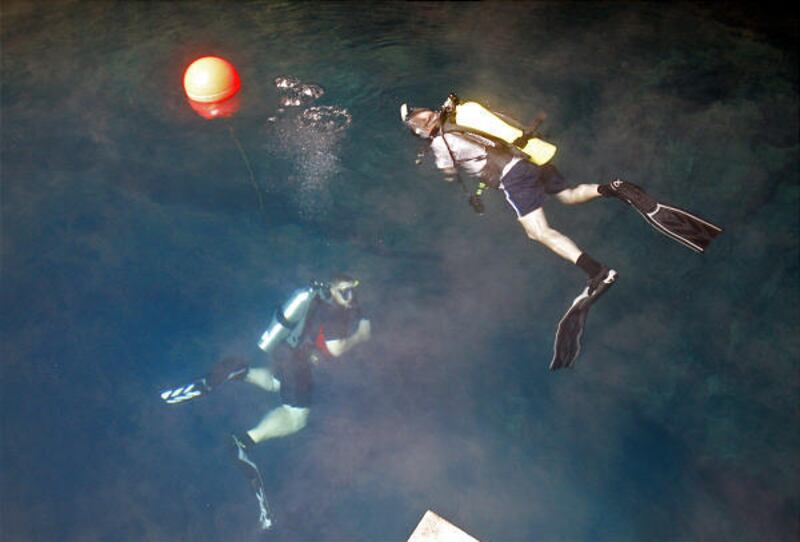
The final step in certification is an open-water dive.
"We can do this in a number of places ... a lake, hot spring, the ocean. It's a chance to practice their skills with an instructor and maybe go a little deeper in a water that's a little bigger, and get a more realistic diving experience," said Mohowski.
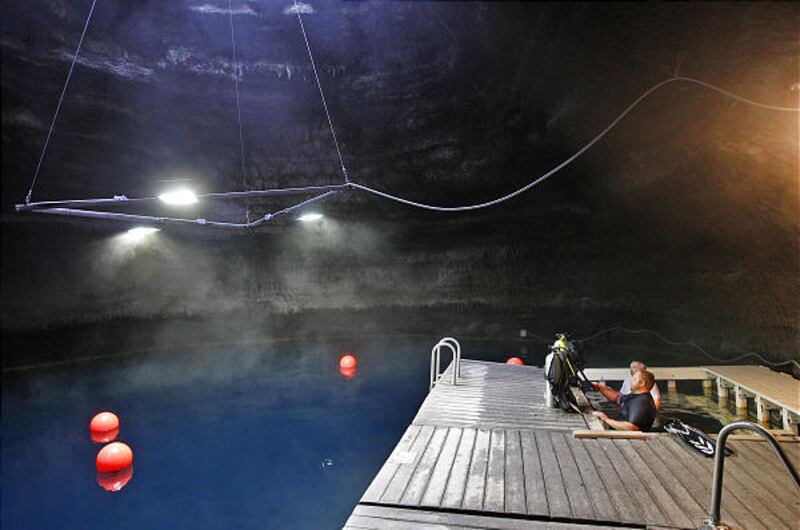
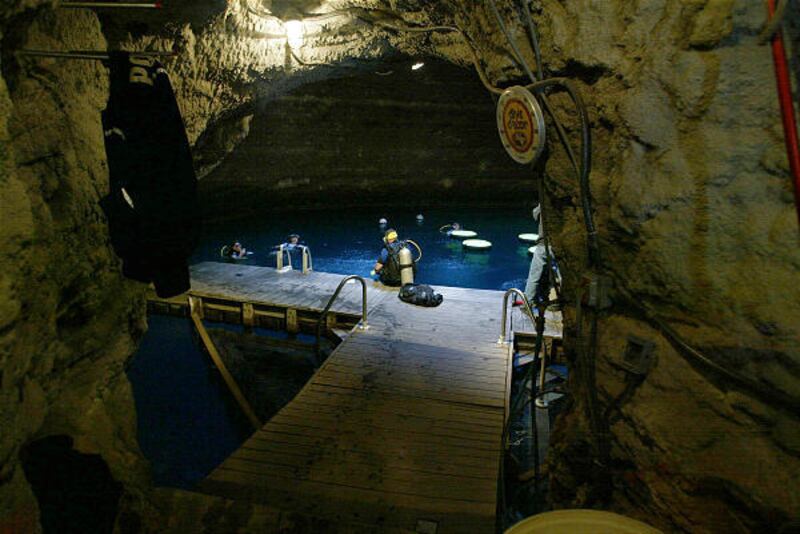
Three of the most popular waters to complete an open-water dive here in Utah are Blue Lake, south of Wendover; Seabase Lake, south of Grantsville; and the Crater at the Homestead in Midway.
Blue Lake is warm year-round, getting down into the mid-60s in the winter and the 80s during the summer. The lake's high-volume flow helps to keep underwater visibility clear.
Seabase is a geothermally heated, salt-water lake that holds colorful tropical fish, including the French angel fish.
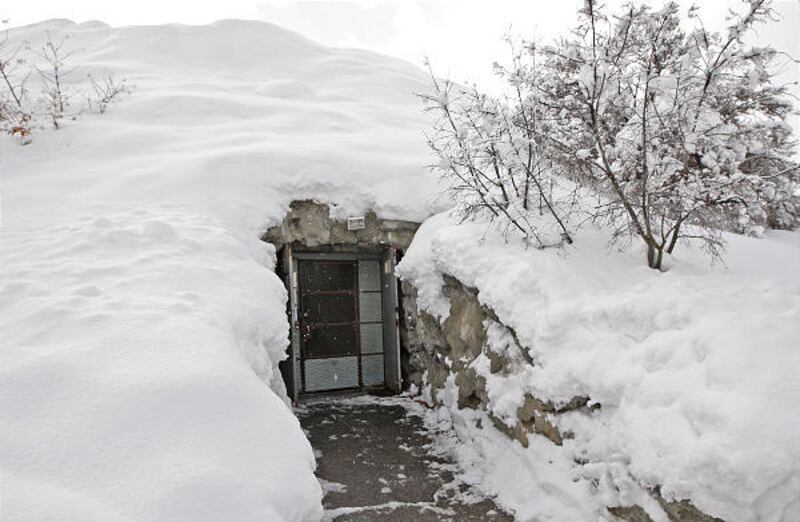
"Most of our open water dives in Utah are done at the Homestead crater. It can get busy on weekends. People come from all over, even neighboring states, to dive because they have nothing like the crater. It's nice for us here in Salt Lake (City) because we can run up there after work, after school or on weekends," said Mohowski.
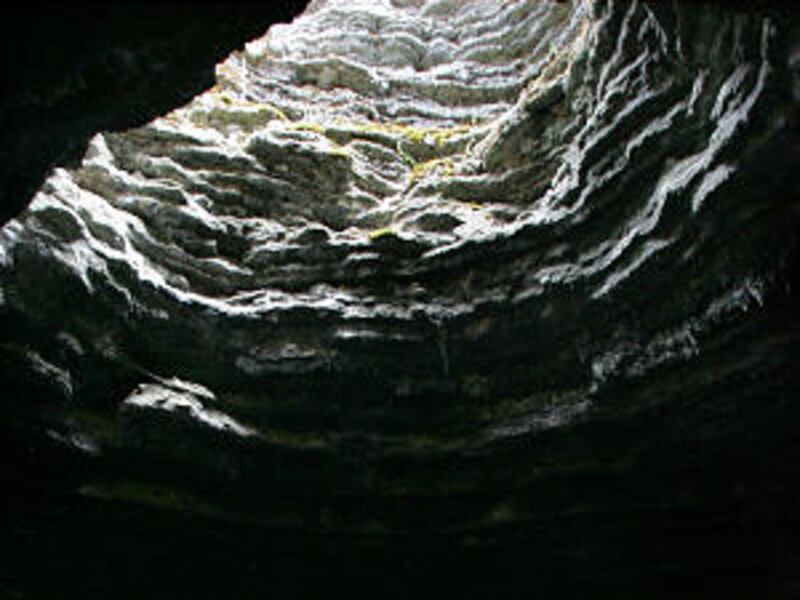
The hollowed-out mound holds water that stays between 90 and 96 degrees year-round, is about 55 feet deep and is crystal clear.
Divers have also found Sand Hollow Reservoir, a large warm-water reservoir northwest of St. George, ideal for year-round diving.
Most of Utah's lakes and reservoirs are open to diving, especially the larger ones such as Flaming Gorge, Lake Powell, Bear Lake and Fish Lake.
But most of Utah's diving waters, because of their cooler water temperatures, require divers to wear a neoprene wet suit. The colder the water, the thicker the neoprene needs to be.
Rules require, once certified, that those children ages 10 and 11 go no deeper than 40 feet and must dive with a mom, dad, instructor or dive master at all times. Those ages 12 to 14 are also limited to 40 feet, but can dive with anyone 18 and older, and those 15 and older are limited to 60 feet.
The reason for the 60-foot limit?
"A couple of things happen as you go deeper, most notably, you use up air faster'" said Mohowski.
"Because your body is under pressure, it absorbs nitrogen from the air you breathe, and too much nitrogen can lead to decompression sickness or the bends. It's all a factor of how deep you dive and how long you stay down."
"Otherwise, the deeper a diver goes, the more nitrogen buildup they get. ... It's something all divers must be alert to.
"But then you can add nitrogen narcosis (to deep diving). Nitrogen under pressure has an anesthetic quality that diminishes motor-skill capacity. You find yourself being easily distracted. You focus on little things that aren't important," he said.
This sometimes causes divers to ignore things like depth, gauges and time.
"You have to remember you're in an alien environment where you're dependent on equipment. And if something goes wrong, if you're too deep, it's a long way back to the surface," he added.
As for the reasons people dive, Mohowski said there are many, starting with the mysteries of being in an alien world, seeing all the fish in their natural environment, exploring things like a sunken ship or underwater reefs, or just enjoying being in the water with family members or friends.
Many of those who learn to dive here in Utah do it in connection with a vacation, such as going on a cruise or visiting a popular diving area, such as the Caribbean or Hawaii or the Bahamas.
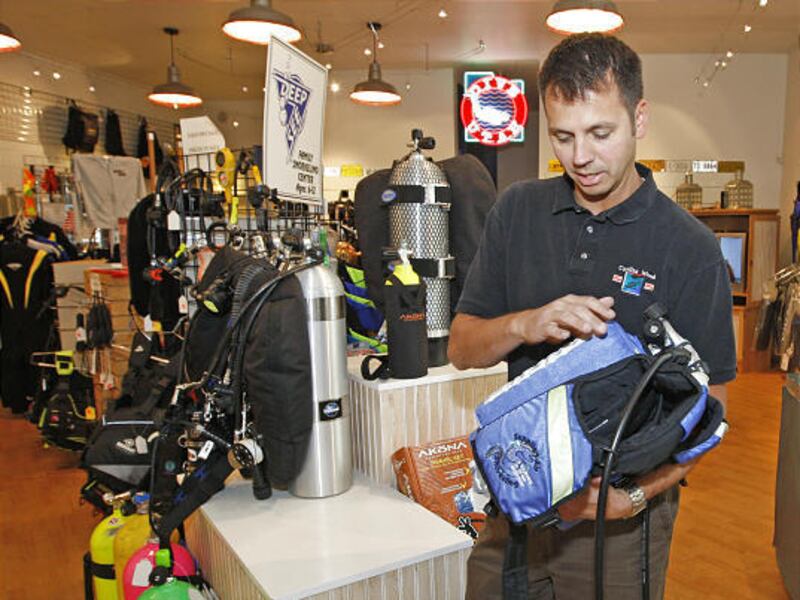
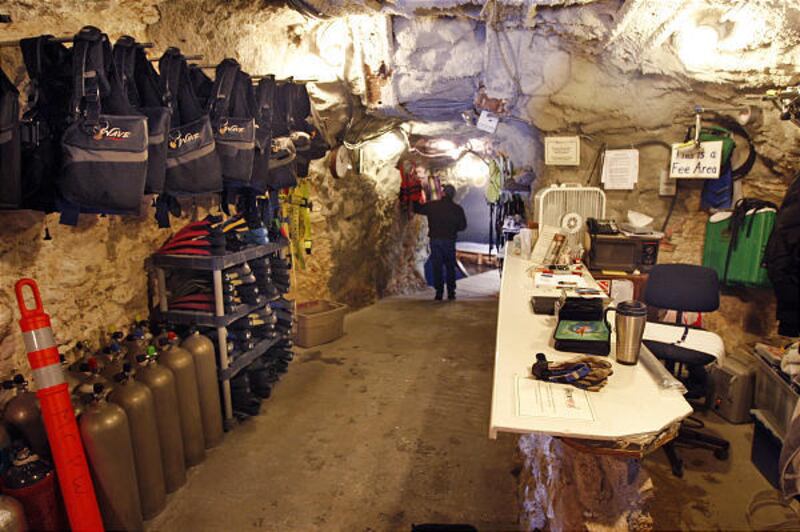
Diving does, of course, require specialized equipment that can either be purchased or rented with the presentation of a certification card.
Mohowski said the cost of good quality equipment would run between $1,200 and $1,500, "which would be for equipment that would last a long time."
Tanks hold about 80 cubic feet of air, which is put into the tank under pressure of around 3,000 pounds per square inch.
That much air, given the diver is considered a normal breather, would last between 30 and 45 minutes.
Which is anywhere from 29 to 44 minutes more time underwater than most people would be able to accomplish.
And, during that time, the diver is able to explore an underwater world that is, indeed, completely alien.