

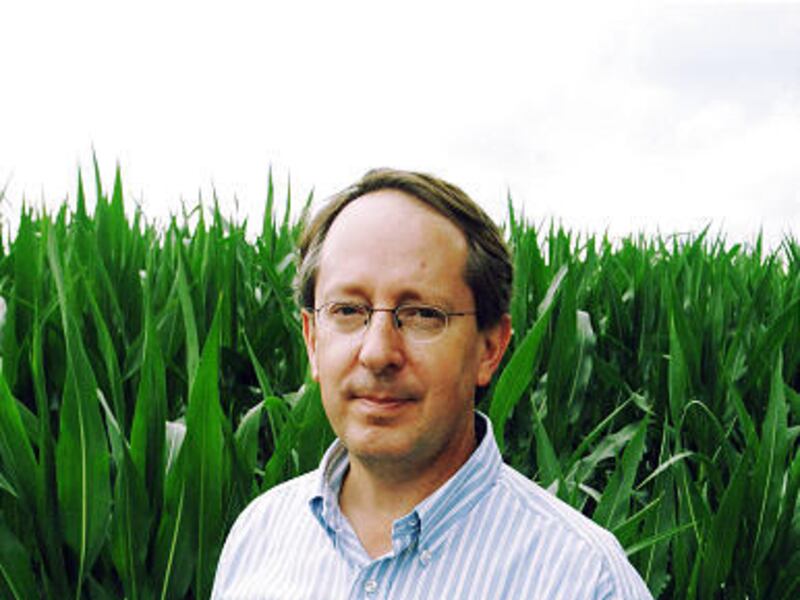
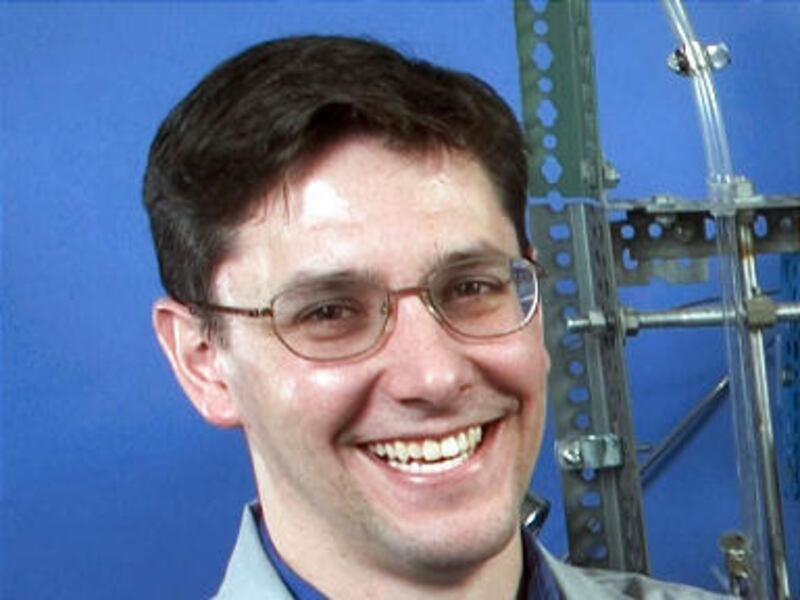
Two prominent, determined LDS scientists are heading the fight to get Americans off their oil dependence and on to alternative fuels.
Bruce E. Dale and George W. Huber have been working tirelessly to make "grassoline" a reality — that is, fuel made from inedible parts of plants.
Their efforts have finally caught the attention of a nation growing more and more concerned about not only oil dependence but also the state of the environment. In July, Dale and Huber co-authored the cover story of Scientific American Magazine on "grassoline."
What was it like to have such a respected publication give them the spotlight? "It was the culmination of 33 years of research — it's definitely the broadest-based, most public thing I've ever done," said Dale, 59, who asserted that it was his good, old-fashioned stubbornness that helped him press forward when the community at large was still apathetic toward the need for alternative fuels.
Huber, 35, a professor of chemical engineering at the University of Massachusetts, has testified before Congress twice about exploring the potential of biofuels and renewable energy. "It's so important," he said. "We have this great, new process developing to make green gasoline."
"Grassoline" was a term coined by one of Dale's graduate students, Matthew Scoggins, in 1991. It captures the idea of taking plant material and converting it into oil. It is a straightforward process: Plants take carbon dioxide and convert it into energy; the key is unlocking this energy to use as fuel.
"We're developing methods to open up the structures of plant materials to get the sugars out and convert them biologically to fuels," Dale said of the efforts of his laboratory at Michigan State University, where he likewise teaches chemical engineering. "It's important to realize that trees, grass, are actually 70 percent sugar in weight, but that sugar is chemically tied up in a way so it's not easy to get at."
For those who are concerned that using plants in order to create fuels could be damaging to the environment, Huber pointed out that they are using non-edible biomass. "We're using agricultural residue — like corn stalks after the corn has been picked — so it doesn't compete directly with food. It could actually improve the environment as well as the economy because we'd be getting fuels from local sources."
Dale said, "We're doing everything we can to make it environmentally useful."
Both Dale and Huber maintain it is going to take time to both shift the status quo as well as legitimately compete with oil.
"People shouldn't underestimate the challenge of making 'grassoline' mainstream," Dale said. "We use $200 billion worth of gas each year in the U.S. — it will take time to replace even a small fraction of that."
Dale's laboratory, which is funded by the Department of Energy, is one of few to capture a piece of a substantial grant working to help make "grassoline" a reality, perhaps within the next five years.
"We'd love to have people pull up to gas pumps in the future and not even know the difference," Huber said.
Both Dale and Huber have benefited from leadership experience within the church as well: Dale, a former stake president, attends the Holt Ward, Lansing Michigan Stake, and Huber is currently bishop of the Amherst Ward, Springfield Massachusetts Stake.
"My mom always told me that the Lord stretches your time when you do what he needs you to do," Huber said about striking balance between his professional life and his equally busy personal life. "He'll bless you and help you to get by."
"We are taught to work together, to be unified," Dale said. "I take that to work. None of the members in my lab are LDS, but they are great people and we trust each other — the spirit of cooperation carries over." Dale and Huber are optimistic about the future of biofuels.
"President (Gordon B.) Hinckley always was so optimistic," Dale said of the late LDS prophet's demeanor about life. "We're adopting that attitude."
"This has huge potential," Huber said of biofuels. "One of the most critical needs of our society right now is to be able to power our vehicles — and do it independently, internally. We're hoping to help solve that problem."
e-mail: eschmuhl@desnews.com