

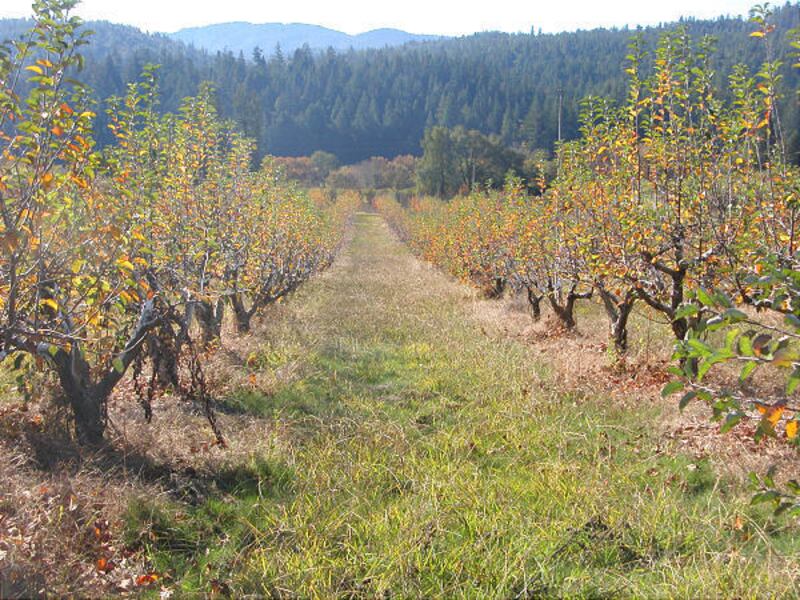
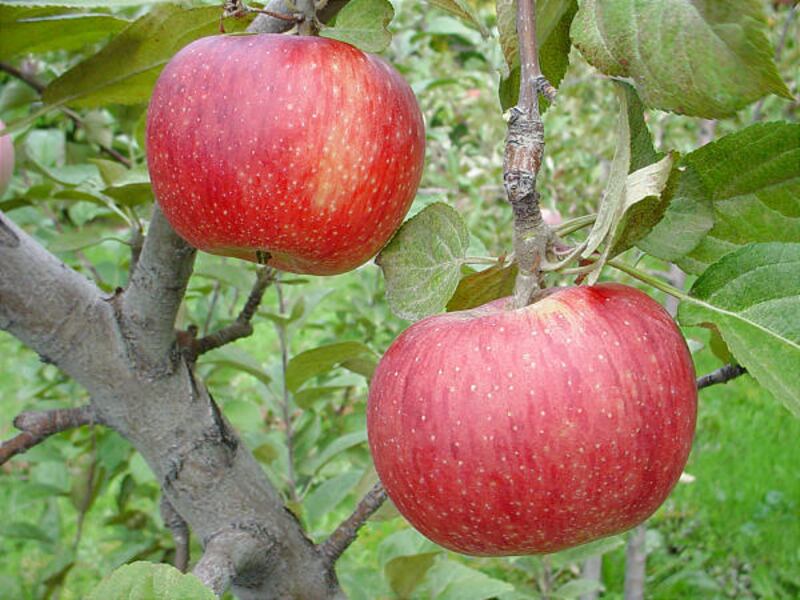
Hopefully, you have spent some time taking stock of your backyard orchard and have made some decisions as to which trees need to stay and which ones need to go.
As I described last week, some of those older, neglected ones need to be judiciously removed and replaced with newer, smaller trees of some of the superior varieties.
For some, the choice is simple. The trees carry no sentimental attachment, and they might not be in a good spot. Such trees can spend their next existence as firewood (apple wood burns with almost no ashes), woodworker's fruitwood or as chips for compost.
For other gardeners, the separation from their trees might not be as easy. Some trees are like members of the family.
One of my apricot trees, for example, is featured in numerous photographs of my three daughters while they were growing up.
Other trees might have been planted as commemorative trees, and still others might be as valuable for their shade as they are for the fruit.
But at some point you might want better or different fruit off that tree.
The ancient art of budding — or grafting — allows you to keep your existing tree but make those changes you deem necessary.
I have always been fascinated with this part of horticulture that can take part of one plant and attach it and grow it on another.
Romantic notions aside, budding or grafting is done for a very practical reasons.
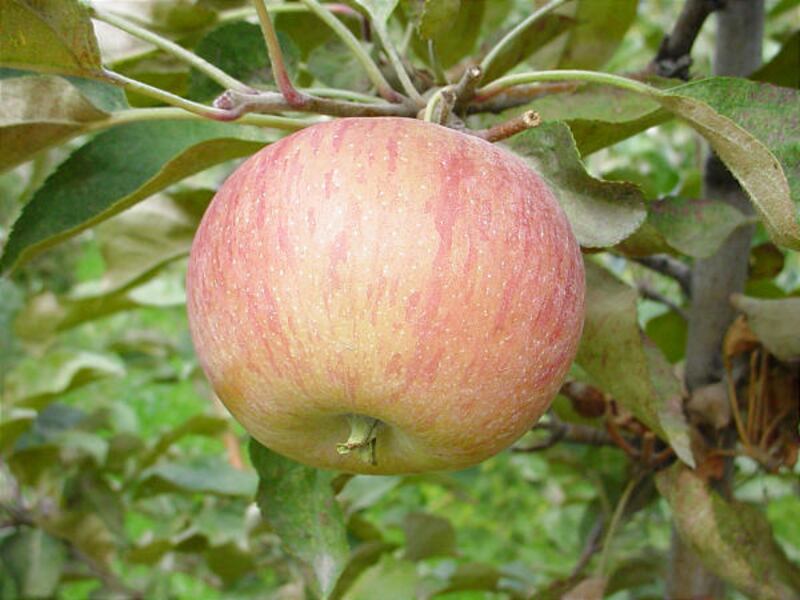
If you plant an apple tree from seed, you have about a one-in-a-million chance of getting an exact duplicate of the original apple because the seed is a product of cross-fertilization.
To get an exact duplicate of the parent plant, you must practice the ancient art of cloning. When you clone a plant, you take a start off of the vegetative portion and duplicate it. It then is genetically identical to the parent.
While cloning animals is new, plant cloning has been done for millenniums. Anytime someone cut a branch off a tree, stuck it in the ground and it grew, it was cloned. Virtually all fruit trees, most named ornamental trees, bulbs, many perennials and even some annuals are now cloned by vegetative propagation.
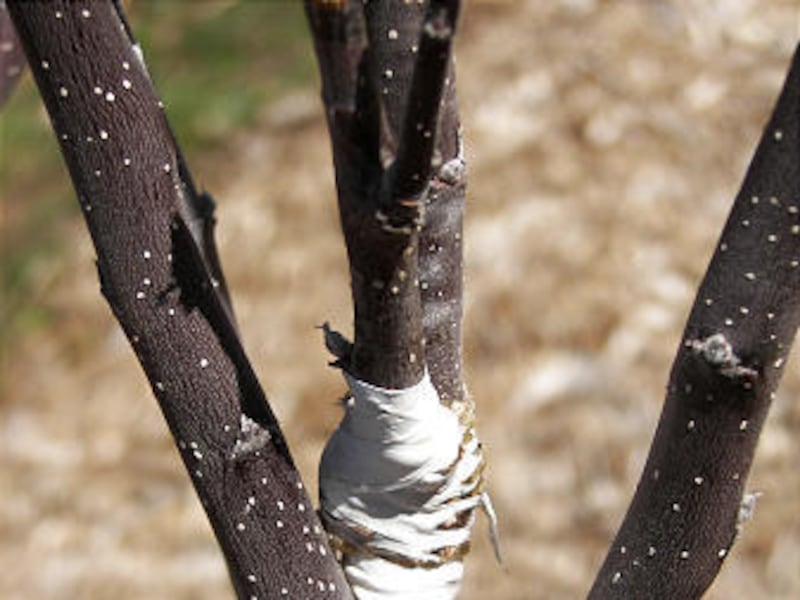
Cloning fruit trees is done by taking a bud or a short twig and transferring it to an existing tree. That tree might be an old established tree in your landscape, or it might be a young rootstock that you are planning to train into a new productive tree.
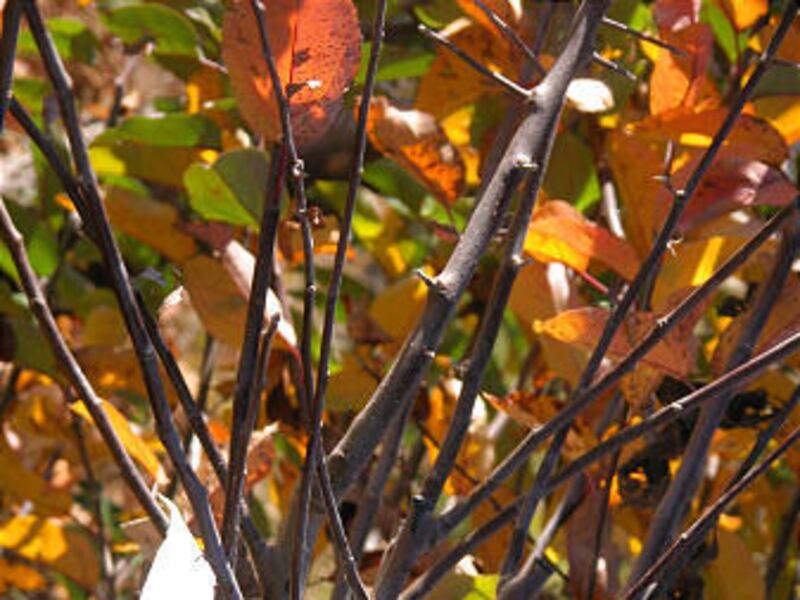
Successful grafting requires that you have dormant bud wood and actively growing rootstock. If you want to try changing a variety on your existing tree, it is critical that you collect some dormant branches from the desired variety right now.
Select young, vigorous sprouts that grew last year and cut them into foot-long sections. Label them according to the variety and seal them in a plastic bag with a damp paper towel.
Save the wood in that dormant state until the existing trees start to bloom. At that time the bark is slipping and the cambium cells can grow together to join the two plants.
To be successful, you must place the cambium layer of the scion or desired fruit variety directly against that of the rootstock. The cambium layer is a single layer of cells that produces the wood cells on the inside of the tree and the bark cells on the outside of the tree.
These cells are tender, so you cannot let them dry out. Cover the wood with grafting wax or an acceptable substitute.
If you cannot find grafting wax, get a wax toilet bowl ring and use the wax from that to cover the open areas of the wound.
Cleft grafting is the easiest way to change the variety on an older, existing plant. Cut the branch of the tree at a convenient place to insert the new twigs. The easiest branches to graft are usually 2-3 inches in diameter.
Remember that you have to graft like trees to like trees. That means apples go on apples, and pears go on pears. Stone fruits are a little more forgiving, so you can graft peaches onto plums and vice versa, but the closer the trees are related, the better the grafts take.
With a few weeks, the grafts will start to grow. They are fragile, so do not bump them or damage them in any way.
Apples will not bear fruit until the second year. Make certain when the fruit comes, it does not weigh down the branches.
The key to successful grafting is to practice the technique.
Transferring a part of one living plant to another is like an organ transplant, so it must be done quickly and efficiently. Don't be too discouraged if it doesn't work the first time around. You can always try next year.
When you are successful, the grafts will grow and bear fruit, meaning you can save that favorite old apple tree, and rejuvenate it with new varieties and give it a new life for a few more decades.
Larry A. Sagers is a horticulture specialist for the Utah State University Extension Service at Thanksgiving Point.
Garden tips and events
For detailed instructions on budding and grafting trees log on to www.ces.ncsu.edu/depts/hort/hil/grafting.html
Thanksgiving Point has several classes in March:
Basic landscape design, March 3, 10 and 17, 10 a.m.-12:30 p.m. The class includes a 15-minute individual consultation on your landscape plan by a Utah State University Extension Service Master Gardener. Cost is $40
Home vegetable production, March, 3, 10 and 17, 2-4:30 p.m. or 6-8:30 p.m. Cost is $40.
Budding and grafting, March 5, 9-11:30 a.m. Cost is $15.
Fruit tree pruning, March 5, 2-4 p.m. or 6-8 p.m. Cost is $15.
Register at www.thanksgivingpoint.com or 801-768-7443
Red Butte Garden is offering a residential landscape design class March 4–April 8, 6 -9 p.m. Cost is $176 for members and $194 for nonmembers. Registration is required. Call 801- 587-5433 or log on to www.redbuttegarden.org for more information.