

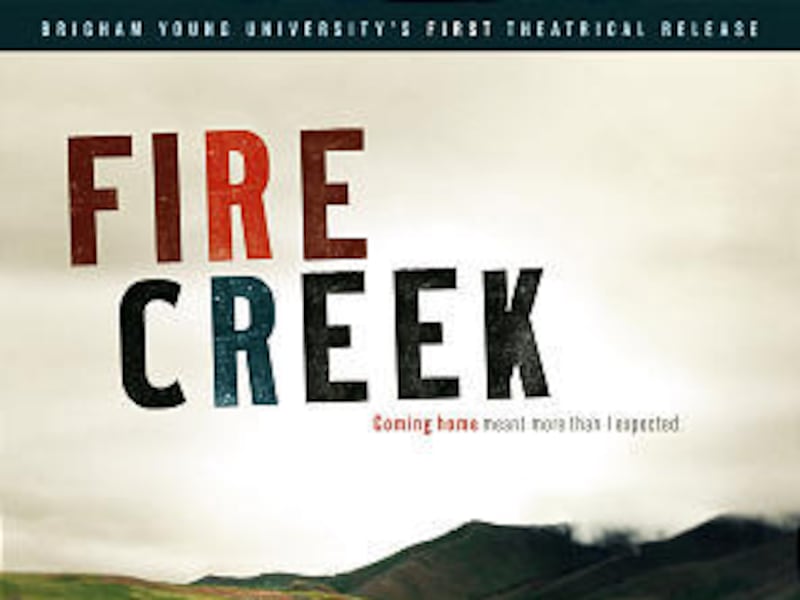
Brigham Young University's first theatrical film release debuted this month, after years of combined effort by students and professors from departments across the Provo campus.
"Fire Creek," a feature-length film about a U.S. soldier returning from war, was first written in 2004, with post-production wrapping up as recently as last semester. It premiered in various Cinemark theaters in Utah on Friday, May 8.
Dennis Packard, professor of philosophy and film and one of the co-producers for the project, said the mentoring aspect he witnessed during production of the film was one of the more remarkable facets of the process. Students worked closely with professors and experts to bring the film to fruition, which makes it really special, Packard said.
"This whole thing is part of the mentoring work at BYU," he said. "I've been at BYU for 35 years, and mentoring is the most important thing that I've seen."
The university setting was a great place to make a film, he said, because there were thousands of people with varied interests to work on it.
"The thing that's interesting about film — it's so cross-disciplinary," he said. "It involves so many things. And at a university, you've got people all around that are interested in all these different aspects, and it's a chance to pull all these people together to work on it."
BYU has produced other films, including "A More Perfect Union," which was intended for theaters, but things didn't pan out.
"BYU having a first film released in theaters is a pretty big deal for us," Packard said.
In addition to being BYU's first theatrically released film, "Fire Creek" is "a striking example of what students can really do if you clear a path for them," Packard said.
The film got its start in 2004, when Nathan Chai, a graduate student in one of Packard's classes, wrote "Fire Creek" as his master's thesis.
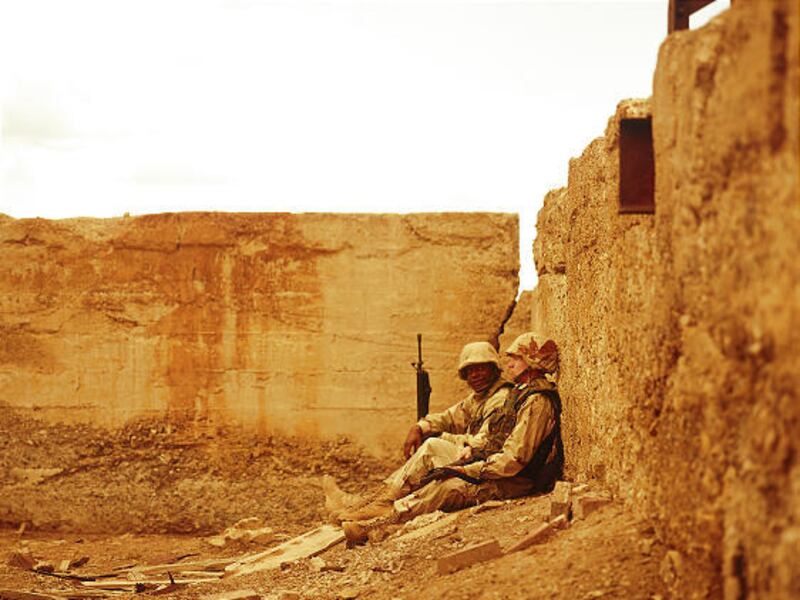
The story line follows Jason Malek, a soldier returning from war in Afghanistan, who struggles to understand why he was spared, when his friend — a good, religious man — died in combat. Packard said the character grows through discovering that answers and perspective come after he tries to better himself.
"You have to get your life into a better place, and then how to think about these things and understand them will come to you," Packard said.
Converting the novel into a screenplay took place soon after Chai wrote it, and pre-production work got started in 2005. Packard said the schedule, which was spread out over five years, is atypical of the way Hollywood studios run. But time is one luxury the university has.
"It takes long, but that's what we have at a university. We have more time," Packard said. The film was produced by BYU's Campus Studios, of which Packard is chief executive officer.
Students from several departments were involved at different stages of the production. Undergraduates studying dance choreographed a boxing scene, and a student studying costume design worked on many of the costumes. Jed Wells was an undergraduate at the time he directed the film.
Students outside the art department were also involved, including accounting students who initially reviewed various scripts to see which would be most marketable. Other business students tracked down possible theaters to show the film in and contacted the press as part of their class curriculum.
Packard said he hoped the theatrical release would recoup the funds spent on the film and that money would be put to use making other films. Beyond that, he hoped it would appeal to a portion of film audiences who don't feel they're catered to — those seeking clean, quality entertainment.
"We're not making art for ourselves … we're making it for real audiences," he said.
The film will be distributed by Third North Distribution and will be available in Mormon bookstores this summer, Packard said.
E-mail: mfarmer@desnews.com