

The term "Mormon Pioneer" brings to mind images of oxen-drawn wagons and handcarts in the famous migration to Utah that began in 1847.
Especially if you live in North America.
But for Latter-day Saints outside the church's U.S. homeland or its long-established congregations in western Europe, "pioneer" is as likely to describe a current or recent state of being — not an antiquity.
So in the global church vernacular, the upcoming Pioneer Day holiday on July 24 may be just the marker for the beginning of an era that will not be exhausted as long as the church and its members continue to find new frontiers.
Mormon Times has called on Latter-day Saints, some who live as far from Salt Lake City as the map will take them, to broaden the story of the Mormon pioneers.
Republic of Angola
Angola's liberation from Portugal in 1975 was immediately followed by a protracted civil war that drove many of the Portugese-speaking Angolans into exile in Portugal or elsewhere in western Europe.
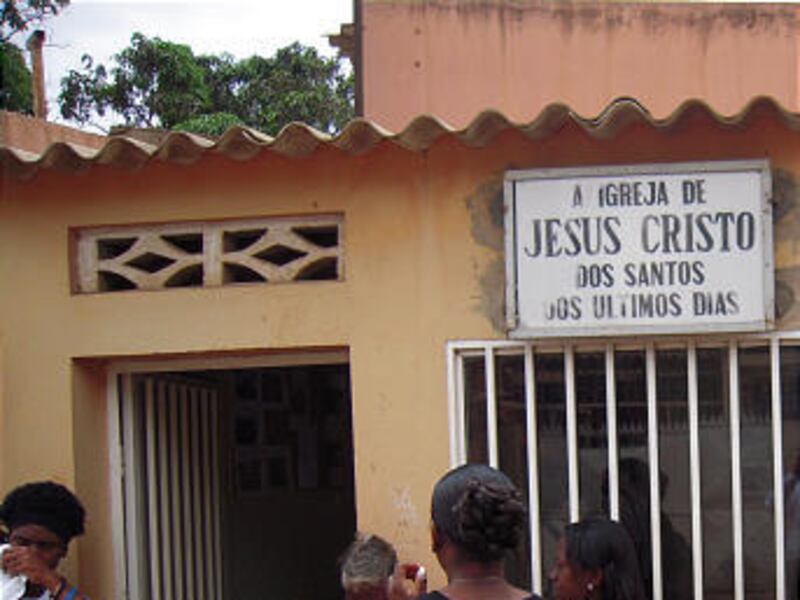
Tom Holst is an expatriate working in the oil industry in Angola. His family and four other expat families are members of the Caskell Branch in Angola's capital city of Luanda. The branch holds services in a former bakery that has concrete floors and a frequently interrupted electrical supply. Frequent interruptions in electrical power are taken in stride. In an interview with Mormon Times and from excerpts of the book "On Sunday," Holst describes Angolan Mormon pioneers — even if the term "pioneer" is one they might avoid.
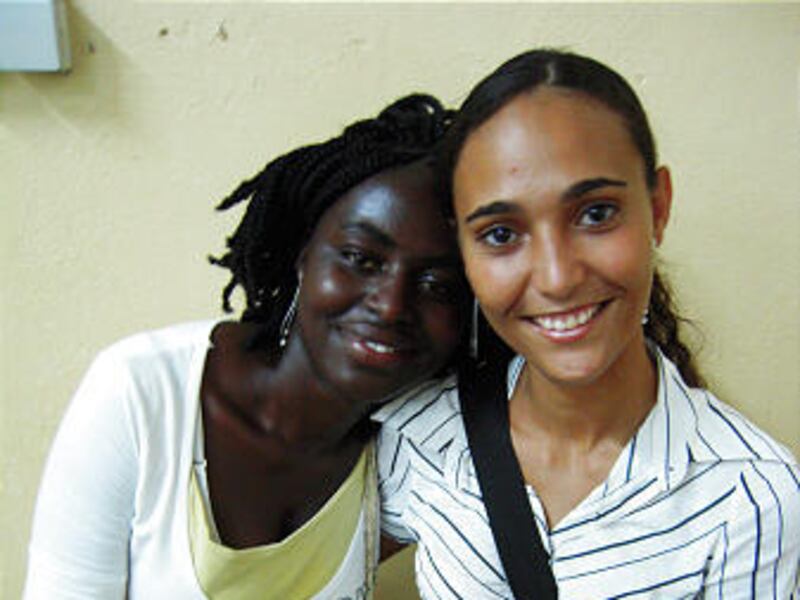
"Enrique Vuamina was among the first Angolans to hear the message of the restored gospel while he was in Montpelier, France, in 1992. Like many of his fellow members, Enrique exiled to Europe during the 27-year civil war that drove many Angolan nationals abroad for work or educational opportunities. When he returned to Luanda in 1996, a small handful of saints began meeting in private houses on Sundays," Holst wrote. "Today Enrique serves in the Terra Nova branch, one of two units in Luanda with a combined active membership of about 300 saints. … These two branches cover the entirety of Luanda, a city of six million people. This growth has been accomplished with, until recently, no full-time missionaries."
Holst said church members in Angola or Russia generally do not use the word "pioneer" unless they are very familiar with the historical church context because the term has a nefarious association with communism.
"The Pioneer organization was an extension of the governing communist party. … As a result, many church members in Angola or Russia may still associate the word "pioneer" with these civic youth organizations.
"By contrast, I personally think of pioneers as people who crossed the plains after a forced exodus from Nauvoo and subsequently cultivated the Great Basin area as a gathering place for faithful adherents of the restored gospel. In this sense, many Angola church members fit the description because they returned from Portugal to participate in building up both their church and homeland after a devastating colonial and civil war."
Adoptive cultural ties "are frequently made to the church in Portugal since many members attended university in Lisbon during their exile period. These members exiled to Portugal because most universities in Angola were shut down during the civil war. While in Portugal, these members first encountered the missionaries, were baptized, and experienced more than a decade of church activity. Because of the resultant social, family and spiritual ties that developed during this period, references are frequently made to the church in Portugal."
"Church meetings in Luanda are conducted entirely in Portuguese. Regional dialects are spoken only in the home and are slowly dying out. In the aftermath of a civil war, the current Angolan government seeks to establish many common points of reference, such as a language, amongst its citizens," Holst said.
"Local priesthood leaders encourage the young men to wear white shirts and ties while administering and passing the sacrament," a standard similar to that of most other denominations there.
Australia
Church members undertook the construction of a chapel in Newcastle, 100 miles from Sydney, shortly after then-prophet David O. McKay visited Australia in 1955. "In 1960 the Sydney Stake was created — one of the first outside North America — and Newcastle became a ward," Glenn Gordon recalls.
Gordon describes the early makeup of the ward as "a place of rough diamonds. The members were workers: miners, cleaners, house painters. We had one sister on a mission in Japan — it seemed very exotic to me — and no one with a university education. These wonderful brothers and sisters had built this ward, literally. They could show you where the bricks were in the chapel walls that they had laid."
Gordon was 13 when he and his parents, Norman and Zeta, decided to be baptized after being taught by missionaries. His mother was a little reluctant.
" 'Do what you want,' she said to Dad (about being baptized) and he was out the door like a shot to see the bishop and arrange our baptism," Gordon recalls.
Six months later, visiting apostle Elder LeGrand Richards called Gordon's father to be the bishop.
"I was there. Dad was stunned and his only response was: 'But I'm only a priest.' 'We can fix that, Brother Gordon,' was Elder Richards' memorable reply."
In addition to his ecclesiastical service as bishop and later as a counselor in the stake presidency, Norman Gordon "was the church's real estate manager in the 1980s and traveled all over the Pacific buying and selling property for the church," the younger Gordon said. "He found and purchased the land for the Sydney Temple, Australia's first temple," his son said.
Russia
Russians in the St. Petersburg branch not too long ago quickly separated their country's past from their cultural Mormon present when talking to a reporter from Salt Lake City. They enthusiastically pointed out the state-run wedding chapel where they held Sunday services was on Seagull Street and that the nearest subway stop was the Pioneer Station.
Russians practicing Mormonism before the fall of the Soviet Union exercised their faith at great personal risk, writes Jussi Kemppainen from his home in Finland, where he joined the church in the 1960s when missionary work there was still quite new.
Kemppainen said he and his family started making missionary excursions from Finland into the then-Soviet Union 20 years ago.
"They risked their all, as did the pioneers of the west," he said. "Their lives, their jobs, welfare — each of them was a pioneer. They marked the path and paved the way for ones that followed. Nobody had trekked the path before them, except the Savior." Kemppainen said in the late 1980s, a few Russian language professors at Brigham Young University "would enter the Soviet areas (as presidents of new Russian missions) not knowing that they would become the wagon masters when the work would begin. In 1989 there were just a handful of members in the whole Soviet Union area."
Aino Larsen, Kemppainen's son, accompanied his family into Russia on those early missionary excursions. He describes the early days of the church there as "amazing."
"We were part of the first unofficial meeting in Vyborg, for example, held at the local library. I remember hiding copies of the Book of Mormon in the trunk as we were crossing the border from Finland to Russia," he said.
"To a 13-year-old teenager, the stories that we constantly heard and often witnessed firsthand were all miracles. I remember feeling the spirit of these new members and being amazed by their energy, faith and devotion."
Guatemala
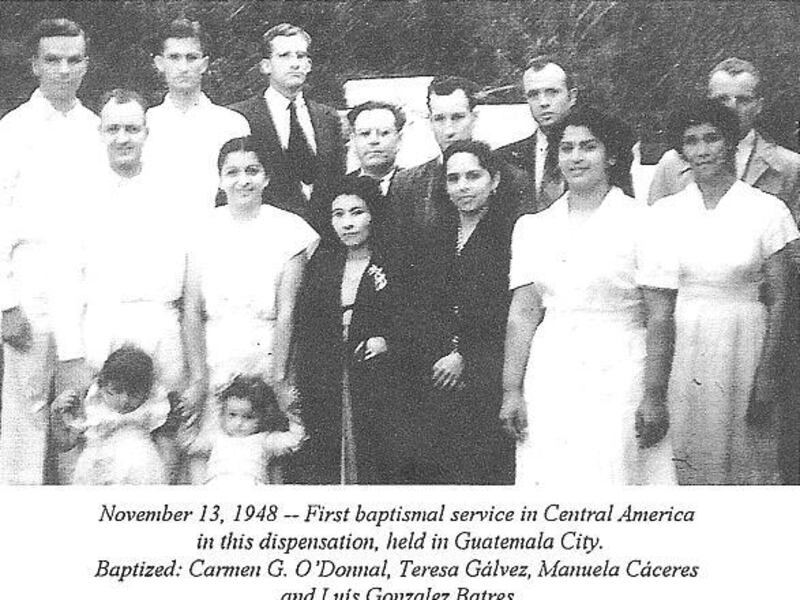
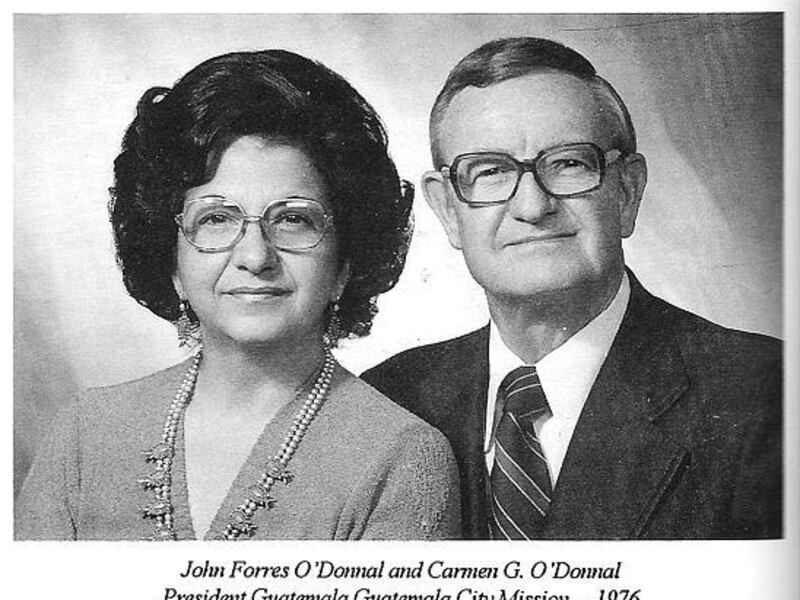
On a sunny November morning in 1948, the first Mormon convert in Guatemala stepped into the waters of baptism. Carmen Galvez Anguiano de O'Donnal was baptized by husband John O'Donnal, a leap of faith that would serve as a precedent for thousands of others who would later join The Church of Jesus Christ of Latter-day Saints.
Born and raised Catholic, Carmen Galvez was introduced to the Mormon faith by O'Donnal, who was in Guatemala working as an agricultural adviser for the United States. They had what O'Donnal described in his memoir as "a beautiful, eternal love affair" that culminated in marriage on June 19, 1943.
Many obstacles stood in the way of her becoming a member of the LDS Church.
"There was a lot of opposition from the family side," O'Donnal said. "She overcame very well, because she had a heart that accepted the gospel."
Seeking opportunities for his wife and others to hear Mormon missionaries, O'Donnal approached President George Albert Smith of the First Presidency about beginning missionary work in Central America.
"I just knew the people of Central America were ready for the gospel," O'Donnal said.
On Sept. 7, 1947, President Pierce of the Mexican Mission dedicated Central America for the preaching of the gospel.
On Nov. 13, 1948, a small group of people gathered around a private swimming pool in the town of Vista Hermosa for the first baptism in Central America in this dispensation.
"It was a beautiful day," O'Donnal said. "I was so happy to be the one to baptize the first member and ever happier that it was my wife."
Now, 62 years later, Guatemala has a Mormon membership of 215,186, according to newsroom.lds.org. The country has four missions and 52 family history centers. Construction is ongoing for a second temple.
Carmen de O'Donnal died in 1998 after serving with her husband in temple and mission presidencies in Guatemala. Her leap of faith set the standard for generations of Latin American Mormons that would follow.
e-mail: sfidel@desnews.com, cwarren@desnews.com