

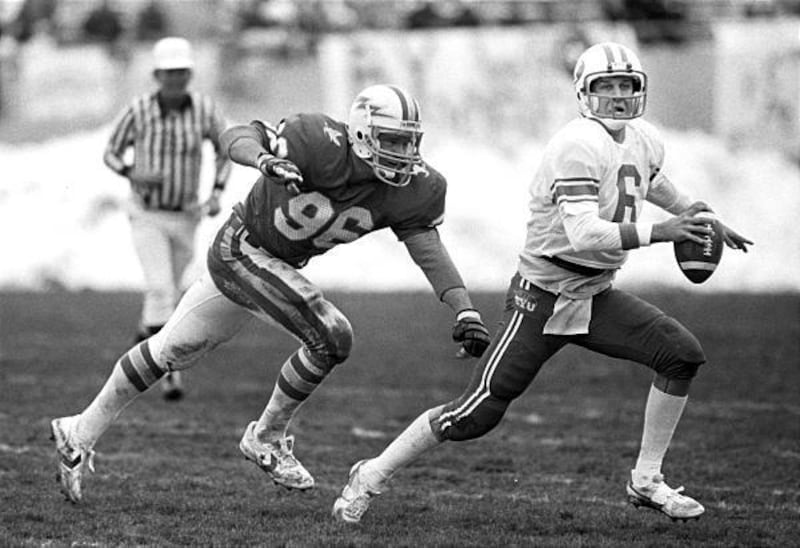

PROVO — Less than a year after BYU won the national championship, the Cougars were booed at home. It was November 1985, and BYU was trailing undefeated, No. 4 Air Force by two touchdowns at halftime. The Cougars rallied and won the game, 28-21, but memories of those boos linger.
"It got a little out of hand, I thought," recalls quarterback Robbie Bosco, who was a senior in 1985.
Earlier that season, BYU inexplicably fell to a winless UTEP team on the road and some disgruntled fans unleashed their frustration.
Shirley Johnson, who has been a secretary in the BYU football office since 1980, remembers receiving "the meanest, nastiest letters" from fans. "One lady who works on campus called me," she says. "It made me cry she was so mean. The fans thought we should win all of the games for the rest of their lives."
That, apparently, is one of the unintended consequences of winning a national title.
Once fans have tasted a national championship, anything less than that pales in comparison. Indeed, that 1984 championship casts a long shadow even today.
Bosco later served as a Cougar assistant coach for 15 years. He understands as well as anyone the pressure to win in Provo. Yet he believes the high expectations were set even before the 1984 season and they just exploded after that.
"Once we won the national championship, the bar was raised even higher. The one bar before that was kind of a quarterback bar," explains Bosco, who now is involved in fundraising at BYU. "Nobody talked about all of the championships LaVell (Edwards) had won. It was always about the quarterback factory and all of the yards. Then we win the national championship and then it's like, man, we won over 100 games in the '80s, won a bunch of championships. It was to the point that fans took that for granted. They thought, 'It's going to happen. I know they're behind in the game, but there's still a couple of minutes left on the clock. They'll win.' There was a weird frenzy, like people were expecting it to happen all the time."
That aside, Bosco says he likes the fact that BYU fans have high expectations.
"It's a good thing that our fans are so passionate about the game and passionate about us winning. I'd rather talk about that than fans saying, 'Hey are you guys ever going to be better than 5-7?' As long as BYU keeps on winning and the standards are up high, I think it's a good thing. It gives you something to shoot for. Otherwise, you'd never go for anything high enough. But expectations are crazy. People are used to winning around here."
Last fall, with the much-publicized "Quest for Perfection" as their mantra, the 2008 Cougars — coming off back-to-back 11-2 seasons and two consecutive Mountain West Conference titles — won their first six games, jumped into the top 10 and were positioned to break into the Bowl Championship Series. But BYU lost three of its final seven contests to finish 10-3. It stands among the Cougars' best records of all-time, but you wouldn't know it around Provo. Many Cougar fans consider that season a bitter disappointment.
Of course, it didn't help matters that BYU's archrival, Utah, did what the Cougars could not — posting an undefeated record, going to a BCS bowl game (winning handily over Alabama in the Sugar Bowl) and finishing No. 2 in the country.
Still, despite its inability to break into the BCS to this point, and despite the exclusionary nature of the BCS, BYU's current coaches and players embrace the high expectations. They are looking to add a second national championship to the program's legacy.
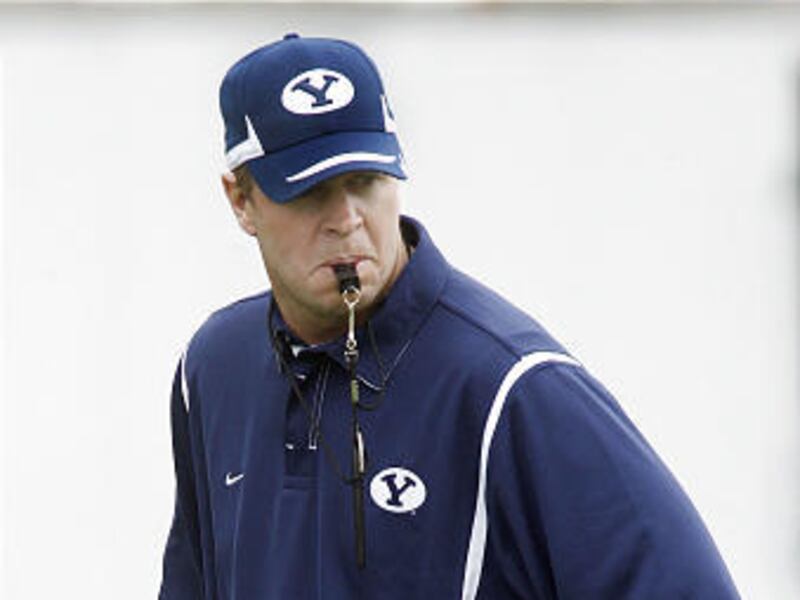
"Our goal is to win the national championship," head coach Bronco Mendenhall has said. "When BYU won it in 1984, it had won nine consecutive conference championships. I don't think it will take nine straight again."
But is it realistic, let alone possible, for a program without an automatic qualifying bid to the BCS claim a national title? After all, last year's Utes recorded a perfect season but weren't able to compete for the highest prize.
"I really feel bad for the University of Utah because if there wouldn't have been a BCS, they would have won the national championship in the exact same way we did because they were the only undefeated team," says former Cougar running back Kelly Smith. "If it would have been the way things were when we won it back in '84, I think Utah would have been the winner this year. But since it happened to us, the BCS conferences decided it wasn't going to happen again and they set up a system that's not really fair."
Opinions vary when it comes to BYU's chances of winning another championship.
"I don't think anyone wants it to happen besides the non-BCS conferences," Bosco says. "It would take beyond an unbelievable season. It would take beating by an Oklahoma by 30 — something that would catch someone's eye, then rolling over a bunch of other good teams. In this current system, it's set for a BCS team to win it every single year."
"I think the climate today would make it very difficult because of what Utah did this year," says coach LaVell Edwards, who led BYU to the '84 pinnacle. "They didn't even get a smell to play in the championship game. I just don't think that the BCS is set up to take care of anybody else but the BCS teams. They've kind of opened it up now and created an opportunity for other teams like Utah, Hawaii and Boise State. But to play for a national championship? It's going to be hard."
Robert Anae, who was an offensive lineman on the '84 team and currently serves as BYU's offensive coordinator, is optimistic.
"I do believe the BCS was designed to keep (the national championship) in the power conferences," he says. "The question is, do you believe a team from a non-BCS school will win a national championship? I do believe it can be done. There are very difficult structural barriers to overcome. But if you can put together more than one undefeated season in a row, you can play for a national championship. It's a much harder road (for non-BCS teams), but I do believe it is possible."
Trevor Matich, the center on that '84 team who is currently an ESPN college football analyst, also believes the Cougars can win another national title someday.
"Yes, they have a chance in the future," he said. "They need to go undefeated. They need to have a strong non-conference schedule for the BCS computers and they need help. In '84, we didn't have to worry about the BCS computers. But we had lots of help. A lot of teams did not take care of business."
Matich, Edwards and others who were part of that '84 team say the current program, under the direction of Mendenhall, is in good hands.
"BYU recruits well and they are very well-coached," Matich says. "Bronco Mendenhall is the right guy at the right time. Bronco understands what football at BYU is. It's a different animal, with purposes that go beyond football."
Though almost all of BYU's current players weren't even born when the Cougars won the national championship, it's something they're very much aware of, and they are aiming to win another.
That view is held not only by current BYU players, but future ones as well.
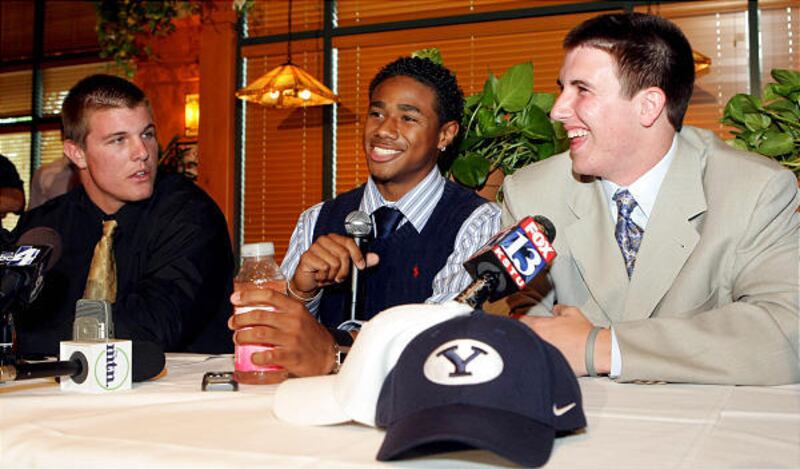
In June, when a trio of top-rated recruits, Jake Heaps (quarterback), Ross Apo (wide receiver) and Zac Stout (linebacker) announced at a press conference in Salt Lake City that they were verbally committing to BYU, they talked openly about the goal of a national title, knowing full-well that BYU is not an automatic qualifier for the BCS.
"This is the place that we felt we have the best opportunity to win a national championship," Heaps said. "In no way, shape or form am I guaranteeing a national championship. But we're going to work like crazy to come out here and work hard for a national championship. It's not a dream, it's a reality. With a lot of hard work and dedication, it's a goal we can achieve."
Heaps, Apo and Stout won't join BYU until 2010. The 2009 Cougars open the season on Sept. 5 in Arlington, Texas, against Oklahoma, which lost to Florida in the BCS championship game last January.
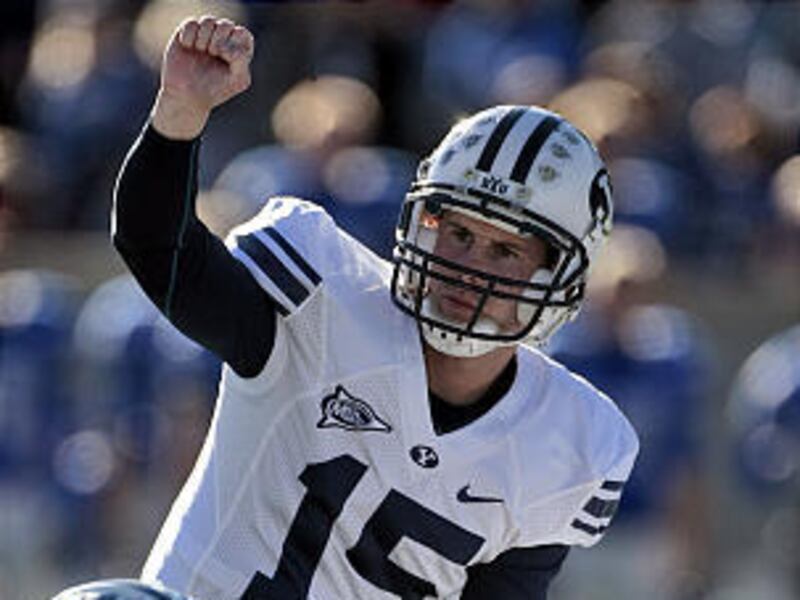
Current BYU wide receiver Tyler Kozlowski, the son of Glen Kozlowski, who starred for the Cougars in 1984, says he looks to his dad's '84 team for inspiration. Twenty-five years ago, it showed what can be done despite long odds.
"I think we are kind of similar (to the '84 team) because at BYU, people don't really give us much respect in regards to the BCS," he says. "With them going undefeated and doing what they did to prove the nation wrong, that put BYU football on the map for us now. The whole 'Band of Brothers' thing that coach Mendenhall brought here, his whole thing is trying to go back to when LaVell Edwards was the coach and reinstate the things LaVell did here. I think coach Mendenhall has done a great job with that. I think our teams are very similar in that aspect, where we try to become a family on the football team, and the last couple of years has shown that. As far as winning a national championship, it's been done before, why can't we do it again? I realize with the BCS, it's that much harder. But what they did, they laid the foundation for us. We just have to build upon that. If they did it, so can we."
e-mail: jeffc@desnews.com