

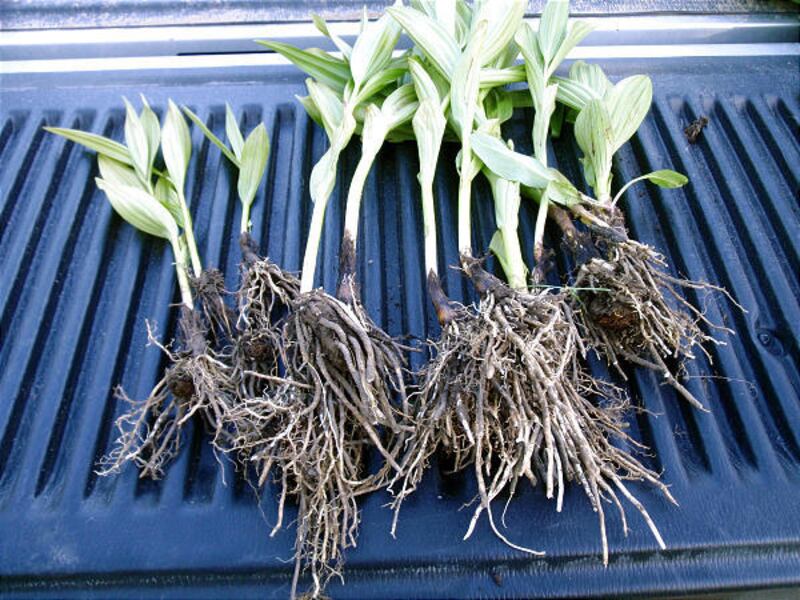
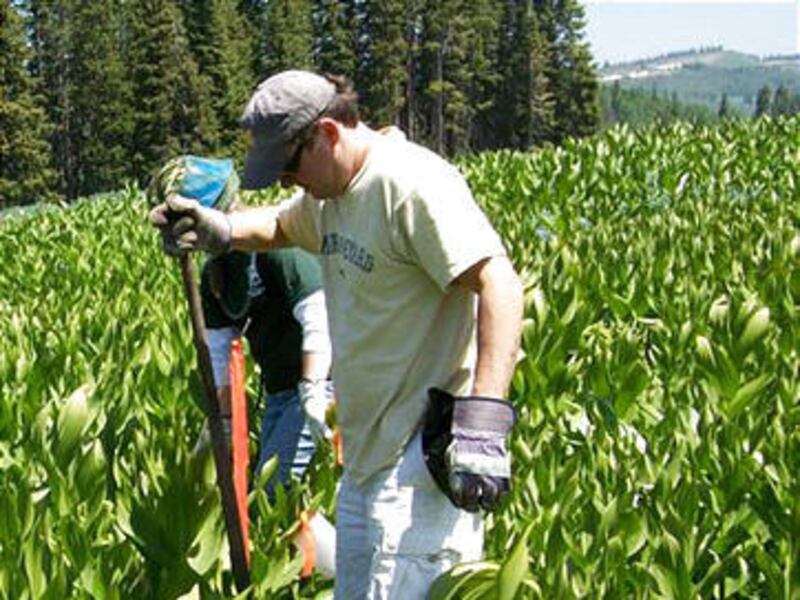
A cancer-drug manufacturer is scouring the valleys and meadows of Utah looking for a plant that local ranchers and researchers have long considered to be a smelly, toxic weed.
Known as "skunk cabbage" to most locals, the corn lily with the scientific name Veratrum californicum produces a unique chemical not found in other plants that is being sought by Infinity Pharmaceuticals, a Massachusetts-based drug company.
Company officials are now in the process of mapping areas of Utah, Idaho and Oregon where the plant grows, and have entered into agreements with the U.S. Forest Service and a small group of private landowners to harvest the plant, according to Joe McPherson, vice president of facilities operations for Infinity.
The plant provides a key ingredient in a new cancer-treatment drug, which can be administered orally and is now being used in phase I clinical trials in patients with no other hope of recovery, said Margaret Read, product development leader for the company.
Research in the past 50 years has shown the plant "caused significant losses from birth defects to the sheep industry in central Idaho in the 1950s. Occasional reports of Veratrum-induced malformations and toxicity in animals continue," according to a study published by researchers at Utah State University in 2002.
Researchers said the plant can produce birth defects in animals when a chemical in the plant prevents normal cellular movement during early embryo development.
Read said the plant contains a "natural inhibitor that nature provides, and we're turning it into a drug." Chemists have used the chemical to create the experimental drug, known as IPI-926.
"We had to conduct a very robust set of toxicology studies before the FDA approved moving forward with it," for use in clinical trials, she said.
Work on the drug began in 2003 or 2004. At that time, only small quantities of the chemical provided by the plant were available. That's when McPherson and his team began working with the Forest Service to harvest the plants.
"We dry them down and extract the material we need for the drug," she said, adding that after the plant is harvested, the area is then reseeded with native foliage.
The drug is administered orally as a capsule and given once daily, she said. It is being used in volunteer patients with solid tumors who are resistant to all available cancer treatments, "for whom there is no other hope."
Phase 1 trials are now underway at Johns Hopkins University; TGen in Scottsdale, Ariz., and the University of Colorado, with the study expected to enroll 30 to 40 patients.
Researchers are trying understand the safety of the drug and come up with a recommended dose for Phase II trials.
Because the drug, and others that deal with the Sonic hedgehog (gene) signaling process, have initially been shown to be effective in some of the more deadly cancers like pancreatic, ovarian, small cell lung, prostate, some skin cancers and tumors of the central nervous system, researchers are examining how it attacks each of those, Read said.
An article in the journal Science earlier this year described the drug's unique properties in treating pancreatic cancer in particular, with studies done in mice that closely mirror the human disease, she said.
"That particular responds very poorly to the chemotherapy used for it," in part because the drug can't access the tumor very well. In those studies, conducted in the United Kingdom, the new "acted in combination with the chemo, allowing it to get to the tumor," Read said.
The genetic hedgehog pathway that is normally active only in embryo development but largely silent in adults undergoes a "malignant reactivation" in many forms of cancer, which "turns it back on," within the tumor itself, she said.
McPherson said those who harvest the drug are most concerned with the content of chemical, which varies in the plants by location. Though researchers don't yet understand why that is, they're looking for the plants with the most potency for harvest, he said.
When a group of plants is located, harvesters take a sample and analyze it for content to determine whether the chemical content meets their needs.
The plant grows in areas of the West at elevations between 5,000 and 10,000 feet, and officials are anxious to identify additional sites where it grows.
For years, private landowners have been trying to eradicate the plant, and the Forest Service has had programs in place to do so as well, McPherson said.
"At this point, it has no known benefit other than what we're doing with it. The landowners we've been working with welcome us with open arms," McPherson said, not only because they get help getting rid of it, but private payment arrangements to harvest it are also made.
He declined to specify what those payments are, saying it depends on the location and content of the plants, as well as the size of the harvest.
The company is now working with as many as 10 private landowners in multiple states, mostly through word of mouth. McPherson is hoping that people with information about the location of the "skunk cabbage" will contact the company. Call 617-453-1015 or e-mail the company at veratrum@infi.com for more information.
e-mail: carrie@desnews.com