

At just 3 years old, Ryan Persing is already a whiz on his two-wheeled bike.
Yup — two wheels, no trainers.
The preschooler's secret to success in riding around his Morgan Hill, Calif., neighborhood is the new breed of kids' bicycles with no pedals nor training wheels.
Call them whatever you want — gliders, coasters, push bikes, balance bikes, running bikes, like-a-bikes (all terms now in use) — they have a growing fan base. Popular first in Europe, the bikes have been catching on for the past five years in America, business analysts say.
And just try to find someone who doesn't like them.
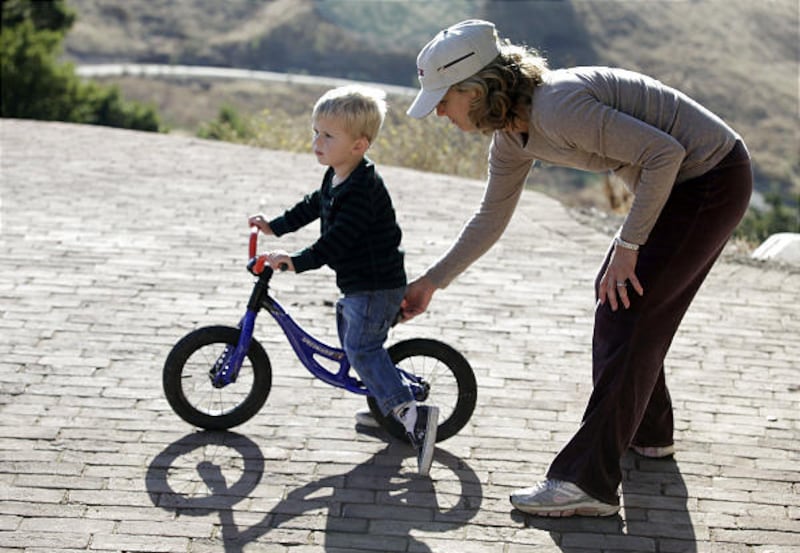
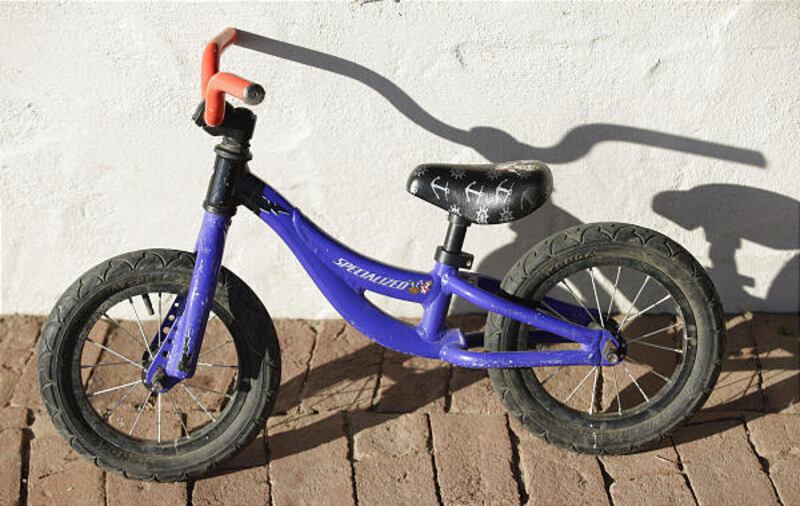
"Ryan loves riding his bike," says Diane Persing, as her son cruises by on a hand-me-down, blue, pedal-less Hotrock, a brand made right in Morgan Hill by Specialized Bicycle Components. "He loves riding with his big brother. They have a jump that they call "Super Jump," and they really love doing that together."
What the Persings and so many others dig about the balance bikes is less wobbling and more seamless coasting. As the name implies, balance is key, and the kids seem to pick it up almost without effort.
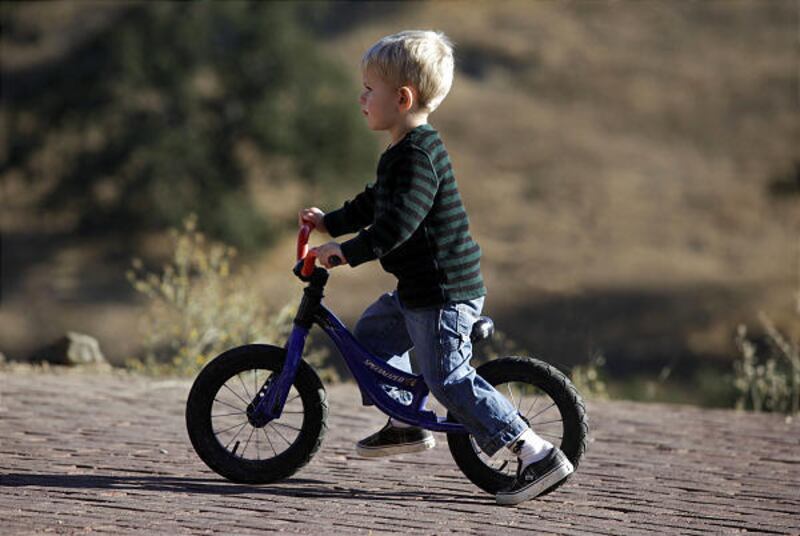
Just watch Ryan. The preschooler sits on the seat, pushes off the pavement with his feet and, when moving fast enough, glides off down the driveway.
His older brother, Nick, 7, got his first traditional bike — with training wheels—at age 4, a year later than Ryan. By age 5, Nick was riding on two wheels.
Persing doesn't know yet which son will have the distinction of learning to ride a pedal model more quickly, but she knows that little Ryan has had no major falls, and is now keeping up with his big brother. Ryan also finds the Hotrock easier to lug to the park than an old-style tricycle.
Experts don't know who learns to ride faster, either, in the contest between trainers and coasters. But they do know that, by age 3, most kids get what pedaling means; and between ages 4 and 6, the average child learns to ride on just two wheels.
Persing's neighbor, Nic Sims, is a spokesman for the company that makes the Hotrock. Clearly, Sims likes the concept of the push bike.
"It's a great way to get kids riding," he says. Sims' boy Charlie started learning to ride at 1 and had mastered the art of two wheels by age 3.
In 2006, Specialized Bicycle Components sold 500 Hotrock models — priced at $159 and equipped with footrests, like a motorcycle. Last year, according to Sims, the company sold 1,000 of them. "It's still a small category, but it's growing," he says.
Other dealers agree that more and more parents think the coasters are worth a try, maybe in the hope of turning their toddlers into mini-Lance Armstrongs.
Brian Wynn of Mike's Bikes in Los Gatos, Calif., says he sells two or three of the pedal-less bikes each week. "They're only in the shop for a few days," he says.
At Hyland Family Bicycles in San Jose, where they sell Raleigh push bikes for $120 to $140, co-owner Bill Hyland says the concept has "been gaining steam quick."
Susan Runsvold at TurningWheels for Kids in San Jose, a nonprofit that donates bicycles to needy children, has been handing out the balance bikes as gifts. "They're the most amazing little bikes," she says.
Market statistics indicate Americans buy 18 million to 20 million bicycles a year. But so far, there's no way to specifically track the number of balance bikes sold in this country, where sales are still tracked only by wheel size, rather than type.
Meghan Cahill, spokeswoman for the Washington, D.C.-based League of American Bicycles, says, "they are definitely growing in popularity, and helpful in learning to ride a bike without fear of wobbling."
She adds unequivocally: "We are pro balance bike."
While all children learn differently, and some families may prefer training wheels or consider a new pedal-less bike too expensive, Cahill says, "I wish I had a balance bike when I was learning to ride. It's great how you can just scoot around with no teeter-tottering."
It's also hard to count how many companies are making and selling the new bikes. If you Google the words "push bike" or "balance bike," you'll find lots of websites. Some of the more popular brands are Zum, Strider, Skuut and Kokua's Like-a-Bike, whose prices can run as high as $395. But Walmart and Target now sell brands starting at about $60. They come not only in metal but also in wood.
And even if parents can't afford a chichi new balance bike, Tim Blumenthal of the Colorado-based Bikes Belong Coalition points out they can simply take the pedals off their kids' regular bikes, lower the seats, and voila!
"Riding this way is just a really good idea," he says.
As for the balance bike's rising in popularity in the U.S., Blumenthal surmises it's a combination of positive media and the trendiness of kid-friendly products, such as cool strollers and baby carriers, which have seen an upsurge in sales.
For bike enthusiasts and those concerned about fitness for kids, it doesn't really matter who learns to ride faster, or why the push bikes have suddenly become a new craze. All they know that the more kids on two wheels, or even three or four, the better.
"Fewer kids ride today than 40 years ago," Blumenthal says. "So anything out there that makes it easier is a good thing."
Distributed by McClatchy-Tribune Information Services.