








When the Silver brothers, John A. and Hyrum A., brought the first automobile to Utah in 1896, they didn't have to wait in line for a driver's license. Those were the days.
For 37 glorious, years Utah was driver's license free. Just hop in and drive. No photos, no eye test, no driver's test. Just get out on the road and drive and crash at will.
Then in 1933, S.S. Christenson, the local manager of the National Auto Theft bureau, argued to legislators that Utah should adopt a motor vehicle operator's license law like the one in New Jersey. An article in the Deseret News on Feb. 20, 1933, reported that Christenson said the lack of a driver's license law led to the death of 123 people on Utah's roads in 1932 and that if they had a law, only about nine people would have died.
The jig was up.
Legislation was passed that required people to get licenses by the end of 1933. The cost was 25 cents, and required no test unless you waited until March 1934. About 75,000 licenses were expected to be issued in Salt Lake county and 175,000 for the whole state.
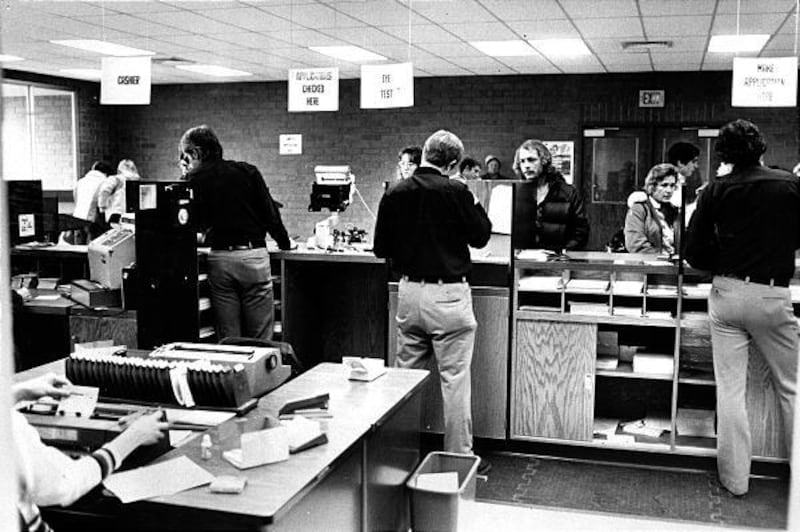
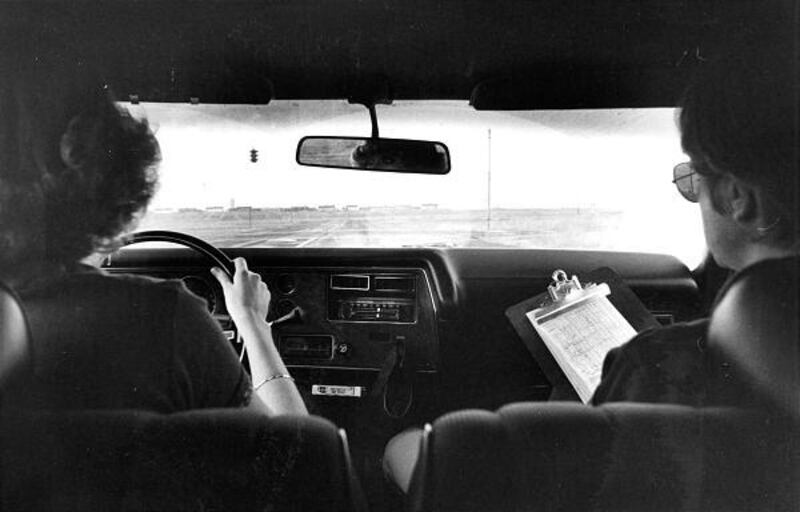
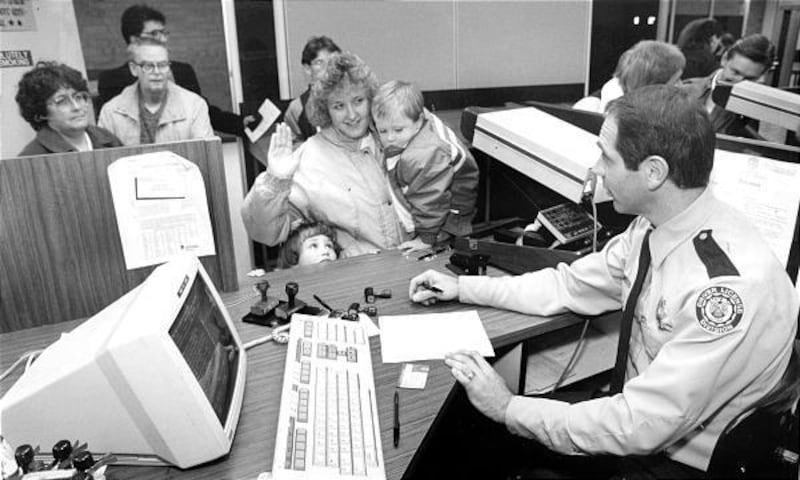
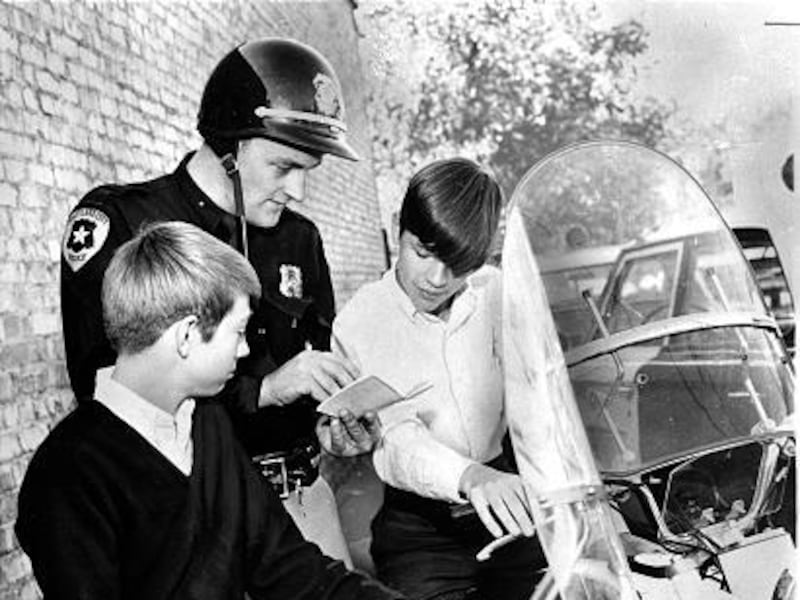
Maybe the roads were safer, but ever since December of 1933, Utahns have waited patiently — and impatiently — to get their driver's license. Photo historian Ron Fox scoured the Deseret News archives to find some photographs that document 77 years of waiting to get a driver's license.
Maybe the worst day in Utah's driver's license-waiting history was May 4, 1957. And it was all the Deseret News' fault.
The Deseret News ran a few investigative stories about "flagrant traffic violations being committed by persons who by law shouldn't be allowed to drive on the state's highways," or in other words, people driving after having a suspended license. These lawbreakers, like today, were driving drunk and otherwise causing havoc on the roads.
This report created a sensation and led to a crackdown called for by then Utah Gov. George D. Clyde. Blockades and checkpoints were set up in the best 1950s tradition.
The purpose of the blockades, according to the Deseret News, was to catch the "menaces," but "the tightening up has reminded many other to take a look at their licenses — only to find out they are not legally authorized to drive because the permits have expired." Three to four percent of people stopped in the blockades did not have a driver's license.
A sort of panic ensued as people rushed to get legal.
Dave Campbell, chief examiner at the driver's license testing station at the State Fairgrounds said at the time, "These last two days have been the heaviest we've ever had." Hundreds of people came to renew expired drivers licenses — afraid they might get caught in the dragnet. Campbell said 100 applicants had licenses that had been expired for five years or more — some of whom even claimed they hadn't driven that whole time.
Over time, requirements and costs for a driver's license have changed.
The Utah State Women's Safety Council heard an address in 1939 advocating eye tests for drivers. In 1955, the Utah Legislature passed such a law. In 1967, Gov. Calvin L. Rampton recommended the adoption of plastic driver's licenses.
In 1973, the plastic licenses were upgraded to be washing-machine proof.
And so it went. Some changes adding to the wait time (such as this year's addition of identity document requirements), others shortening the time.
There is no doubt that S.S. Christenson was correct in arguing that licensing good drivers and banning bad drivers reduces accidents. There is some doubt, however, that driver's license renewal lines will someday be nonexistent. But Utahns hope for that day.
e-mail: mdegroote@desnews.com