

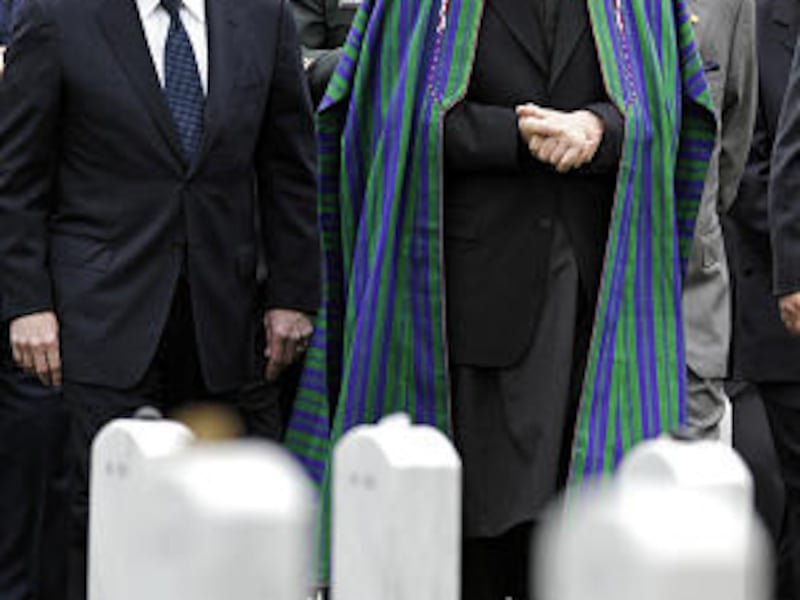
WASHINGTON — Since the end of the draft two generations ago, the number of military veterans in Congress has fallen by roughly two-thirds.
It mirrors a drop in veteran presence across all levels of American society. But as another Memorial Day arrives in what is destined to become America's longest war — the one in Afghanistan — military veterans disagree on the effect the diminished number of veteran-politicians has had on the nation's legislative body.
Some do not see service as a prerequisite for sensibility and understanding of defense and veterans' issues.
"There are many members who continue to be passionately supportive of veterans regardless of their own experiences," former Senate Democratic Leader Tom Daschle, an Air Force veteran from South Dakota, said.
"What I am hopeful for, regardless of the number, is the recognition of the lifelong care that will be required for the extraordinary number of veterans who are amputees and PTSD (post-traumatic stress disorder) victims. That must be our country's highest priority regardless of how many get elected to Congress."
Others view veterans as an endangered political species and believe that the volunteer military provides a unique window to the nation's defense and veterans' care needs and exhibits a trait sorely needed in politics today.
"We have a new breed of leader in this country (that) has a track record of demonstrating selfless service to country," said Marine Corps veteran D. Patrick Mahoney, head of Iraq Veterans for Congress Political Action Committee. "I think it is quite clear that the selflessness of the American Marine, soldier, sailor is quite a contrast to the selfishness of the American politician."
As Memorial Day arrives, some 4,400 American military personnel have died in Iraq and more than 1,080 have died in Afghanistan, according to icasualties.org.
The Congressional Research Service says that 4,435 Americans died in the Revolutionary War; 364,511 in the Civil War; 116,516 in World War I; 405,399 in World War II; 36,574 in Korea and 58,220 in Vietnam.
The military draft ended July 1, 1973. According to the Military Officers Association of America, only 25 of today's 100 U.S. senators are veterans, compared with 73 in 1981. The percentage of veterans in the House of Representatives fell from 62 percent in 1981 to 22 percent — or 94 members — today, according to the association.
"It is really society in general," said Craig Roberts, media relations adviser for the national American Legion. "When I was growing up, and I am 60, everybody was a veteran: dads, uncles, all the male teachers in your school. Now it is very rare, and that is represented in Congress, and we are all concerned about that."
Chuck Raasch writes from Washington for Gannett. Contact him at craasch@gannett.com, follow him at http: twitter.com/craasch or join in the conversation at www.facebook.com/raaschcolumn.