


PROVO — The sailors are obviously having a hard time keeping the boat upright in the surging waves.
One strains at the helm as others huddle in fear. But in the center of the boat, a figure dressed in white stretches out his hand.
The painting is small but exquisitely done, rich with detail, full of impact and emotion. You can almost feel the rocking boat, almost sense the peace that is to come.
It is clearly the work of a believer, says Rita Wright, museum educator at the BYU Museum of Art, and it invites you to believe, as well.
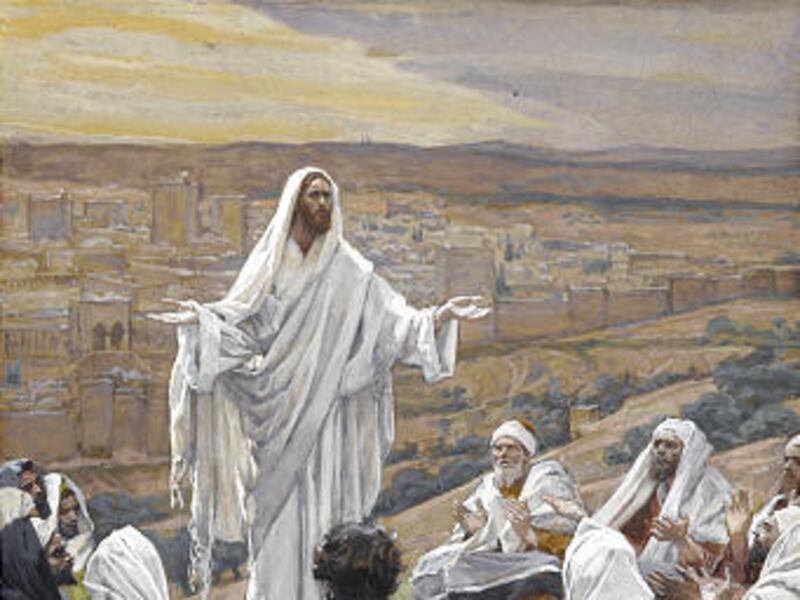
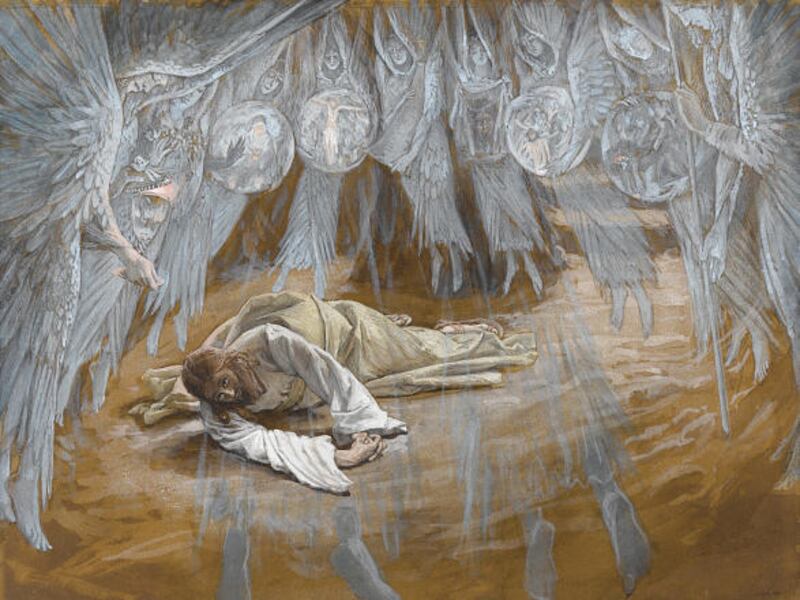
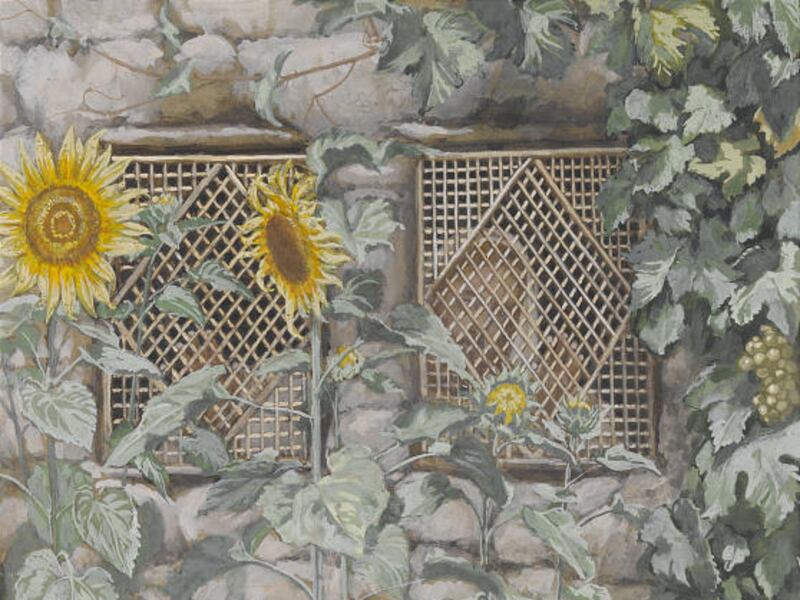
That's one thing that Wright loves about the exhibition, "James Tissot: The Life of Christ," on display at the museum through Jan. 9.
The show includes 124 watercolors by the 19th-century French artist on loan from the Brooklyn Museum.
The exhibition is an expression of one man's faith, she says. But it has universal appeal.
"Every visitor will have different thoughts or impressions as they look at Tissot's paintings, but each will bring their belief in Jesus Christ. We hope this exhibition will cause, as Tissot put it, 'each and all (to) withdraw to ponder, as the Virgin did, these things in our hearts.' "
Tissot was "a wonderfully skilled artist. His works are beautiful, refined," Wright says. "They also have a spiritual power that grabs, that allows all viewers to be touched by the spirit."
How the works came to be created is equally interesting, she says.
The story of James Jacques Joseph Tissot, as it is for many devout believers, is the story of two lives: pre-conversion and post-conversion.
The "pre" Tissot was a fixture of French and English society who lived an extravagant lifestyle and had a lot of success in the world of Victorian art.
He was born in 1836 in Nantes, a French seaport. His childhood there inspired a lifelong interest in nautical things and contributed to his ability to paint shipboard scenes.
He went to Paris in 1856 to study art and became acquainted with the young James Whistler and also became friends with impressionist painter Edgar Degas.
Tissot traveled about the continent, exhibiting for the first time at the Royal Academy in London in 1864. He also anglicized his name to James.
In 1870, the Franco-Prussian war broke out, and Tissot spent some time in the army, but after the defeat of France and occupation of Paris, he left for England in 1871.
A few years later, he met Kathleen Newton, an Irish divorcee, who had had a child out of wedlock. Tissot flaunted convention by openly living with his mistress until 1882, when Newton, who was dying of consumption (now known as tuberculosis), cheated the disease by taking her own life.
Tissot was devastated and returned to Paris almost immediately. His life would change in the mid-1880s after a religious experience in the Church of St. Sulpice (well-known now to all Dan Brown fans).
"He later said he had a 'vision' in which he saw the Savior and two men sitting in the rubble of a building that looked like what we later saw in pictures of World War I," Wright says. "He saw it as a witness of the Atonement for all men. And he decided the rest of his life would be devoted to religious painting."
Tissot read the New Testament multiple times and made pilgrimages to the Holy Land in 1886 and 1889. He made numerous sketches of local architecture, clothing and customs. He wrote pages and pages of commentary on the New Testament, which showed that he devoted a significant amount of time pondering not only the divine nature of Christ but also his own relationship, Wright says.
"Some of his commentary reads so much like James E. Talmage."
Tissot made sketches, but "we think he also painted a lot in the Holy Land," she says. "That's one reason why the paintings are all small; he had to carry everything around with him. But they are also small because he wanted to create an illustrated Bible."
Which he did; the Tissot Bible contained text in both Latin and French, as well as his own commentary. A copy of the Bible came with the exhibition, "But we found we also had a copy at the Harold B. Lee Library," Wright says. "It belonged to Joseph F. Smith and was donated to the library by Joseph Fielding Smith."
Tissot devoted the last decades of his life to religious works, even though they were not hugely popular in the secular France on the day.
"Degas complained that Tissot was no fun since he 'got religion,' " Wright says. But his work was shown in the State Salon in Paris, and reports talk of the clergy coming in record numbers, and of women kneeling before the paintings weeping, she says.
After finishing the New Testament, Tissot began working on the Old Testament. "His design of the Ark of the Covenant, in fact, is the one Steven Spielberg used in his movie," Wright says.
She can relate to the women of the Paris exhibition. "I've had my moments here," she says. But what's so fun, she adds, is that "it's like a little detective game. Every time you look, you find interesting little facts, new things. He really captured a sense of what the Holy Land looked like. It's so interesting to see how he depicts divine things, to look at the details in the rugs and furnishings."
Tissot shows a younger Joseph than many painters. He used a rare saffron color for the robes of the Magi. The sojourn in Egypt shows a reddish-haired boy at the docks. A young carpenter carries a wooden plank in a way that foreshadows his fate. He wears traditional Hebrew clothing as he reads scrolls in the synagogue. At Bethesda, mystical hands stir the water.
There are so many interesting details, Wright says.
One of her favorite paintings is one of "The Good Shepherd" bringing back the lost lamb.
"This is one of the most oft-repeated images, but I've never seen one where the shepherd has to made such an arduous journey over the rocks. You realize what he had to go through, the physical pain involved in saving the lost ones," Wright says.
Scenes of the crucifixion are graphic and sometimes hard to look at, "but we also get a perspective from the Savior's point of view, and another from the back of the cross that is amazing."
And at the end, as Jesus ascends into heaven after his resurrection, "he leaves his footprints as a reminder that he walked among men. That's a powerful image," Wright says.
It all makes going through the exhibition "a different little journey each time," she says. And it is a journey that touches all people of faith.
As Tissot wrote in one of his commentaries, "I have chosen from amongst the scenes of the public life of Jesus, those which best illustrate not only what He is, but what He was, and what He ought to be to us. Especially those which, being more suggestive than others, are a better starting-point for the imagination in its effort to rise to the comprehension of that incomprehensible ideal which is the Christ."
If you go . . .
What: "James Tissot: The Life of Christ"
Where: BYU Museum of Art, Provo
When: Through Jan. 9
Admission: Free
Web: moa.byu.edu
Also: Free docent-led tours can be scheduled a week in advance at 801-422-1140.
e-mail: carma@desnews.com