

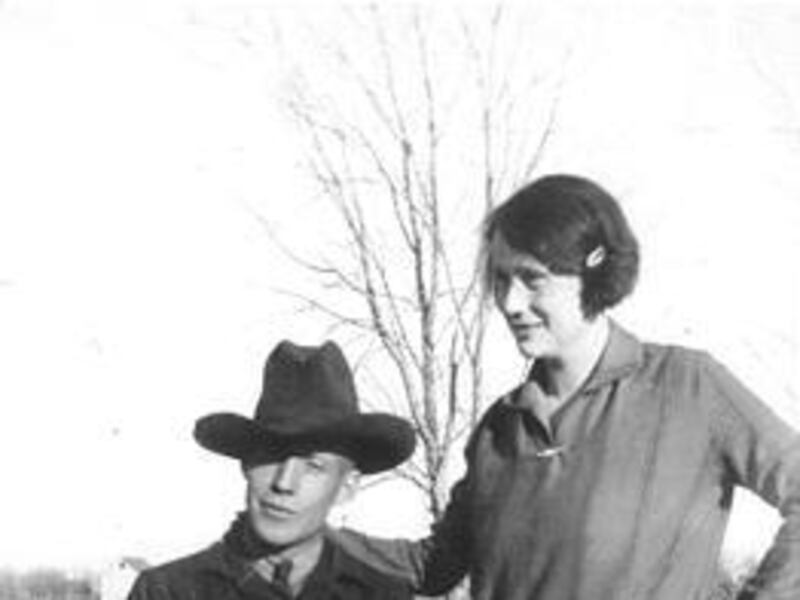

Bill Tibbetts was an outlaw — or so they said. Lawmen claimed that he had rustled cattle and then fled from justice.
Tibbetts claimed he was framed.
But as he saw how the case was stacked against him, when he had a chance to escape, he took it.
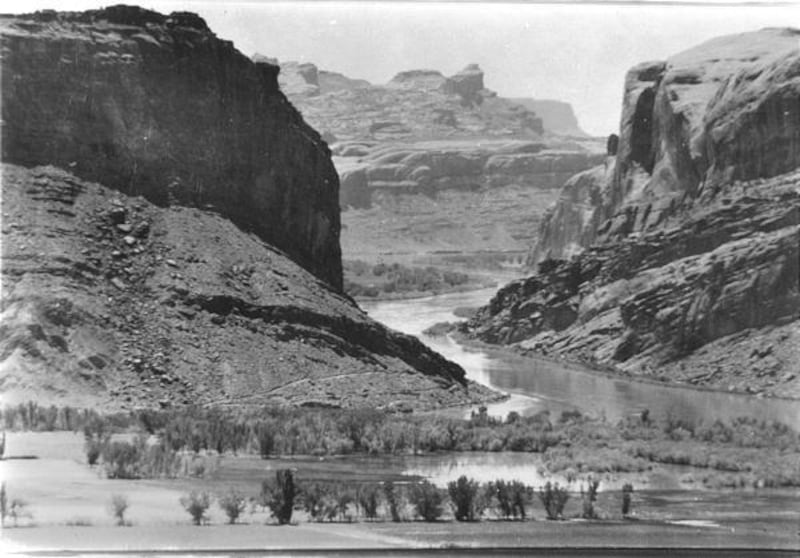
Either way, the adventures of Tibbetts were one of the last sagas of what we think of as the "Old West" that played out in one of the most remote and barren landscapes of the state, from the infamous Robber's Roost to what is now Canyonlands National Park.
The story is told by Tom McCourt in "Last of the Robber's Roost Outlaws: Moab's Bill Tibbetts," published by the Canyonlands National History Association.
It's a fascinating story, and one that has largely been untold, said McCourt in a telephone chat from his home in Price.
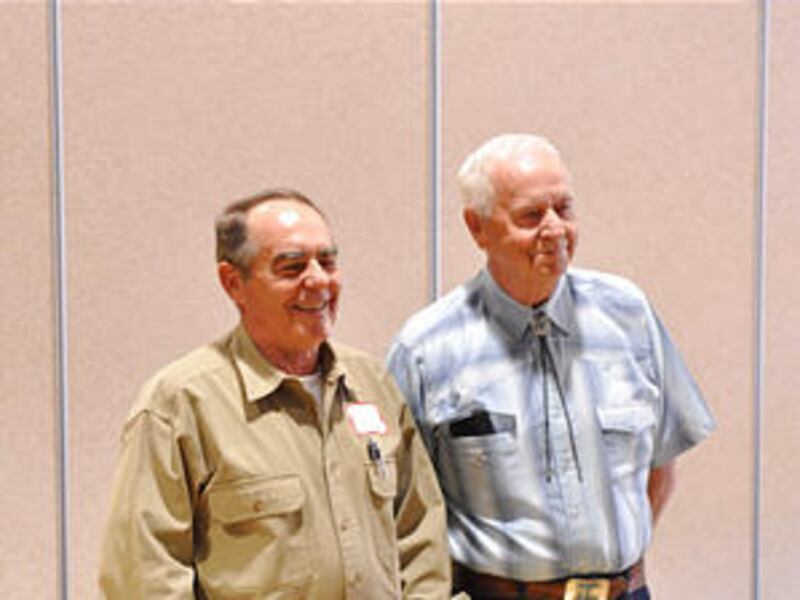
It came to his attention through Ray Tibbetts, the son of the outlaw. "Ray had seen some of the other books I've done and came to see me with a stack of stuff. He said he'd been looking for 50 years for someone to write his dad's story."
As McCourt started looking through the materials, he came across a story that immediately caught his interest. It not only captured the flavor of the outlaw era, but also told a lot about the hardships and travails of eking out an existence in the southeastern Utah.
Although the story starts in the late 19th century, much of it plays out in the 1920s.
We think of the 1920s as being civilized, of home to automobiles and department stores and high fashion. But not in southeastern Utah, McCourt says. "In the early 1900s, most of that area was still untamed, unnamed and unexplored."
Bill Tibbetts grew up in this area, and did not have an easy time of it, especially after his father was murdered by a neighbor in a domestic violence dispute. "Bill was a tough guy, and he often looked for trouble," McCourt said. "But he was a manly man, a true cowboy. I'd have loved to have met him."
Ray Tibbetts did know him. Bill Tibbetts was his father, after all. "As a young boy, at about 10 or so, I started hearing stories about an outlaw named Bill Tibbetts. I thought, 'That can't be my dad — he didn't do those things.' But as time went on, I heard more, and finally asked him about it."
They lived in Moab at the time, "and he told me, 'Yeah, I did those things, but they are in my past, and I can't change them. I don't do them now.' "
By that time, Bill Tibbetts was a respected member of the community, "and his word meant everything to him. His word was his bond, and a handshake was all it took," said Ray Tibbetts, in a telephone interview from Moab, where he still lives. "That was how he raised us boys. I only knew him as an honest man."
All his father ever wanted was to be a cowboy, Ray Tibbetts said. But it was not easy in that time and place.
Bill Tibbetts got in trouble with the law at a young age. "He and a buddy came across some horses and got the idea of rustling them. They did, and they got caught."
Bill Tibbetts was sent to reform school, but he sold his own horse and sent his saddle and everything else he had back to pay for the horses. When World War I broke out, he was allowed to join the Army and serve out the rest of the time that way.
"But when he came back, he still wanted to be a cowboy," his son said. "He took his mother's cows into the Maze District. It was beautiful country, but it was having a severe drought. He moved to Grand View Point and then to Island in the Sky, where other ranchers had herds. He tried to co-mingle his cows with theirs, but they didn't want him there, and it caused a range war."
As Ray Tibbetts tells it, "The other owners rigged up a charge of rustling against him. The sheriff came, and he turned himself in. But the only attorney available to him was a brother to some of the other users, who told him his best chance was to break out of jail."
Bill Tibbetts did that and became the subject of a huge manhunt. But he eluded capture and eventually made his way to Oklahoma, where he adopted an assumed name and married. They moved on to New Mexico, and after the statute of limitations on his crimes expired, came back to Utah, living first in Hanksville and then in Moab.
When his wife, Jewel, found out about his assumed name, she made him marry her again, with his real name, and he used his real name the rest of his life.
He even became a deputy sheriff. That's a tradition of the Old West, McCourt says. "Like with Matt Warner, people found that outlaws often made the best lawmen. Bill had a reputation for intimidating people, but they respected him."
Bill Tibbetts also ran a store in Moab and worked in real estate. He and his wife were killed in 1969, after being hit by a drunken driver. They had four boys, including Ray, who was the youngest.
McCourt had a lot of old newspaper clippings to help him tell the story. Ray Tibbetts took him out to see a lot of the old trails and areas and told him the stories he had learned from his dad. McCourt also uses fictional dialogue to help bring the story to life. It's impossible to know how some of the conversations went, but McCourt felt like he got to know Bill Tibbetts pretty well.
McCourt also includes some Indian stories from the day. "They speak volumes of the mind-set and prejudices of the times, but they were a part of life."
Other than the fact that it is a very interesting story, another thing he loves about it "is how it makes the Canyonlands area come to life. I visit there, and it puts humanity into places like Elaterite Basin, the White Rim, Island in the Sky."
You appreciate even more what people went through to tame that country, he says. "You look at the distances. From LaSal to Moab is 40 miles to drive now, but that took all day on horseback, and it was a grueling trip. To go into Moab for supplies would often take a week."
McCourt himself was "a teenage cowboy. I went to work on the Preston Nutter Ranch, and being around those big, crusty cowboys, I grew up in 90 days," he joked. McCourt eventually ended up in the coal mines in Price and then was laid off and turned to writing.
Times have changed, he says. But he thinks we can learn a lot from the grit and gumption that it took to live in those earlier days, as well as the loyalty to land and family that grew out of the hardship.
"It was a difficult time," he said, "and we don't appreciate it nearly as much as we should."
e-mail: carma@desnews.com