

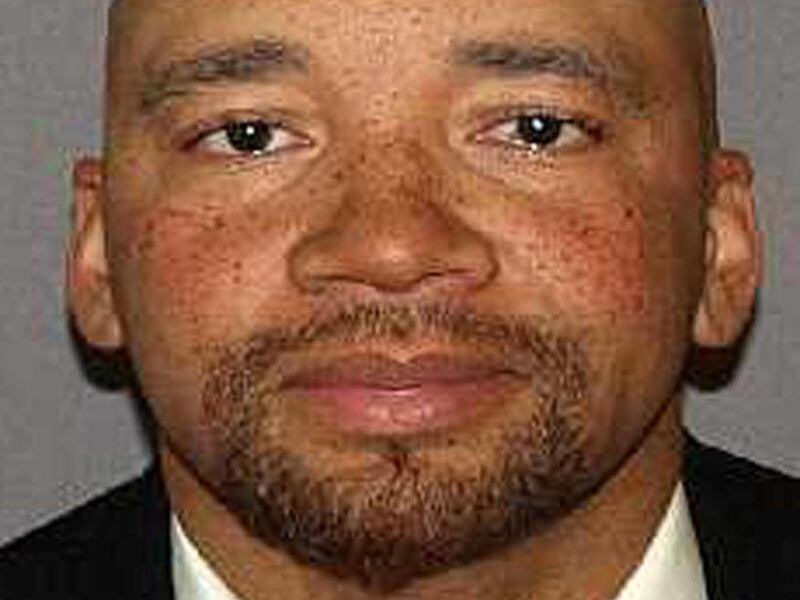
COLUMBUS, Ohio — A pharmacist facing nearly 200 counts of illegally dispensing prescription painkillers and linked by the government to two drug overdose deaths pleaded guilty Tuesday to three charges in exchange for cooperating with the government and ending his career as a pharmacist.
Before entering his plea, Harold Fletcher said he had screwed up by not asking a patient enough questions before prescribing 480 tablets of oxycodone in February 2006.
"I didn't ask the appropriate questions of patients," Fletcher said. "I didn't document it."
Fletcher, 42, pleaded guilty in federal court Tuesday to illegally dispensing a prescription drug, filing a false tax return and hiding money by making cash deposits under a limit that triggers automatic bank review.
The deal calls for a prison sentence of no more than two years. It also calls for Fletcher to help the government in other cases involving illegal drug prescribing.
In March, Paul Volkman, a doctor who worked at the Tri-State Health Care and Pain Management clinic in Scioto County and has been linked to Fletcher, goes on trial on charges of helping distribute millions of highly addictive drugs that authorities said led to nearly a dozen deaths.
Volkman's attorneys have dismissed the charges as a case of "an inflated and irrational fear of the medical science of pain treatment."
Assistant U.S. Attorney Mike Marous wouldn't say Tuesday whether Fletcher was providing help with the Volkman case.
Fletcher's attorney, Brad Barbin, said his client was in the wrong business because he was not good with paperwork.
"Because of the kind of practice it is, and because you're not paying attention, you fall into this trap, where the business is good, you're not asking the right questions, and before you know it you have been doing it too long for the government to say, 'We're not going to make you a target,'" Barbin said.
Fletcher pleaded guilty to prescribing 480 tablets of the painkiller oxycodone on Feb. 3, 2006, to a patient who went to his Columbus pharmacy for pain treatment.
Internal Revenue Service special agent Della Blunk testified in court that Fletcher "deliberately closed his eyes to the high probability that the prescription was not prescribed for a legitimate medical purpose."
Fletcher then took the somewhat unusual step of trying to defend himself, saying the patient was an Iraq war veteran suffering from cancer, shrapnel wounds and post-traumatic stress disorder. As Fletcher, his attorney and prosecutors debated the point, U.S. District Court Judge Michael Watson temporarily suspended the hearing.
After about 20 minutes, the hearing resumed and Fletcher pleaded guilty to that count and two others.
Records from the Drug Enforcement Administration show that Fletcher filled painkiller prescriptions in 2009 for two people who died of overdoses the next day.
One of the people was a Morehead, Ky., man who died Nov. 5, 2009. The second was Leslie Dawn Cooper, who struggled with addictions for years before dying at age 34 of an overdose of oxycodone, the key ingredient in OxyContin, on Oct. 3, 2009.
The night before, Cooper paid $250 in cash for the prescription in Portsmouth, then took it to Fletcher's pharmacy in Columbus, 85 miles away, because no local pharmacist would fill it.
Records from the Drug Enforcement Administration show that Fletcher filled Cooper's prescription for 90 oxycodone tablets.
Cooper lived in Scioto County, in southern Ohio, considered by the DEA one of the worst places in the country for prescription painkiller abuse.
Cooper's mother, Barbara Howard, on Tuesday said the plea deal was justice for her daughter.
"He's hurt a lot of people," she said. "There's been a lot of people that have suffered."
Fletcher also pleaded guilty to depositing $245,846 in 26 payments each under $10,000 to avoid federal reporting requirements. He also pleaded guilty to filing a false tax return for 2006.