

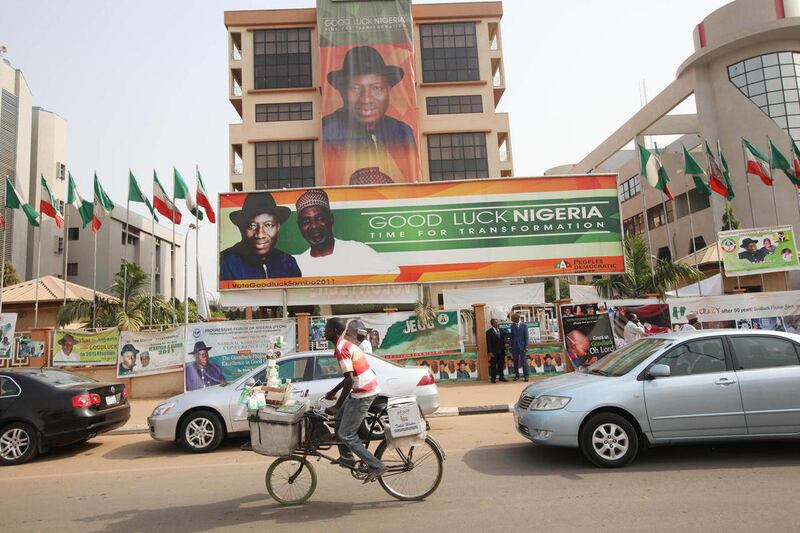
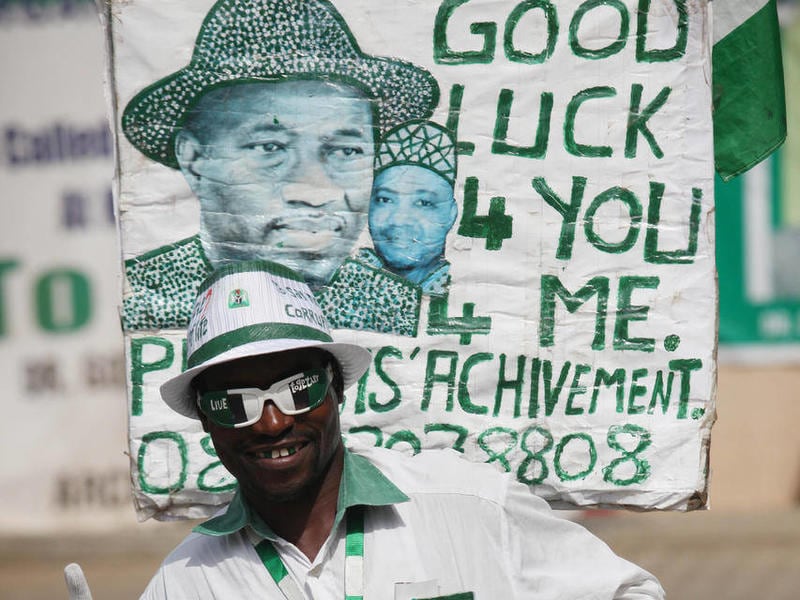
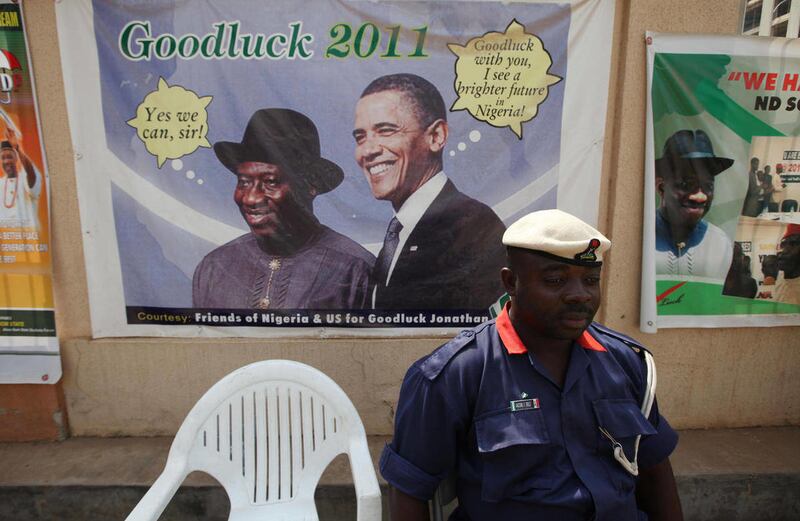
ABUJA, Nigeria — Nigeria's ruling political party will pick its presidential candidate Thursday for the April election, a decision that delegates may make based on where the candidate is from rather than what he has to offer.
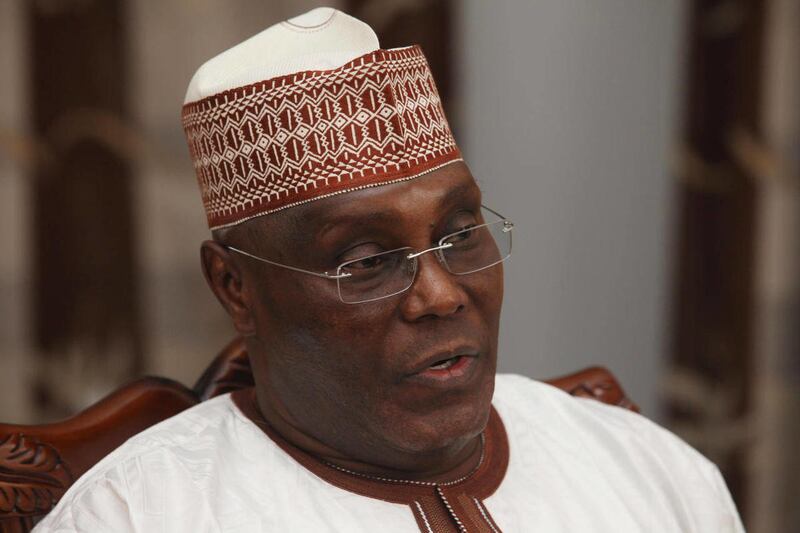
That vote, pitting President Goodluck Jonathan against former Vice President Atiku Abubakar, highlights the religious and ethnic fault lines still running through the oil-rich nation of 250 ethnicities more than 40 years after its deadly civil war.
Those differences still lead to violence and killings even today and this election, challenging the notions of power-sharing in the ruling party, could stoke the flames.
"Over a period of time, we've come to realize to achieve total integration, unity, peace and stability, power sharing must be part of our political institution," Abubakar said in an interview Wednesday with The Associated Press. "This is ... so that every ethnic nationality has a sense of belonging."
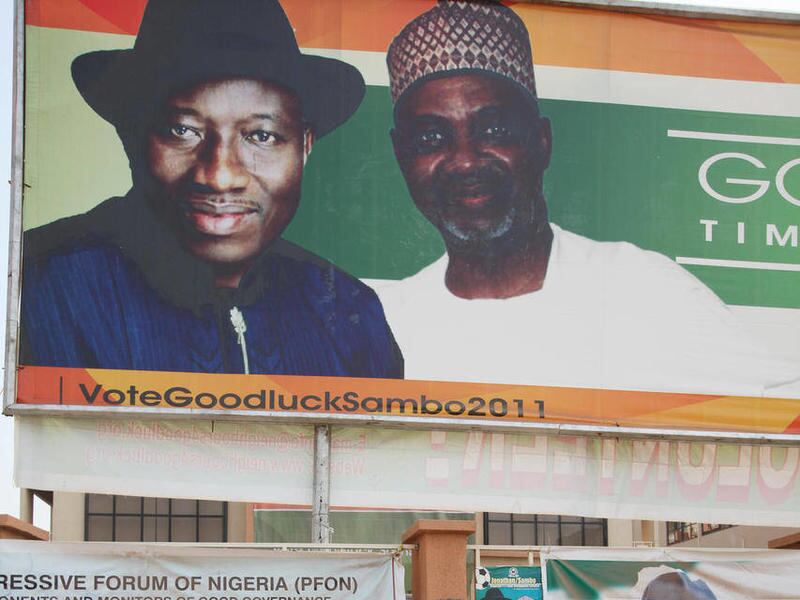
Jonathan, a Christian from the nation's oil-rich southern delta, came into the presidency after the May death of elected leader Umaru Yar'Adua, a northern Muslim. Under an unwritten power-sharing agreement in the ruling People's Democratic Party, the presidency should have been held for another term by a northerner because a southerner had it for the first eight years of democracy in the nation.
However, Jonathan decided to contest the coming election. That decision brought anger from northern leaders fearful of being cut out of the lucrative position of president in a nation fueled by billions of dollars of oil revenues.
Jonathan himself represents a minority ethnic group in the country, the Ijaw from the Niger Delta.
"We've been told a minority cannot be president, but in Jonathan, we are finding a minute minority tribe standing in an election," Dalhatu Sarki Tafida, the director general of Jonathan's campaign, told the AP in an interview Wednesday.
Some hail his ascension as a sign citizens in the country can first identify themselves as "Nigerian" rather than an ethnicity.
In the south, many also believe the region deserves more time in power. Since Nigeria's independence from Britain in 1960, the country's history saw military dictators hailing mainly from the country's Muslim north until democracy took hold in 1999. All of the country's oil wealth also flows from the south.
Those in the north "are grumbling because they think they have a right to rule this country," said Charles Dokubo, an analyst at the Nigerian Institute of International Affairs.
But the north remains a potent force in the country's military and other power structures.
"I cannot see how the northern part of this country, which controls 60 percent of the population, would be out of possession for" that long, said Kabiru Mato, a political science professor at the University of Abuja.
As the campaigns of Abubakar, Jonathan and minor candidate Sarah Jubril remain light on policy, they'll rely heavily on personality.
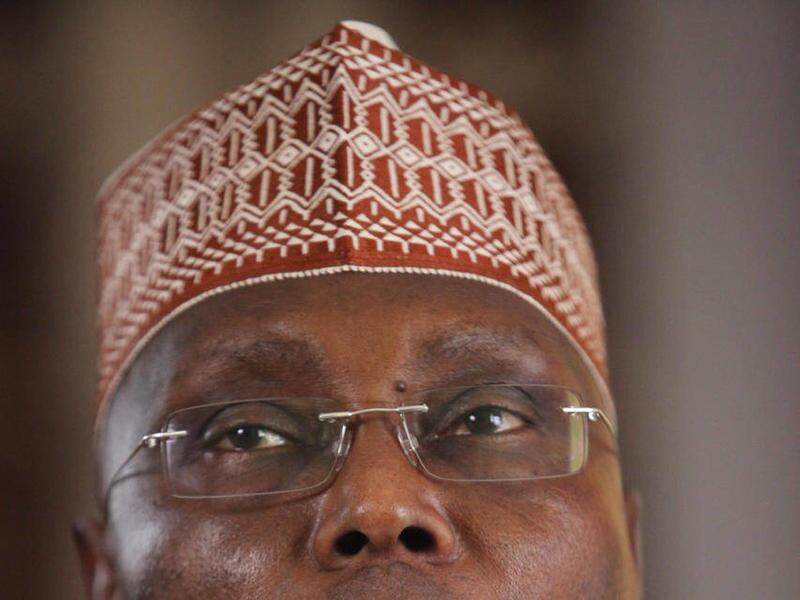
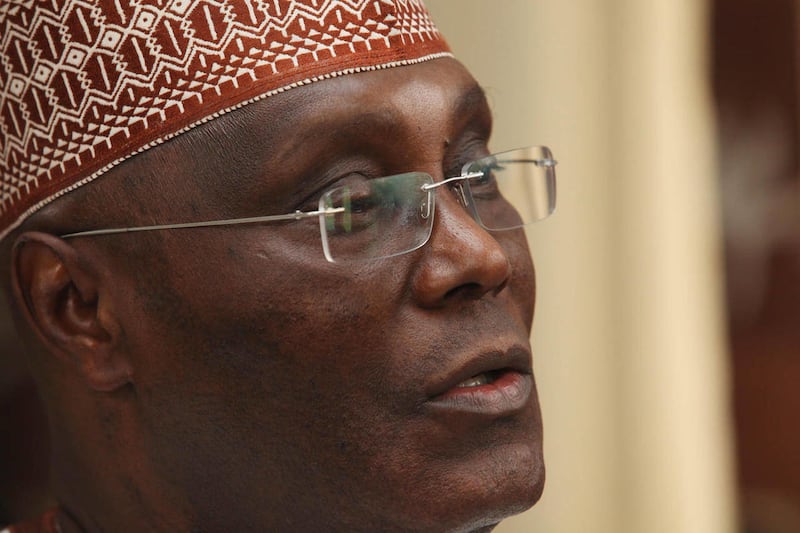
Abubakar, a stern-faced former Customs officer who created an oil and gas empire, faulted Jonathan for being a candidate weak on experience who rose to power on "all accidental positions." Jonathan first became governor of Bayelsa state only after the impeachment of the elected leader, then rose to the vice presidency after being picked by outgoing President Olusegun Obasanjo.
Abubakar also criticizes Jonathan for not stopping the religious violence that's killed hundreds in the north over the last year and the recent bombings targeting the capital. He blamed the violence on weakness from Jonathan and the nation's endemic poverty. World Bank statistics suggest most Nigerians live on less than $2 a day.
"It is frightening to see young, unemployed men asking for money, asking for food, banging on my cars. It's really frightening," Abubakar said Wednesday. "Unless government moves in with massive employment programs, we'll continue to have it."
Jonathan's top campaign manager blamed some of the violence on the candidate's opponents.
"We believe that it is caused by some desperadoes in politics ... to make sure that our candidate, the president, looks like he is not able to control," Tafida said. "It has nothing to do with incapacity or weakness on the part of our president."
However, both candidates have their share of faults. Jonathan's administration arrested the top campaign manager of former military dictator Ibrahim Babangida's failed primary campaign, claiming he was linked to the Oct. 1 bombings that hit Abuja, Nigeria's capital. The bombings killed at least 12 and wounded dozens more. The campaign manager was later released without charges.
Jonathan also remains soft-spoken and appears indecisive on major issues. As the crisis in Ivory Coast reached its peak, Jonathan left members of a regional bloc wanting to speak about the issue this month. He instead went to campaign for a gubernatorial candidate.
Abubakar is trailed by allegations of corruption. U.S. federal agents searched his Maryland home in 2005 as part of their prosecution of fallen U.S. Rep. William Jefferson of Louisiana. A 2010 U.S. Senate report aired allegations that Abubakar and one of his wives funneled more than $40 million into the country through illegal wire transfers. In his own country, an anti-corruption agency accused him of siphoning $150 million in oil money from the federal budget.
Abubakar denied all the allegations Wednesday, stressing he never faced any criminal charges.
Yet all of these issues may prove moot with delegates concerned about keeping Nigeria's uneasy democracy rumbling along. To do that, many may simply decide based on where the candidate is from.
"A lot of people always take cover under their individual identities," Mato said. He added: "You don't try to wipe away the colors that make people think they can take part in the federal system."