

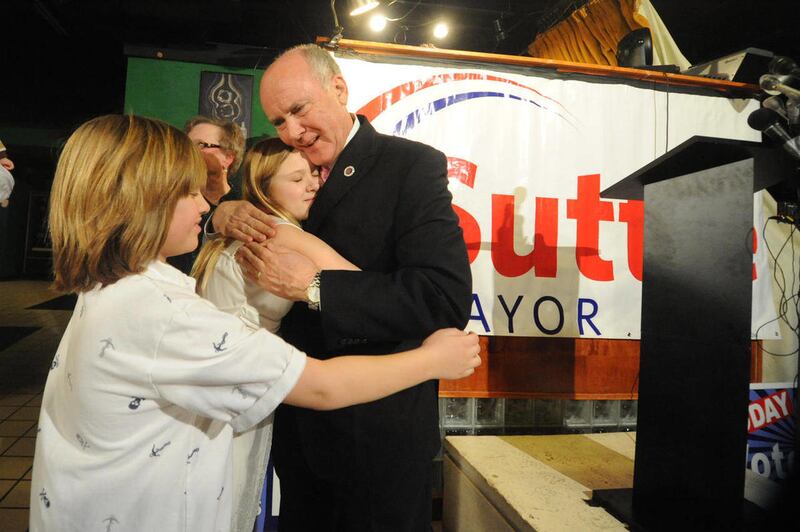
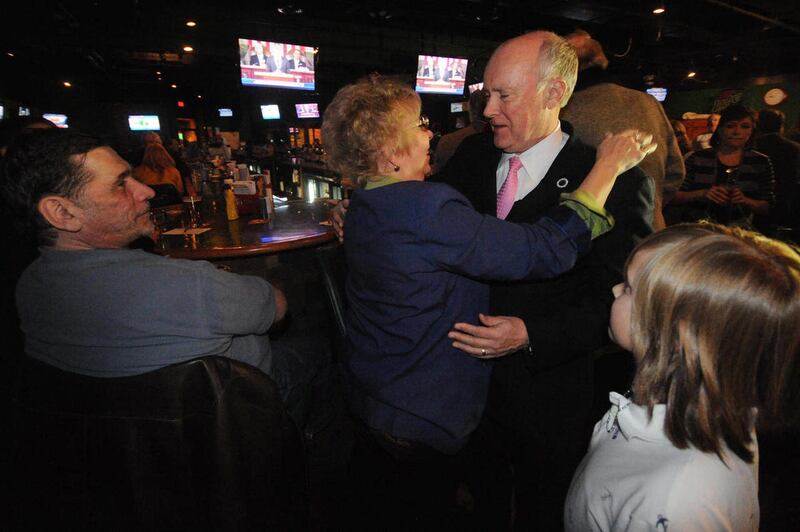
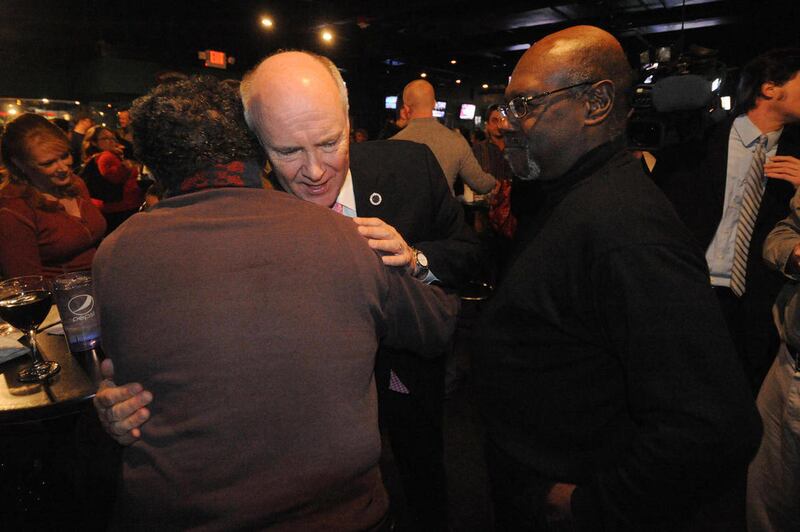
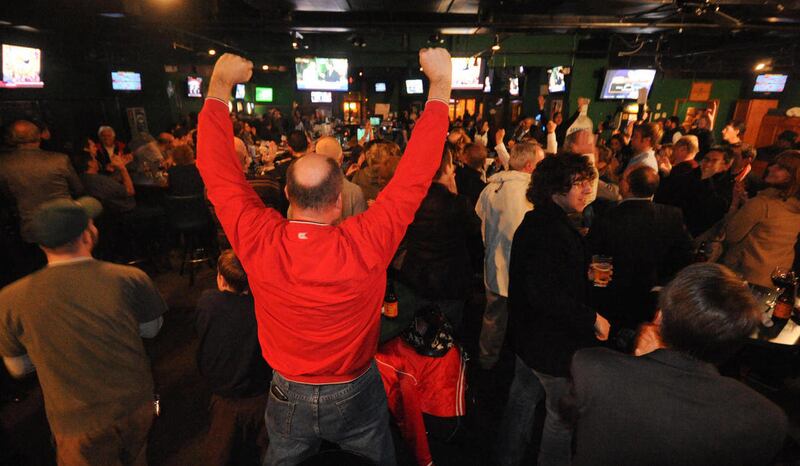
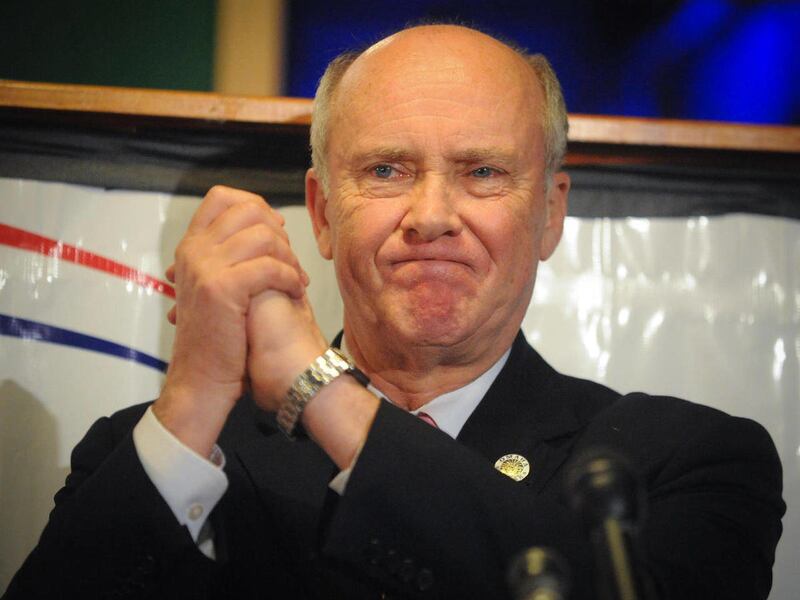
OMAHA, Neb. — Omaha Mayor Jim Suttle says he's survived city's first mayoral recall in more than two decades and is ready to move forward, but his critics aren't yet ready to concede defeat in the tight race.
Suttle declared himself the winner late Tuesday in a special election seeking his ouster over tax hikes and union deals. The recall group, meanwhile, held out hope that several thousand uncounted provisional and early ballots could push the election in their favor in the days ahead.
"Omaha sent one important message today: We all care deeply about our city. . . . Let that one important trait carry us forward the next two years," Suttle said in his speech declaring victory.
"I respect the right of those to disagree and I want to reach out to those individuals as we move forward."
Suttle also said that he's ready to get back to being mayor after a campaign that consumed much of his time in the past few weeks. He acknowledged that he's had problems communicating with residents of Nebraska's largest city and said he will strive to do better.
With all precincts reporting, 51.1 percent of voters opposed the recall and 48.9 percent supported it. Suttle had a 1,652-vote edge, and campaign manager David Dover estimated about 4,000 provisional and early ballots still had to be counted. Dover said it wouldn't be enough to oust the mayor.
Election officials did not respond to a message seeking comment Tuesday night on exactly how many ballots were left to be counted.
Recall spokesman Jeremy Aspen said he would not concede until all of the votes were tallied. He also said the turnout at the polls showed how important the race was to the city's residents. More than 75,000 votes were counted Tuesday, about a thousand shy of the number of votes cast in the 2009 mayoral election that put Suttle in office.
"It definitely demonstrates the community was engaged in the election," Aspen said. "That's a great victory for local government."
Recall threats are common in Omaha, but seldom do those efforts actually reach the ballot. Tuesday's election was the first since 1987 in which voters had the opportunity to oust their mayor.
As a powerful Democrat in a deep-red state, Suttle says he felt targeted by Republicans since the moment he was declared the winner of the 2009 election. The anti-Suttle effort picked up steam around a year ago when he announced plans to raise property taxes, charge a fee on restaurant tabs and increase a vehicle tax to combat a projected $11 million shortfall for 2011, largely because of policies by his predecessors.
Although the tax hikes were hugely unpopular, they did help balance Omaha's books, turning the city's deficit into a $3.3 million surplus and helping to restoring its AAA bond rating.
Organizers of the recall effort insist it isn't about politics or about revisiting the 2009 mayoral campaign. They accuse Suttle of supporting excessive taxes, breaking his promises and pushing for changes that threaten the city's economic future.
The GOP dominates politics in Nebraska, with a strong majority in the officially nonpartisan Legislature and a hold on most state and federal offices other than conservative Democrat Ben Nelson's U.S. Senate seat. Nebraska voters haven't favored a Democrat for president since Lyndon Johnson in 1964, although Barack Obama won one of the state's three electoral votes in the 2008 presidential election.
Omaha, a city of 440,000 people, is one of the few spots where Democrats can compete, with the party holding a slight edge in registered voters over Republicans. Of the more than 28,000 people who signed a petition seeking the recall, 48 percent were Republican, 35 percent were Democrats and 17 percent were in neither party.