

“When you don’t forgive others, you keep building a hell inside yourself.”
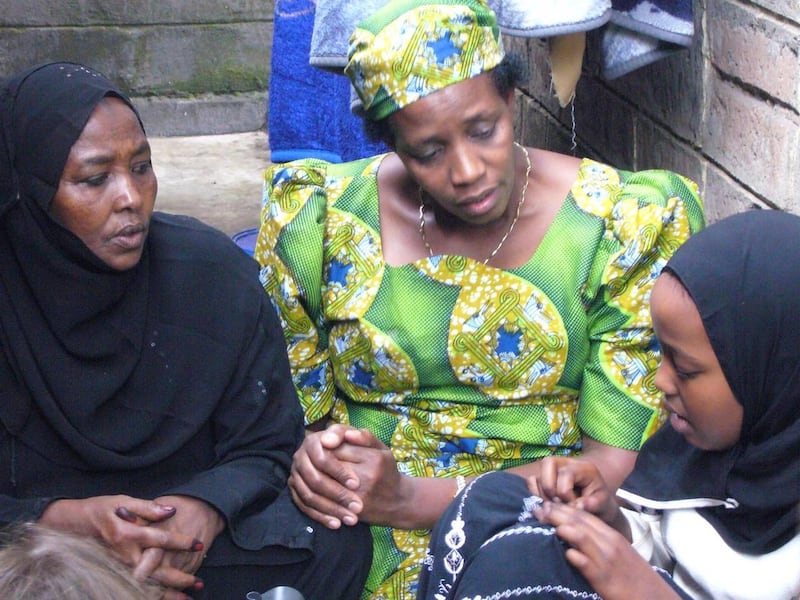
Rose Mapendo remembers the horrors she endured in her native Congo — beatings, rapes, tortures, being forced to watch the execution of her husband. And giving birth to their twins inside a death camp cell, cutting the umbilical cords with a stick. Yet she is a forceful advocate of forgiveness and reconciliation.
“Pushing the Elephant,” to air Tuesday at 11 p.m. on KUED-Ch. 7, is a heart-wrenching but uplifting documentary of the 2009 U.N. Humanitarian of the Year. The intimate profile includes portions of her tireless advocacy — from large speaking engagements at the White House and the United Nations High Commissioner for Refugees in Geneva to small meetings with officials to bring other refugees to America.
The documentary’s title refers to a quote from Mapendo: “One person alone cannot push an elephant, but many people together can.”
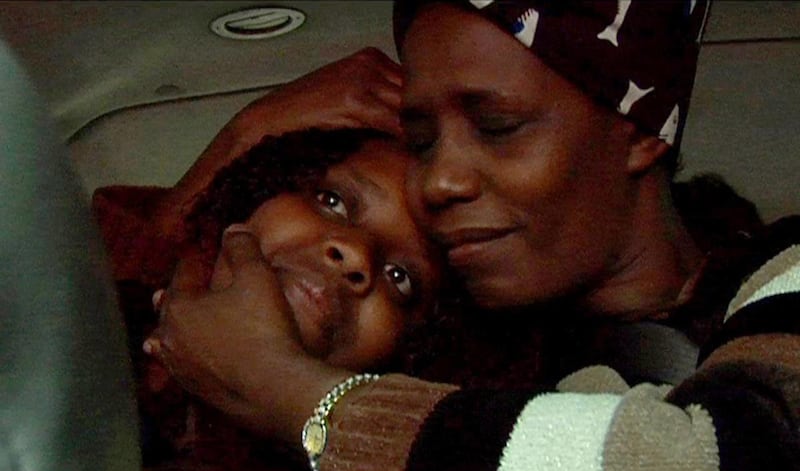
Mapendo is a human rights hero, a survivor of nearly unspeakable atrocities who is now helping numerous other victims to recover and rebuild their lives. But “Pushing the Elephant” also shows the challenge of helping her daughter learn to forgive. Included is the story of her reunion with Nangabire, the only of her ten children who wasn’t able to flee the country’s most turbulent period.
In the late 1990s, when the ethnic war and violence engulfed the Democratic Republic of Congo, 5-year-old Nangabire was separated when the other Mapendo family members were imprisoned. More than a decade later, mother and daughter are reunited in Phoenix where the family resettled and together face the past and build a new future.
Filmmakers Beth Davenport and Elizabeth Mandel keep the focus on the Mapendo family, which they followed for a year. The story unfolds bit by bit through captioned interviews, in Banyamulenge and English, and footage of the rambunctious Mapendo brood. During the discussions, we hear a dishwasher churning in the background and younger children at play. Her travels take her across the globe but at home she’s fretful, anticipating her daughter’s arrival.
“My children, each one have a story,” she says, “We have some story maybe we never share.” Not every detail of their suffering is revealed, so the small moments receive greater scrutiny. Mapendo remembers one young son asking her, “Why we are dying, you cannot give us food?”
The name Mapendo means “great love” in Swahili, and in “Pushing the Elephant” viewers see this great love in action. Mapendo repeatedly teaches to forgive those who so abused her family and others as she continues the work of one ordinary woman doing the extraordinary.
Blair Howell is a freelance editor and writer.