

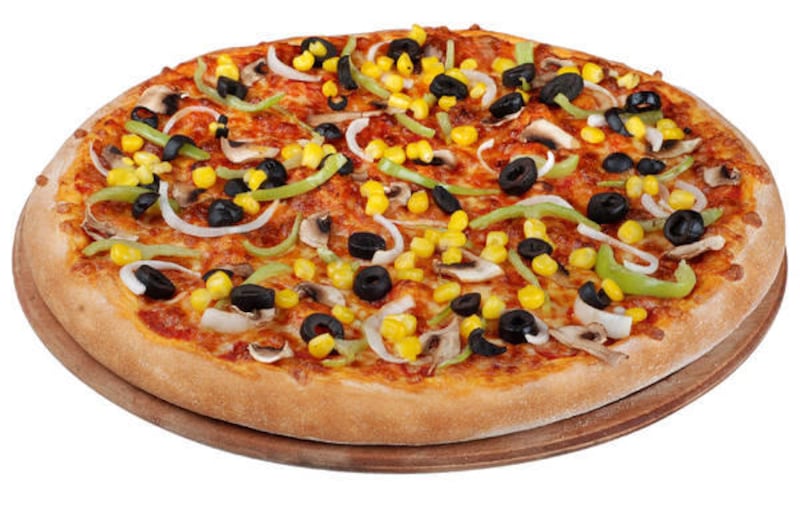

Thirteen years ago, during my first month in Chile, an American friend decided to give my palette a rest from unfamiliar food and took me to a pizzeria. The proprietor was very friendly and allowed us to help assemble our own pie. Though I can not recall what toppings we chose, I definitely remember one interesting item we spotted on the menu: “American-style” pizza.
What toppings do you imagine would make a typical American-style pizza? Perhaps it would include some of the more common ingredients we see like pepperoni, sausage, onions, bell peppers or mushrooms? No, in this case, the “American-style” pizza featured hot dog slices and corn. I seem to recall it may have included mayonnaise, too, but many foods in Chile do. We asked if the pizza paid homage to, perhaps, a different part of North or South America, but the owner confirmed his attempt to imitate a pizza typical of the United States.
How would an American visiting Chile react if their hosts tried to make them feel at home by ordering this Pizza Americana? The well-intentioned host might be left feeling a little deflated after a decidedly mediocre reaction.
When hosting foreign visitors, we all benefit from learning what foods and restaurants might help our guests feel comfortable during their stay. Often our assumptions about what is authentic or customary in the visitor’s country may be terribly mistaken.
At a recent business presentation I attended, an American businesswoman who often hosts Chinese delegations asked a visiting Chinese businesswoman if it was most appropriate to host these delegations at Chinese restaurants. The Chinese presenter praised the woman for being considerate enough to ask and noted that asking each delegation for their preference is a good idea. However, in her opinion, “the Chinese restaurants in the area are no better than the American restaurants. I think most Chinese will like the local Japanese restaurants better.”
Gaetana Cummaudo, an Italian colleague of mine, notes that many Italian restaurants in the United States have adopted customs she has never actually seen in her home country. One of these is the dipping of fresh bread in olive oil and balsamic vinaigrette. Cummaudo’s American friend caused a stir when, while visiting Italy for the first time, he was somewhat bothered to see a small, white dish on his restaurant table, but no bread, olive oil or vinaigrette. Using his limited knowledge of Italian and many hand gestures, he managed to communicate what he expected. The server brought some bread and the desired condiments, and the restaurant employees stared in confusion at not only his food choice, but also at the small, white dish holding the dip – an ashtray.
Local Indian restaurants are also not exempt from cultural shifts. While dining at a delicious Indian restaurant on London’s famous Brick Lane, my colleague, Thomas Edwards, and I learned that our own Indian fare preferences are actually much less authentic than previously assumed. After ordering some of the kormas, curries and masalas that we often enjoy at other Indian restaurants in the west, we heard an interesting observation from our server. “In India, we call this baby food,” he said with a smile. “Because it is so mild, we usually only serve it to small children who can not yet handle spicy, adult Indian food.” Similarly, a friend of mine was surprised when his Tokyo-based colleagues informed him that teriyaki dishes are served commonly to Japanese children on a casual Saturday afternoon, but not usually in nice Japan-based restaurants.
Differing preferences often require us to be flexible. Dr. Lee Boam, professor of organizational behavior and international business at the University of Utah, recalls hosting a Chinese staff member at a conference on Asia Pacific business at the University of Southern California. Unfortunately, the conference served a lunch that was entirely unappealing to his Chinese guest.
“That evening, I thought I would treat her to dinner, to make up for lunch,” says Boam. “We were in downtown Los Angeles, and I walked her past numerous restaurants. She looked at the menus and nothing looked good. We ended up at the only place she was willing to eat – McDonald's! This was familiar to her and comfortable.”
Globalization places us in increasingly more situations where we may need to host international business associates for meals. With so many cultural differences in dining preferences, even among those of the same nationality and culture, the safest and most considerate thing we can do when treating a guest is to simply ask. Avoid making too many assumptions about what your guests would like and inquire about their preferences – we Americans would probably appreciate the same courtesy if it helped us avoid eating pizza topped with hot dogs, corn, hamburger patties or fried eggs.
Adam Wooten is director of translation services at Lingotek. He also teaches a course on translation technology at BYU. E-mail: awooten@lingotek.com . Follow him on Twitter at AdamWooten..