


Carbs are bad, carbs are good. Fats are bad, fats are good. With the constantly changing messages about what’s best for our health, it is easy to become overwhelmed when it comes to eating right.
After all, if even nutrition experts seem confused about nutrition, is it easier to stop fighting the good fight? Brain neurosurgeon and recently published author Dr. Larry McCleary answers with a resounding "no."
McCleary clears up the air about all this government-backed nutritional advice: It turns out doctors aren’t contradicting themselves as much as it seems. Rather, 35 years ago when doctors told government officials that Americans eat too many calories, they tried to simplify the issue by advising the public to limit fats, the most calorie-dense element in food.
And Americans listened, cutting fat out of their diets by 20 percent, McCleary said. Yet obesity rates have risen by 250 percent in the meantime.
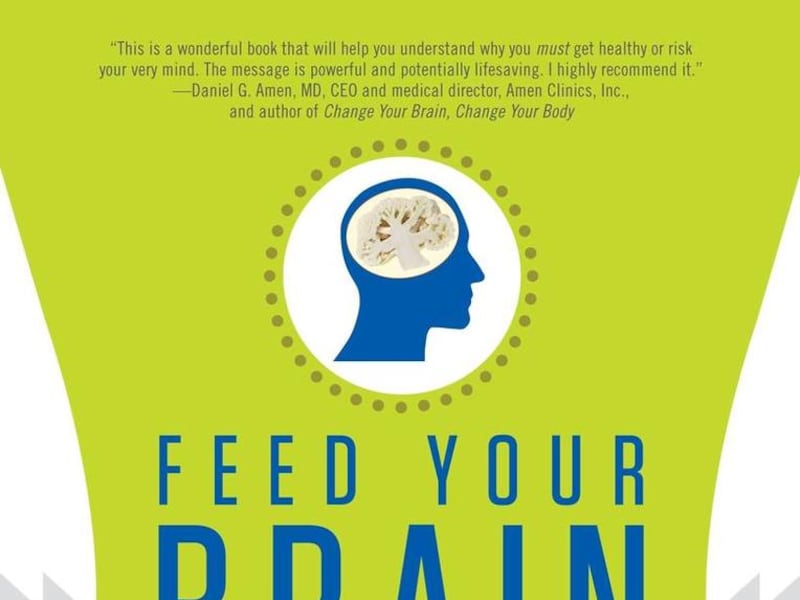
In his book, “Feed Your Brain Lose Your Belly,” McCleary explains this seemingly paradoxical phenomenon.
The flaw with an old-school, low-fat diet lies in the nutritionally-sparse low-fat foods presented on grocery store shelves today, he said.
Because these processed, packaged goods lack the fiber and healthy fats necessary to keep our bodies energized and our stomachs feeling full, they cause our brain to go into "starvation mode," he said.
And because our brains run on sugar — adequate amounts of which are found in the body's natural blood stream — the brain first demands sugar when starvation mode hits.
McCleary's dietary advice is all about overcoming those tricky impulsive brain messages, bringing the mind and body in tune with one another.
"You could call it more of a holistic approach ... It's really a whole approach to living," he said.
Certainly, "Feed Your Brain Lose Your Belly" is not a strict list of do's and don'ts (though you can find food lists and meal ideas within its pages). Instead, his overarching message is simple: Get enough sleep. Avoid stress. Exercise appropriately. And, most of all, make healthy food choices.
Using experiences from the world he knows best (advising parents in nursing their child's sick brain back to health), the former children's brain surgeon details precisely which foods are the healthiest choices and why based on the connection between the brain and the belly.
This unique medical perspective may sound daunting, but McCleary writes in layman's terms that make a surprising amount of sense, considering the scientific basis.
McCleary compares "sticky fat cells," the fat-storing condition our cells enter when we eat the wrong food, to the structure of a fully-inflated basketball.
Like a basketball can be deflated to release air, fat cells have a on-off switch for releasing fat that can be burned as energy. This switch is turned to fat-storing mode when insulin, the sugar-controlling hormone, levels are raised.
And insulin levels are raised when people eat food high in sugar. Therefore, the key to maintaining or losing weight is to keep insulin levels low by avoiding high sugar foods.
Herein lies the problem with American nutritional advice, he said. Since Americans have been advised to avoid fat, the alternative is to eat more carbohydrates. But carbs have a high glycemic index, meaning they turn into sugar in the blood stream and raise insulin levels in a fashion similar to table sugar.
"If we eat more fat, we will burn more fat," he said.
This is because, unlike carbohydrates, the GI of fat is zero. Therefore, eating fat has no effect on insulin levels.
Since the crash from high insulin levels causes a false hunger sensation, McCleary said people who want to lose weight can do so without entering "starvation mode" by never allowing themselves to get too hungry.
"When the brain gets hungry, it gets selfish," he said. "What it wants is sugar — that's what drives you to eat a cookie rather than an avocado."
But if you eat healthy fats before those crazy cravings hit, you will feel satisfied and not even think about food, McCleary said.
Among the satisfying, healthy fats is avocado, olives, olive oil, coconut oil, vegetables (like leafy greens, mushrooms, onions and tomatoes), legumes (like black beans, chickpeas and edamame), fruit (like apples, berries and oranges) and nuts (like almonds, walnuts and pistachios).
But even vegetables and fruits have their exceptions: McCleary said potatoes, corn, watermelon and figs should be limited or avoided entirely.
The list of "good foods" and "bad foods" can seem confusing, so McCleary includes a ranking of foods by their GI and recommends that people avoid foods with high GI ranking.
As for workout routines, he has a somewhat atypical approach to the topic.
By no means does he discourage regular physical activity, but he does warn dieters of the pitfalls of excessive workouts.
"When you exercise, you get really hungry. And if you don't have someone nearby saying 'you've eaten too much,' it's easy to eat more than you've burned off," he said. "What's most important is the food choices you make."
Still, McCleary points out the perks of exercise, saying it is good for the heart and lungs and releases endorphins (feel-good chemicals that bring peace and a feeling that you've done something good for your body).
Above all else, exercise is beneficial because it furthers his general theory — it puts people at one with their bodies, allowing them to be in tune with their physical needs, he said.
Brooke Brown is a writer with a love of fashion, cooking and music. Her fashion advice appears on Deseret News every Monday. She also blogs daily at www.keepfashion.wordpress.com. Email questions or comments to brooke.k.brown@gmail.com.