

Several weeks ago, I talked about winter kill and the havoc it wreaked on many local gardens.
While making visits and looking at gardens, I have seen that the damage is much more severe than originally anticipated.
I already covered the causes with the sudden temperature drop during Thanksgiving Week last fall. Now the focus is what gardeners need to do to correct the damage to the thousands of damaged roses in Northern Utah gardens.
Assessing the damage is not difficult. A quick look tells you that the canes that would normally be green are brown and lifeless. While some damage is to be expected each year, the weather, in many cases, took its toll on the canes clear to the ground.
Looking at my own roses, I was at first encouraged because there were some signs of growth. However, my encouragement was short lived. To understand why, you have to look at the anatomy of most hybrid tea roses.
Over the years, the breeding of hybrid tea roses focused on bigger, more colorful and showier blossoms. Plant hardiness was secondary to these because they could overcome many of the problems associated with rose growing by grafting the roses onto a different rootstock.
That means that most hybrid tea rose bushes are two plants in one. For example, my Peace rose was created by taking a bud from a Peace rose and attaching that to the desired rootstock.
This is a cost efficient way to produce large numbers of roses quickly because it only takes one bud to produce a new plant. With older cultivars of roses, grafting the rose onto a hardier rootstock will double the size and bloom production of the roses on that plant.
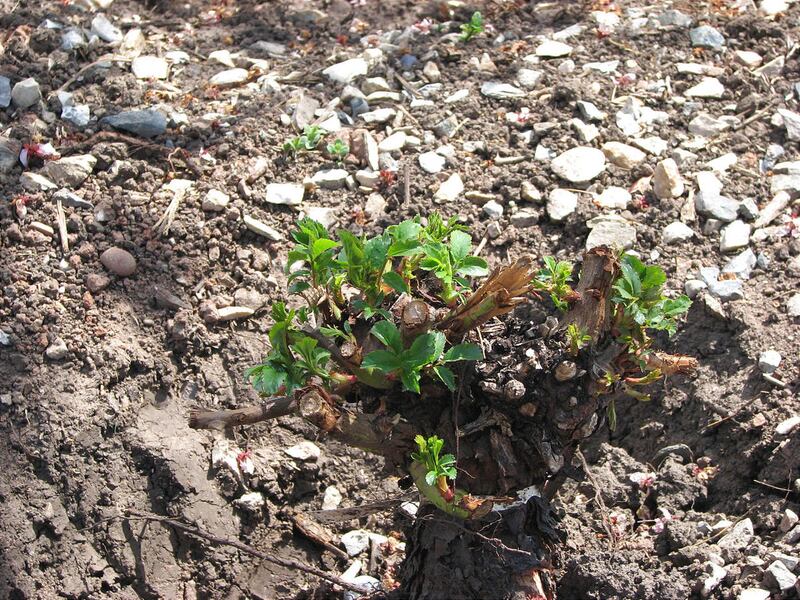
The problem that we see now is that the top — or the hybrid tea portion of the plant — has died. That means that the rootstock is the part that survived, and that is what many people are seeing growing in their gardens.
The question I get most frequently is, "Won't these shoot produce a new rose?"
Yes, they will grow into a rose bush, but it is not the one you would want in your garden.
Most rose growers use a climbing rose named Dr. Huey as their rose rootstock. It propagates easily and can be budded over a long season.
The plants harden off and ship well, and they tolerate many varied climates and soils.
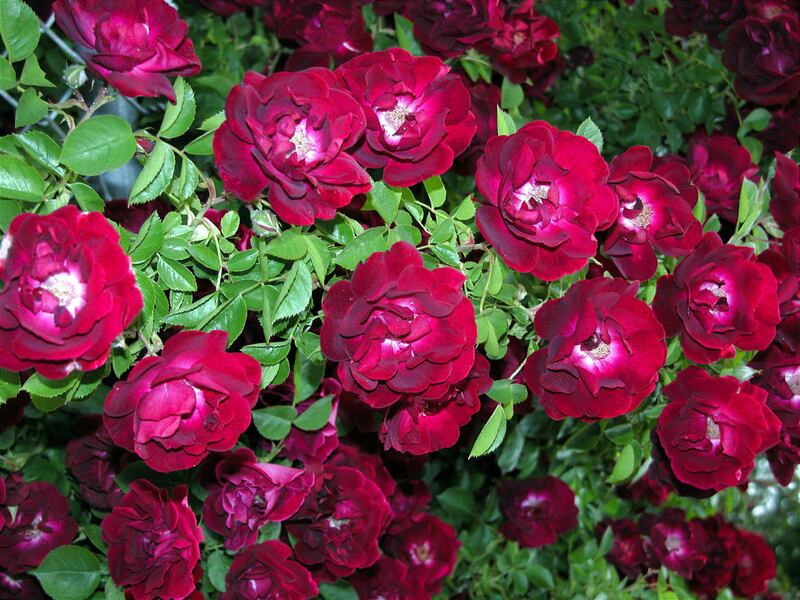
The downside to these is that they have single, dark red blossoms, and they only bloom once per season. They are not likely to be a favorite in your garden, but they are very common because they come up as the other roses have died off over the years.
We usually see suckers as unwanted growth from below the graft on the plant. Another way to identify suckers is by their leaves, because they are usually a different color and shape than the rest of the rose.
Scrape the soil away from your roses to make certain that the suckers are growing from the roots below the graft. If there is no growth above the graft, get out the shovel and take out the rose.
If there is growth above the graft union, cut away the dead canes above the top of the live buds and then let them grow into new canes to re-create the rose plant. This is possible even if only a couple of inches of the desired scion rose is still alive.
Think carefully about replacement roses. While we have not had such serious damage to our roses for decades, we do not know what the future weather will be. Choosing more cold hardy roses is cheap insurance that you will not face this problem again.
Look for roses that are propagated on their own roots because that eliminates the problem with suckering and graft incompatibility.
Old garden roses are exceptionally hardy, as are the hybrid perpetuals and Portlands from the Victorian era. Some miniatures are also very cold hardy.
Some polyantha, floribunda and grandiflora roses are more cold hardy.
Also look for shrub roses because many of these are very cold hardy.
Since gardeners are always optimists, look at the death of your roses as a chance to add new improved types to your garden. As an added bonus, many new types have exciting colors, shapes and smells and are often more resistant to some of the problem diseases. Since nature has not given you a choice, make the right selection to keep your future garden coming up roses.
Garden tips
One Utah nursery that specializes in cold hardy roses is High Country Roses in Jensen. Contact them at www.highcountryroses.com.
Red Butte Garden is hosting a vegetable container gardening workshop on May 19, 6-9 p.m. Cost is $42 for members and $45 for nonmembers. Registration is required at 581-6464 or at www.lifelong.utah.edu.
The Utah Botanical Center and the Ogden Botanical Gardens are joining forces for a plant sale at the Ogden Botanical Gardens, 1750 Monroe Blvd., on May 19, noon-6 p.m. Proceeds will benefit both organizations.
Larry A. Sagers is a horticulture specialist for the Utah State University Extension Service at Thanksgiving Point.