

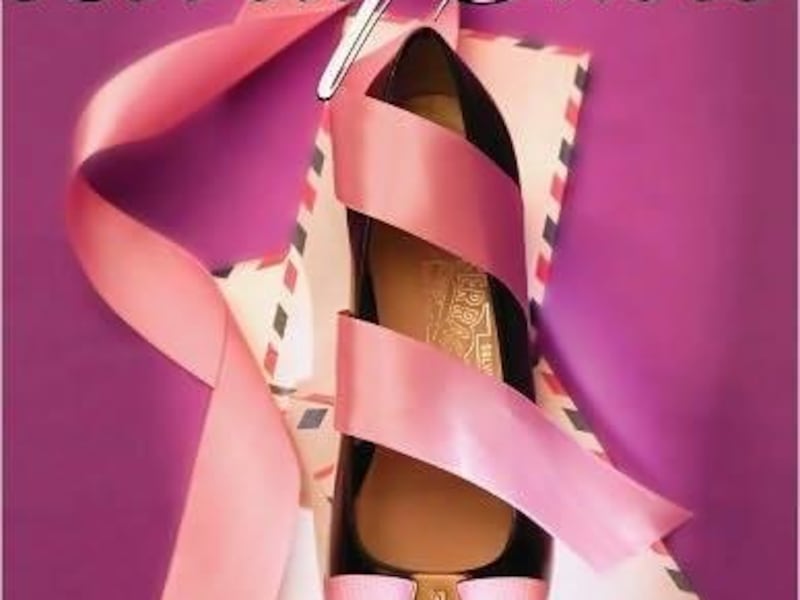
"THE LOVELY SHOES," by Susan Shreve, Scholastic/Levine, $16.95, 246 pages (ages 9-14)
Ninth-grader Franny Hall had become accustomed to her limp from a withered leg and deformed foot. She had always worn lace-up oxfords with an orthopedic lift. In the small-town elementary school, everyone accepted her clumping walk. But high school was different. There were new friends, dances, boys and trying out for cheerleading squad. Wearing an orthopedic shoe with a party dress seemed impossible.
For her first dance, Franny’s mother bought her silver slippers. The sparkly shoes were perfect, until her tiny misshapen foot, wrapped like a cocoon in toilet paper, came out of the slipper. The paper unraveled in a long tendril across the dance floor for everyone to see.
Embarrassed, Franny isolated herself in her room, ignoring a mother who suffered along ("Poor darling"), a less-sympathetic father ("get a grip") and a beloved younger brother, Zeke, who left a food tray outside her bedroom door.
After seeing a magazine advertisement, her mother contacted Italy's Salvatore Ferragamo whose skill was not only designing expensive shoes for celebrities but producing specialized footwear. Franny was accepted at his European clinic and a shoe at last was built especially for her deformed foot.
“The Lovely Shoes” is much more than a teenager in a happy-ever-after story. Shreve has crafted a multidimensional character who refuses to be defined by her physical trials but “did not believe she would ever be normal.” Franny is no Pollyanna. Her angst is reflected in moody, opinionated actions and she even shows her “claws” to an unwelcome aunt.
Readers will appreciate the diversity of her parents and adore Zeke who supports Franny in all things but is, himself, finding independence.
The parallel settings — small-town Ohio following polio scares of the '40s and rich romantic Italy where Sheve places Franny — provide stages for her evident growth and tolerance.
“The Lovely Shoes” is a fictional story; however the author draws from her own experiences for some of the plot. Shreve contracted polio as a child and before numerous surgeries was “crippled” (a term accepted at that time).
She recalls attending a school dance with toilet paper stuffed in the toes of her new shoes to make them fit. Like the story's Franny, Shreve had shoes made by Ferragamo. She says that although she never met Ferragamo like the Franny Hall does in the book, “for several years, I ordered shoes from pictures in magazines, even the shoes I wore in my wedding and they came by mail.”
Shreve is the author of “Kiss Me Tomorrow,” “Blister” and many other novels for young readers.
Email: marilousorensen@ymail.com