

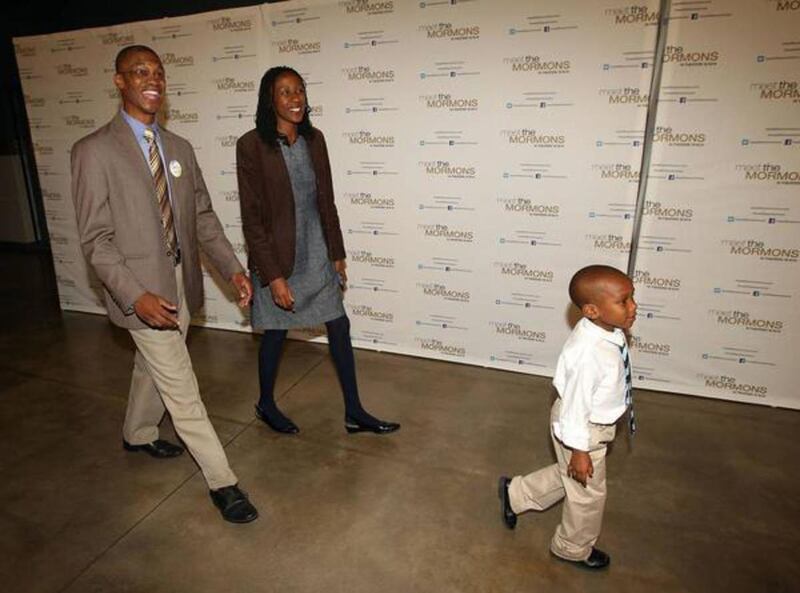














SALT LAKE CITY — Brandon Purdie didn't sleep Monday night or Tuesday night, but he isn't tired. The head of a movie distribution company with a surprise hit is too busy for the mundaneness of fatigue.
The weekend box office success of "Meet the Mormons" put Purdie Distribution's founder in the driver's seat Monday morning in the turbo-charged race to expand the number of screens showing the documentary. The momentum continued Monday and Tuesday, making it one of America's 10 biggest movies this week and one of the top 100 documentaries of all time.
"We thought it would be a special weekend,but we had no idea," Purdie said. "We were blown away. With a new release you hope to reach the numbers to be in the top 10 in the nation, but on 317 screens you don't think that will happen. It's an exciting ride."
Purdie hoped "Meet the Mormons" would do $5,000 per screen over the weekend for a total take of $1.5 million. Instead, the documentary about Mormon families living their faith averaged $7,917 per screen and took in $2,509,663.
The gross climbed to $3.7 million by midafternoon Thursday. The film expands to 333 screens Friday, then will add significantly more theaters next week, Purdie said.
The per-screen average for "Meet the Mormons" is now $11,681, tops among the top 20 films this week, and demand that shines a spotlight once again on trends in the movie business. For much of the past decade, and certainly again in this Year of the Christian Movie, moviegoers have flocked to religious-themed movies. At the same time, a wide gap has emerged between movie critics and those grateful to pay to see stories on the big screen about what their faith has done and is doing for people like themselves.
Big gap
The gap appears on several movie review websites, such as Rotten Tomatoes, where "Meet the Mormons" has an audience score of 92 percent and a 0 on the "Tomatometer," which reflects critics' reviews. (None of eight critics liked the movie, but they gave it an average score of 4.8 out of 10.)
That gap is consistent with the apparent trend.
"Son of God," the theatrical spinoff of the wildly popular 2013 TV series "The Bible," is one of the big, studio productions that some say is making 2014 the Year of the Christian Movie. It also had a big gap this year, liked by 21 percent of the critics and 73 percent of the 40,727 viewers who rated it on Rotten Tomatoes.
"Son of God" made $59.7 million at the box office.
Two other 2014 movies have had similar gaps.
"God's Not Dead" was liked by 17 percent of the critics and 81 percent of viewers, and made $60.8 million in theaters.
"Heaven is for Real" drew likes from 46 percent of critics and 68 percent of viewers. It made $91.4 million at the box office.
The list goes on. Sherwood Pictures, the movie arm of an evangelical church in Albany, Georgia, experienced the same phenomenon with several movies over the past eight years:
"Facing the Giants" — Critics, 13 percent; Viewers, 86 percent; box office, $10.1 million; budget, $100,000
"Courageous" — Critics, 30 percent; Viewers, 86 percent; box office, $34.5 million, budget, $2 million
"Fireproof" — Critics, 40 percent; Viewers, 83 percent; box office, $33.5 million
The movies all have flaws that deserve critical review. Sherwood Pictures is transparent about the fact its movies are made by members of its congregation and staff, not professionals. On the other hand, the viewer numbers are significant, too. For each movie, tens of thousands of viewers provided those positive ratings to Rotten Tomatoes.
Religious historian Martin Marty tackled the critic-viewer tension for the Huffington Post's religion blog last week in response to the release of "Left Behind," another religious-themed movie in theaters now.
"Admittedly, there is a great deal of reflexive panning of faith in films and public media," he wrote. "Also, admittedly, some of these dismissals of religion are simply uninformed or marked by prejudice."
But Marty argued that Christian pastors shouldn't send flocks to theaters for "bad products" like "Left Behind" that don't enhance or exalt a faith that has been the subject of great literature. ("Left Behind" also has divided evangelicals over the doctrine of the rapture. Christianity Today labeled the movie "not Christian.")
"Meet the Mormons" director Blair Treu said, "I hate to be lumped in as a director with religious movies, so I don't want to lump critics together, but there does seem to be a trend."
The disconnect has led some to ask questions like, can religious movies get a fair review?
"There does seem to be a number of reviewers who are skeptical of any kind of religious faith, across the board," Treu said, "almost a predisposition that 'if it's promoting or fostering any kind of religious belief, I'm not comfortable with it.’ ”
Facebook love
Treu's Facebook page was flooded with positive reactions to the movie.
"I'm thrilled by the response, not only in filling the seats but what those who go are saying when they leave," he said.
Treu's reading of social media reaction is that Mormons initially bought most of the tickets but now, comfortable with the movie's portrayal of what they believe their faith does for people like themselves, they want to and have begun to bring their friends.
The Church of Jesus Christ of Latter-day Saints did not ask congregations to rent theaters for the film, typical of many religious-themed films, but it encouraged members to go.
Purdie instead pursued traditional distribution deals, sharing profits with theater owners. A few members did buy out entire theaters, producer Jeff Roberts told The Hollywood Reporter.
Purdie said his talks with theater owners changed Monday morning.
"The conversation had definitely shifted from us as an independent film trying to get into theaters to where the theater chains are excited about the film and talking about adding it to their theaters. It's a nice place for a distributor to be."
Treu was prepared for criticism.
"Every film that's made, whether a feature or a documentary, is made from a point of view," he said. "Films made from conservative or religious points of view don't do well critically."
"It's an honest, unscripted portrayal of these people," he added. "People say, 'they are so happy.' Well, they really are. They are proof that living a Christ-centered life, it's possible to be happy, even with struggles."
Critical reaction
There appeared to be another gap between those who reviewed "Meet the Mormons" and the goals of the movie's makers.
The critics appeared to want the film to go deeper into LDS beliefs rather than simply show the diversity of LDS families around the world and the way their faith informs their lives.
Martin Tsai of the Los Angeles Times wrote that "the film operates under the assumption that the average Joe associates Mormonism more with 'Sister Wives' than Mitt Romney, so the film will be an eye-opener only for subscribers to such stereotypes."
New York Times reviewer Ben Kenigsberg said he felt that the movie began from "an oddly defensive posture," because he — and other reviewers — didn't find it newsworthy that Mormons are diverse.
But Kenigsberg may be ahead of much of America. The movie was pitched by Treu and greenlighted by church leaders even before the release of a study that showed a majority of Americans still know little or nothing about Mormons.
Treu said critics also may not understand other parts of the genesis and purpose of the documentary.
"This was designed to be a visitors center piece, so it was intended for a self-selected audience, people willing to go to a visitors center to learn something about Mormons and about the LDS Church," he said. "We made it as an introduction to Mormons. A lot of people getting hung up in the critical reviews miss the point. It's not meant to be Mormonism 101, it's meant to show who we are as a result of trying to live these beliefs."
The movie's makers screened it for focus groups. Audiences that were not LDS told them to release the movie in theaters, Treu said. LDS Church leaders took the advice, though they still plan to show it at the Legacy Theater next to historic Temple Square in the future.
Treu worried some critics didn't watch the film closely, resulting in mistakes in several reviews.
"The film that I watch and the film portrayed in the critical reviews are totally different," he said.
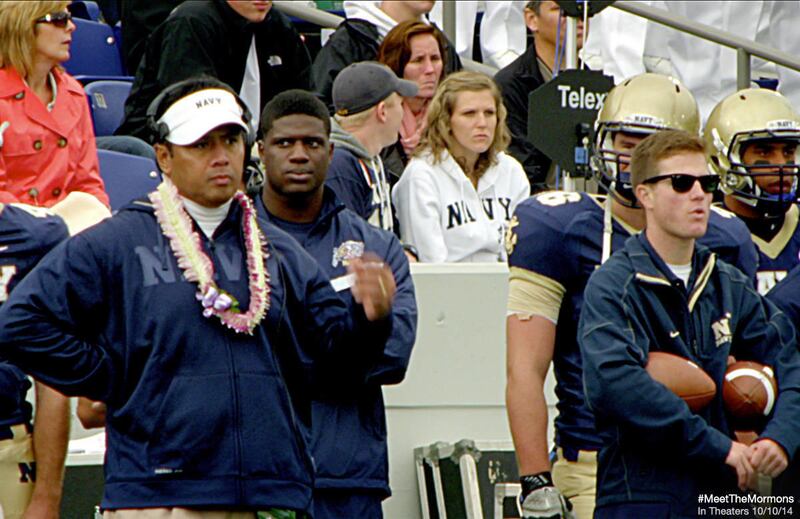
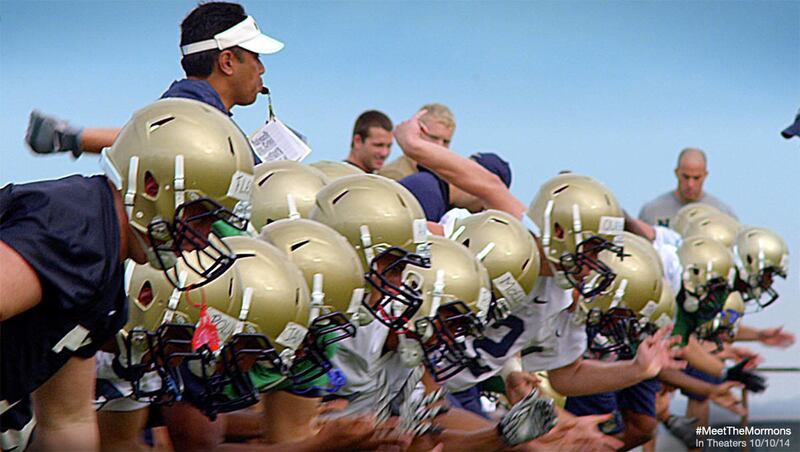
For example, critic Roger Moore misstated the church's name throughout his review — he wasn't the only one — then got the Navy football coach's first name wrong in his listing of the film's participants.
He also took a shot at coach Ken Niumatalolo and the film with this sentence:
"'I’m not pushing my religion on anybody,' Coach Niumatalolo assures the viewer as he notes that he decreed that his team will not do prep work on the Sabbath."
In fact, the movie makes it clear Niumatalolo told his assistant coaches they wouldn't meet as a staff on Sundays, but that each coach is free to do prep work on Sundays.
"He doesn't take the keys away," Treu said. "The film makes a key point of tolerance."
Extra pressure
The movie industry is being disrupted by the Internet, which creates added tension to the different motives of theater owners making ends meet and critics reviewing films as pieces of art.
As pressure on revenues increase, theaters for years have tried to diversify to draw audiences with swap meets, Sunday church meetings, European soccer matches and operas. Then Netflix made an announcement two weeks ago that rocked theater operators.
It said next year's sequel to "Crouching Tiger, Hidden Dragon" would be released simultaneously in IMAX theaters and on Netflix. Theater owners have balked, promising to boycott the movie, banning it from their screens.
The announcement prompted headlines like, "Is Netflix trying to kill the movie theater once and for all …?"
It's clear then why theater owners take calls from distributors with budding box office hits.
"The giant gap between critic reviews and audience excitement is a result of why they went to the movie," Purdie said. "I try to bring the audience what they want to see. Someone once said, 'Audience is king.' Audiences tell us what they want. It's market-driven. Theater chains are smart and very responsible. They want to give audiences what they want."
"Meet the Mormons" was the No. 1 grossing film at more than 100 theaters where it played on the weekend, from Utah and Idaho to Southern California and the Bay Area to Chicago and Washington, D.C.
On Monday, it moved up to the No. 9 spot in the week's top 10.
"The audience took ownership of the film," Purdie said.
One other notable item from reviews came at the end of The New York Times review, right after it noted the film is rated PG. In italics, the two-word phrase said, "Implicit proselytizing."
Treu said the MPAA said the PG rating was for "thematic elements" and didn't mention proselytizing, so The Times added that independently.
“Everyone is entitled to their own opinion," Treu said, "but this isn't consistent with what we’re hearing audiences say, particularly those from other faiths. They are saying, by a substantial margin, that they really like the entertaining and uplifting nature of the movie — also that they appreciate that it’s not preachy or pushy.”
He added, "If you want to be uplifted, entertained and learn about real Mormons, you're going to enjoy this. If you're going for any other reason, you likely will be disappointed."
Email: twalch@deseretnews.com