




There are so many things you can learn from football that you can relate to the gospel and vice-versa. So when you hear (religious doctrine) taught kind of in football terms, applying it to life, it’s awesome. – Freshman Chase Hansen
SALT LAKE CITY — On a Thursday afternoon in April, a group of Utah football players gather on the west side of the practice field, the effort of running spring drills in the sunshine still evident on their faces.
They huddle together more so they can hear graduate assistant Sione Pouha than to take advantage of the small bit of shade provided by the fence and trees leaning over from outside the facility.
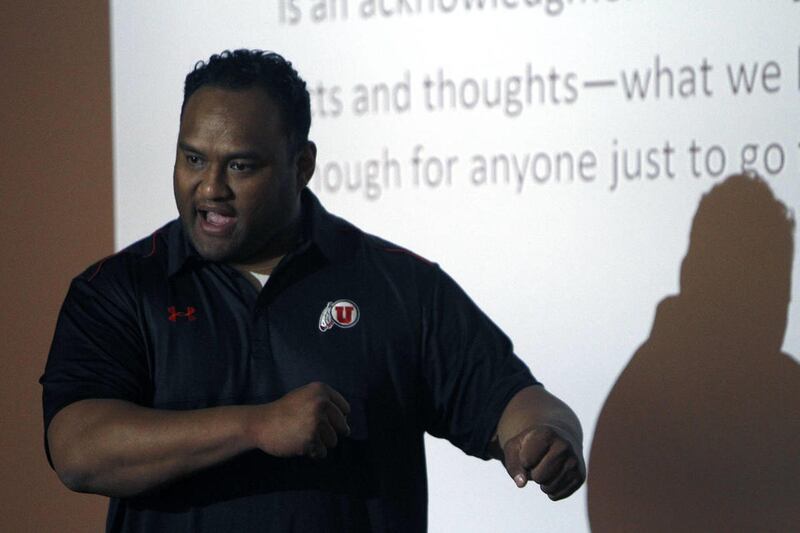
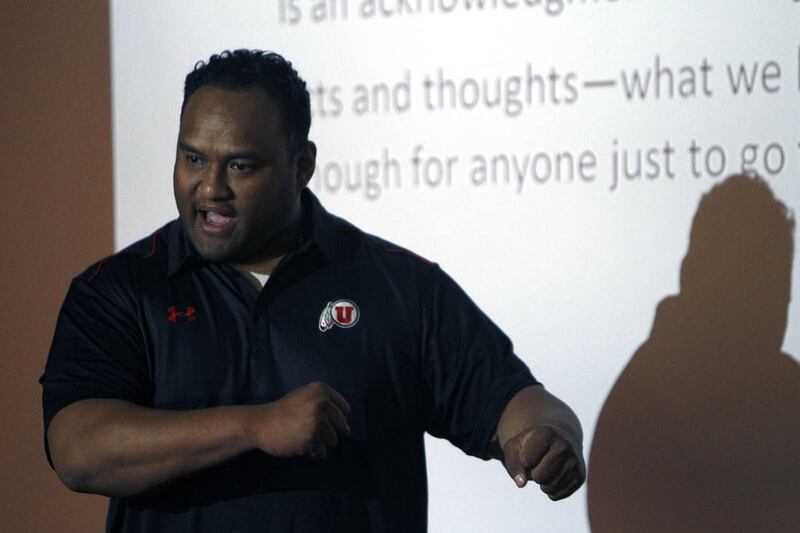
Pouha’s passion is palpable. He moves almost constantly as he talks. His eyes sparkle and his voice rises and falls as he throws out ideas and follows with questions.
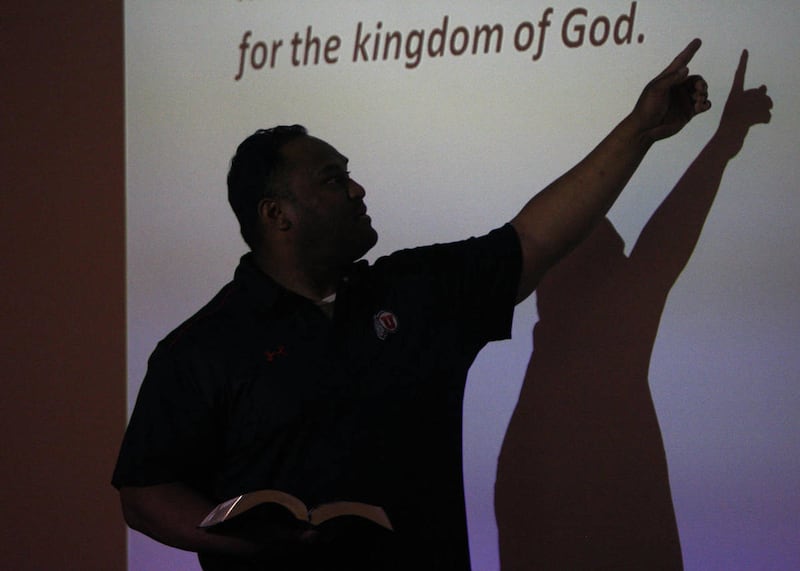
The former Ute and New York Jets defensive lineman isn’t animatedly teaching schemes or techniques, he’s preaching the gospel of the Church of Jesus Christ of Latter-day Saints. It’s a special version of the church’s religious education program tailored to the demanding schedules of student-athletes.
Whether it’s on the side of the practice field or in a team meeting room, Pouha and safeties and special teams coach Morgan Scalley teach an LDS Institute lesson at least once a week whenever schedules and situations allow.
“The Institute understands the dynamics of these boys’ lives,” Pouha said. “It’s usually an hour a week, and we try to pick out principles and doctrines in the scriptures and try to relate those principles to what the kids are going through.”
The adapted Institute program began five or six years ago when a teacher from the LDS Institute would go to the players and teach a class once a week. He went on a mission recently, but that’s about the time the University of Utah hired Pouha as a graduate assistant. Pouha is certified by the Mormon Church’s educational system, and taught seminary at Corner Canyon last year as a student teacher.
Scalley is the liaison while Pouha does most of the teaching.
“He’s a legitimate instructor so they get credit,” Scalley said.
For the players, it’s a chance to take religion classes that are not only convenient but tailored to their specific life circumstances.
“I love it,” said freshman Chase Hansen, who returned from a mission in December. “There are so many things you can learn from football that you can relate to the gospel and vice versa. So when you hear (religious doctrine) taught kind of in football terms, applying it to life, it’s awesome. It’s just good to keep your perspective because you can lose it fast on a football field. You can lose it fast in a locker room. In this, you kind of come together as teammates and as brothers and you realize this is what matters. … It’s just an awesome way to stay motivated.”
California native Tyler Bell, a sophomore tight end, takes regular LDS Institute classes, as well as the class offered by Pouha and Scalley.
“I would say you can never have too much of a good thing,” said Bell, who served an LDS mission in Michigan. “It’s kind of cool because we’re all football players. A lot of these guys are return missionaries, so it’s kind of cool to have a little brotherhood going on. Being able to compare a lot of things to football makes it very relevant to us.”
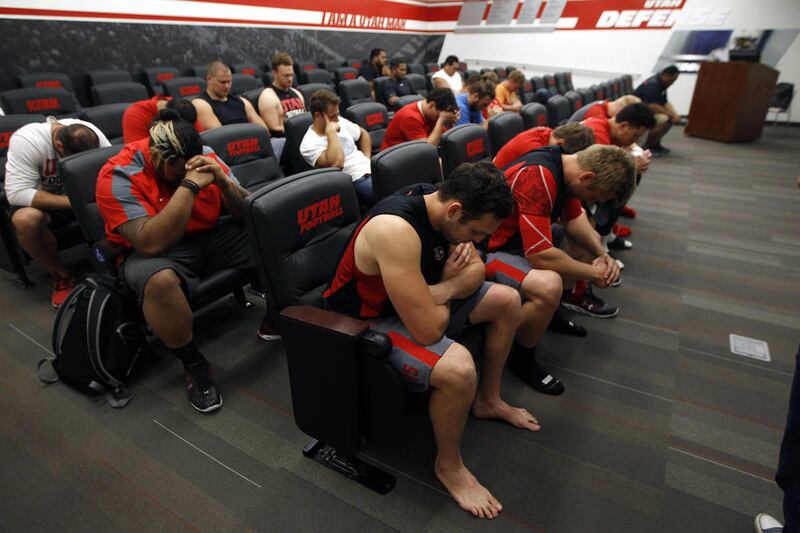
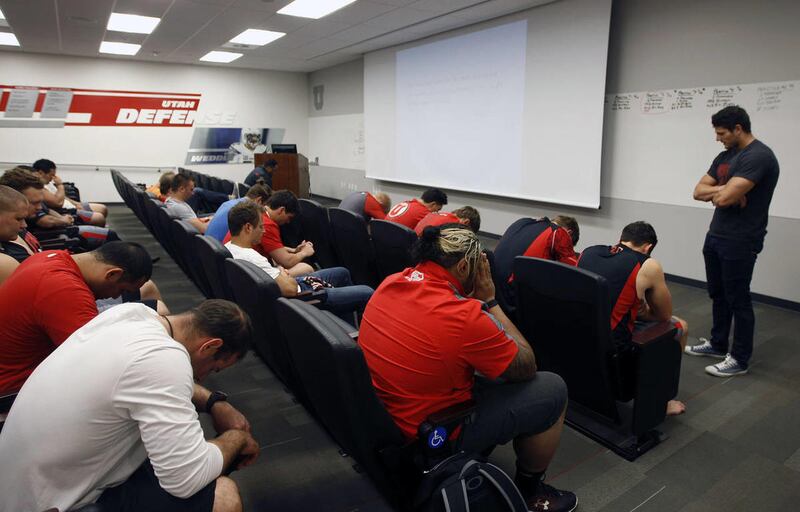
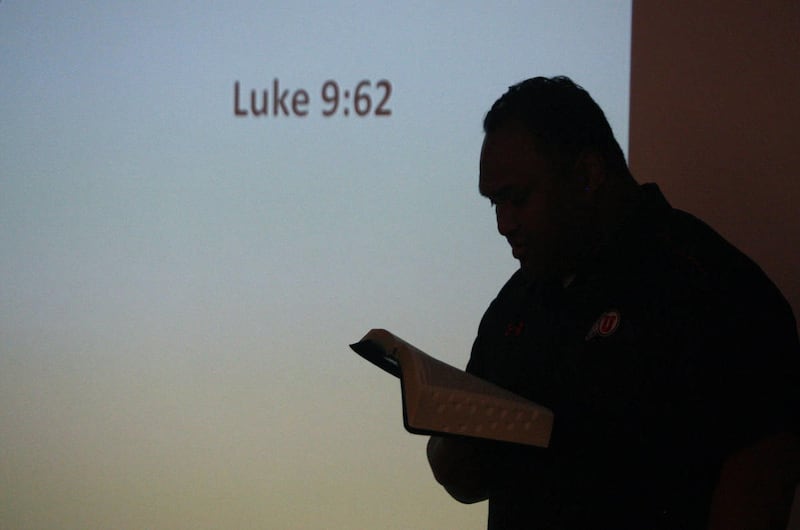
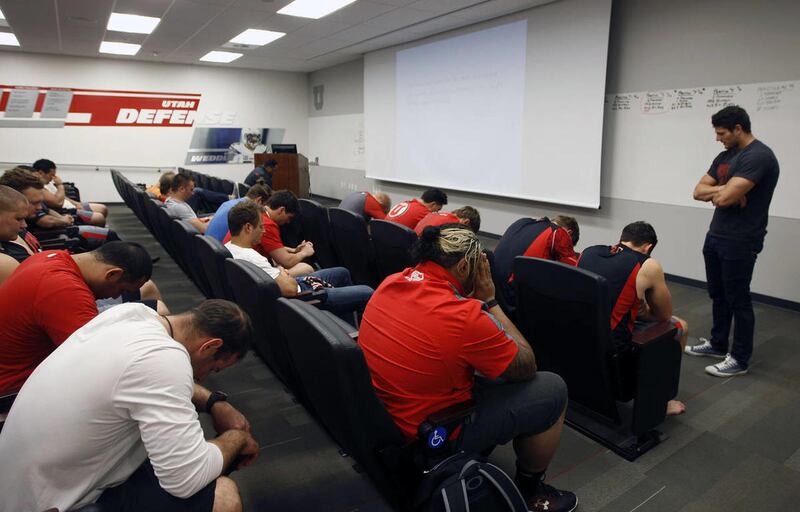
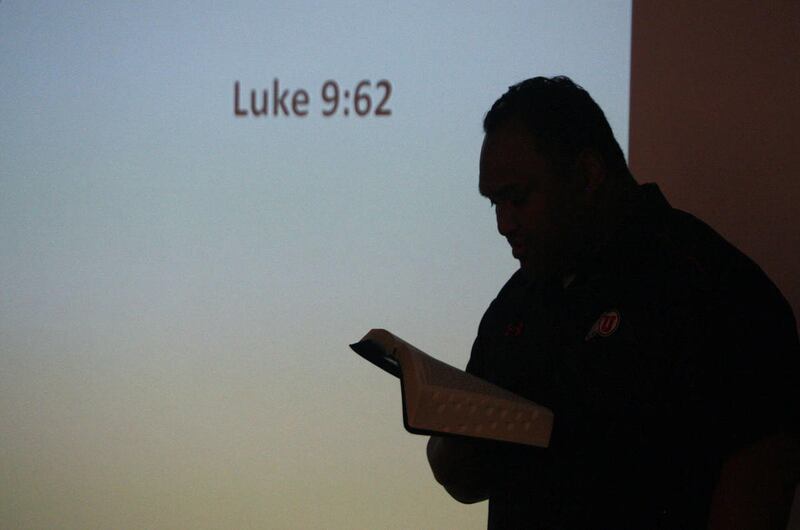
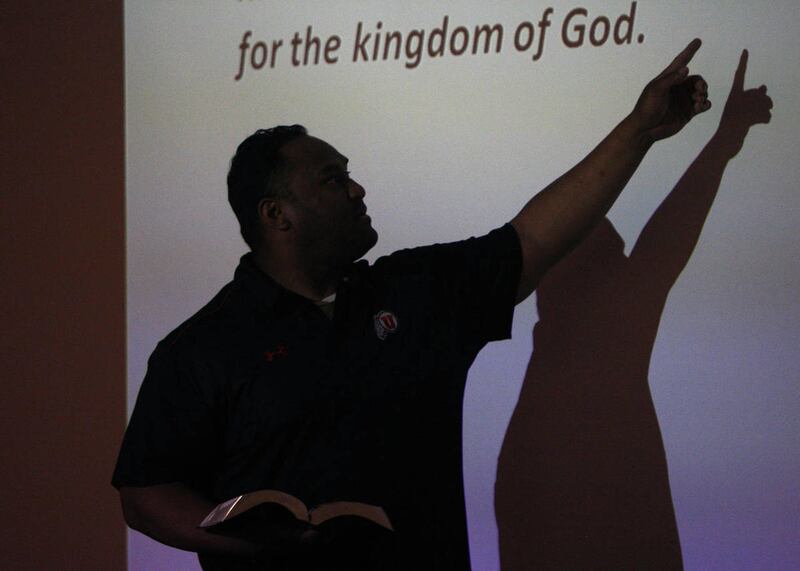
On another Thursday after practice, Pouha and Scalley gather with about 15 players in a team meeting room. Head coach Kyle Whittingham slips into the back of the classroom after he finishes with media interviews. A scripture from the book of Luke is on an overhead projector in the front of the room as Pouha offers background for the words.
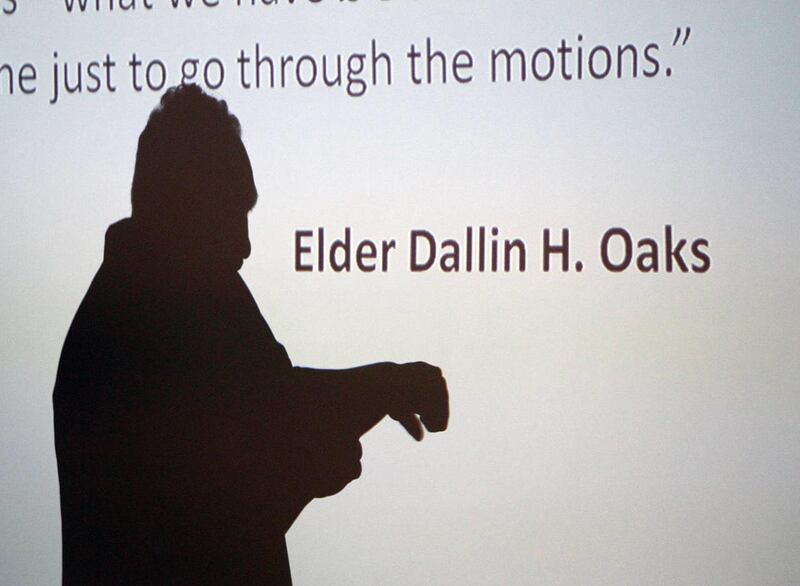
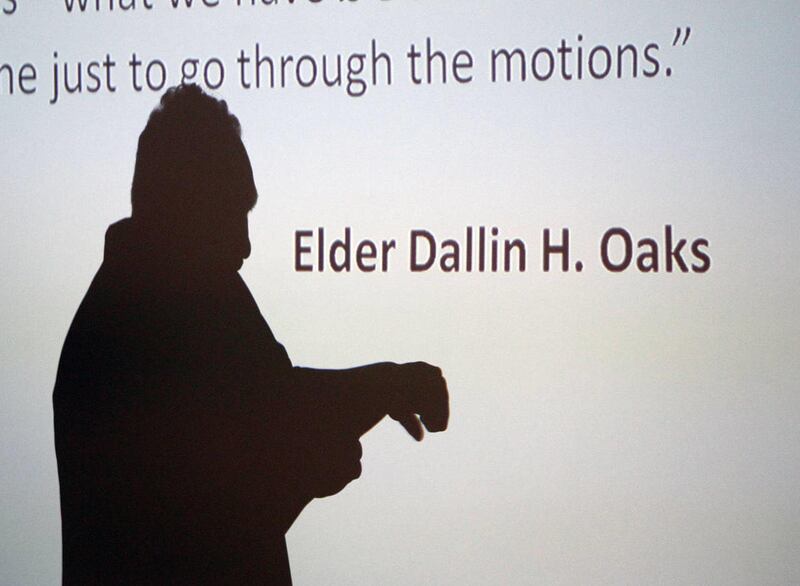
He asks questions, sometimes directly of a player, sometimes in general. There are never a shortage of answers, as they discuss how being committed to the Lord’s work means more than just going through the motions.
The coaches use sports analogies because they said it is what the players understand best.
“One of the best things Christ did was teach in parables,” Pouha said. “I think an effective teacher would try to find something that the Savior did and think what do they understand? Then speak that same language.”
He points out how that day’s lesson discussed being a committed disciple of Jesus was something akin to being a committed member of a team.
“When you draw those parallels, they can connect it,” Pouha said. “And when they connect it, they better understand it.”
It may seem to some, that religion and football are incompatible. The ferocity of football doesn’t exactly seem to embrace the loving nature of Christianity.
Pouha grins as he admits he believes “God created football anyway.”
Like most everything in life, he said, it’s all about the approach.
“There is a way to go about it,” he said, explaining that being competitive doesn’t mean comparing oneself to others or trying to defeat others. “When we think about competitiveness, we always think about it in opposition, that there is somebody else to beat. I think of competitiveness as be better tomorrow than the you of today. I want you to be your best self because that’s the only fair comparison. … And I think competing against themselves brings higher growth, higher development than saying do it like this guy or do it like that guy.”
Programs like this special Institute class aren’t about competing with BYU. They’re simply an effort to make the players feel more loved, more accepted. Scalley said during the season, they have a weekly non-denominational religion class that aims to support players of all faiths.
“It doesn’t really matter what institution you’re at,” Pouha said. “The real institution that matters is the one inside your heart. Whatever you need to do to protect that and then grow it at the same time, that’s the most important part, and you can be anywhere in the world.”
Pouha laughs when asked why the class is necessary for young men, most of whom already attend church and have other religious commitments.
“In a day and age when we’re all stuck on phones, in a sort of cyber world, and it’s almost where a hug from someone is almost weird now,” he said. “This is who you really are. You’re not in the cyber world where you can just ‘like’ somebody. You can actually look them in the eye, give them a hug and say, ‘Hey, I appreciate you.’ The more you can implement that in your life, the more you can remind yourself that you’re human, and that we need to treat each other like humans … I think it makes for a better world.”
He said coaches, parents and religious leaders try to know all they can about the young people they serve, but that’s not possible. Instead, he asks God to guide his lessons and his coaching.
“As I prepare to give the lessons, I don’t know what their situations are,” he said. “Only God does. Hopefully this gives them the tools that will help them. There could be somebody sitting here and they would never answer a question. But there is a reason they’re not in their car heading home. You just never know.”
And Bell said that’s one of the reasons he goes to religion classes — with his teammates and on his own.
“I’ve seen a lot of things happen,” Bell said. “I feel like young people, at least in my generation, are very tossed around. This is a very influential part of our lives, and I think having Institute, having that spiritual guidance is hard to come by. … Even if it’s just 15 minutes on a Thursday afternoon, that can make a huge impact in someone’s life.”
Twitter: adonsports EMAIL: adonaldson@deseretnews.com