

SALT LAKE CITY — It has been said that children say the darndest things, or in this case, ask. Every few months we like to explore our innate sense of curiosity and find out what children — of all ages — wonder about when it comes to animals.
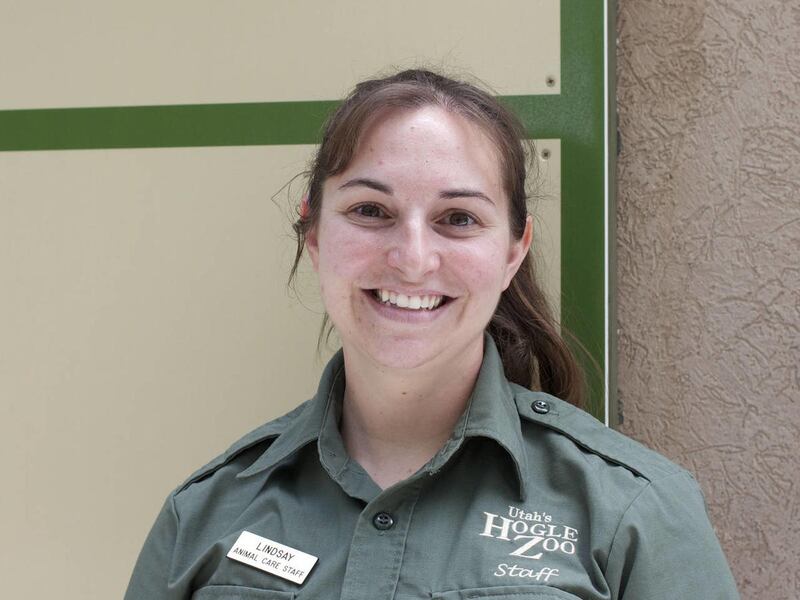
This month the focus is on orangutans. Hogle Zoo primate keeper Lindsay Renner answered our questions and talked about the zoo’s Bornean orangutans, Tuah and Acara.
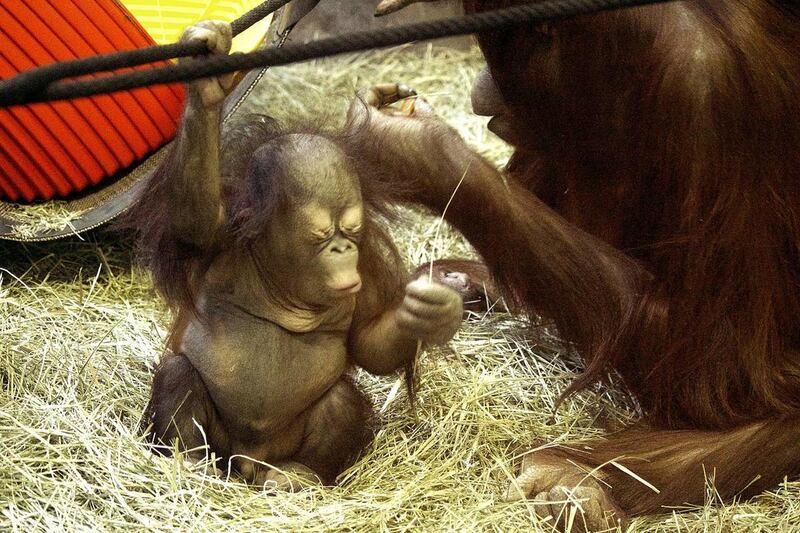
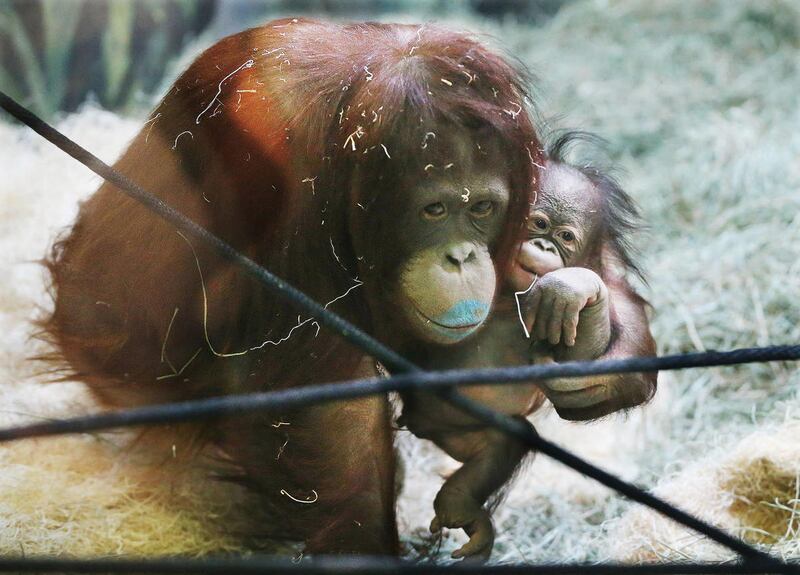
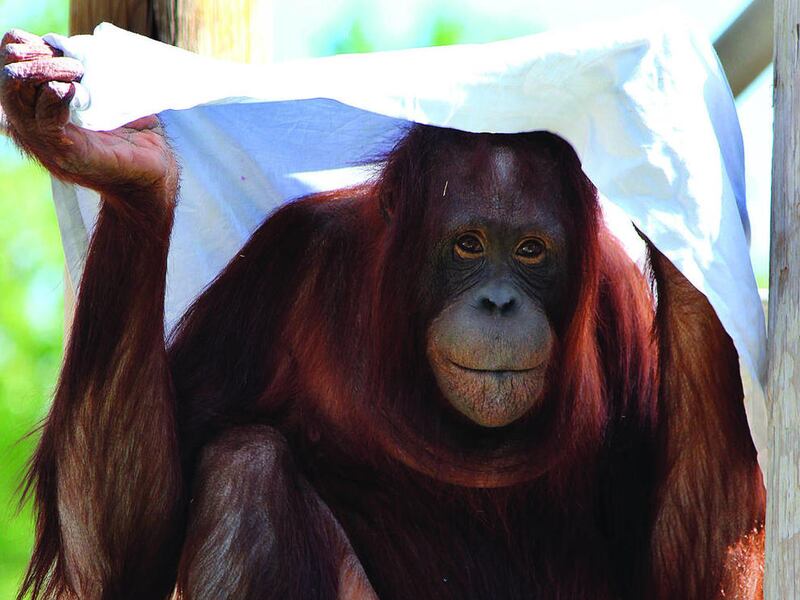
Seven months ago, Utah’s Hogle Zoo welcomed the arrival of a new primate, a male Borenean organutan named Tuah. Tuah’s mom, Eve, died shortly after his birth. Father Eli died earlier in the year. Fortunately, Tuah has an older sibling, 10-year-old Acara. The keepers worked with Acara to help teach her how to be a mom to baby Tuah.
Acara wasn’t used to being around anything so small, so the biggest challenge was teaching her how to be gentle with her brother. The keepers started by giving Acara a stuffed animal that they called her baby. They placed the stuffed toy in the enclosure and taught Acara the command “go get your baby.” Then they would teach her to be gentle with the toy. When Acara did something right, she was rewarded with food. She quickly picked up the skills she needed to start caring for Tuah. Renner says Acara is doing a great job as surrogate mom and is very quick to come to Tuah’s aid if he ever gets distressed.
Q. Why are they called orangutans, where does the name come from and does it have a special significance? — Katy Dark, sixth-grader
A. It is interesting the word orange is in their names since they are orange or reddish colored, but their name actually comes from a Malaysian word or phrase, “orang” “hutan.” It means person of the forest. A lot of people mistakenly pronounce it “orangutang” with a “g” on the end. In the Malay language, with the "g" on the end, it actually means a person in debt rather than the person of the forest that the “orangutan” denotes.
Q. Can primates see color? — Chandra
A. Yes, all primates can see color. They all have the rods and cones in their eyes that humans have. Some have different numbers of cones, so some see more colors than others.
Q. Are there boy orangutans since it looks like they all have bosoms?
A. There are boy orangutans. Boy orangutans in the wild do look very similar to girls. If they have some extra skin or extra insulation they are carrying around, they can look like they have bosoms.
Q. What do orangutans eat? – Emily, 4
A. They eat mainly fruit and leaves off the trees; sometimes bark and insects. But the main thing they like is fruit, and that makes up the majority of their diet.
Q. What do they get for a treat?
A. They don’t get Snickers or M&M’s like I would prefer, their version of a candy are grapes. They like bananas or anything new and different. So sometimes we will get mangoes or papayas. Or some new and different fruit you don’t see that often. They really like the variety.
Q. Do they live in America?
A. They do here at the zoo, but orangutans are native to the island of Borneo in Southeast Asia. Sumatran orangutans live on the island of Sumatra. Very close to Borneo, but they do not overlap in their geography.
Q. Can you have an orangutan as a pet?
A. Unfortunately, it is physically possible to do so. And that is one of the reasons they are so endangered. A lot of people think they look really cute and want one for a pet, so hunters will catch baby orangutans and give or sell them to people. So while it is physically possible, it is not a good idea because they have a very complex social system, and they need to live in that social system with other orangutans. They know exactly what kind of food they need to get and what nutrition they need in their wild native habitat, and people can’t provide that for them unless it is someplace like here at the zoo where we have experts in nutrition and medicine and behavior in order to care for those animals.
Q. How do baby orangutans hang on while their mothers swing through branches without falling off? — Lulu, 5
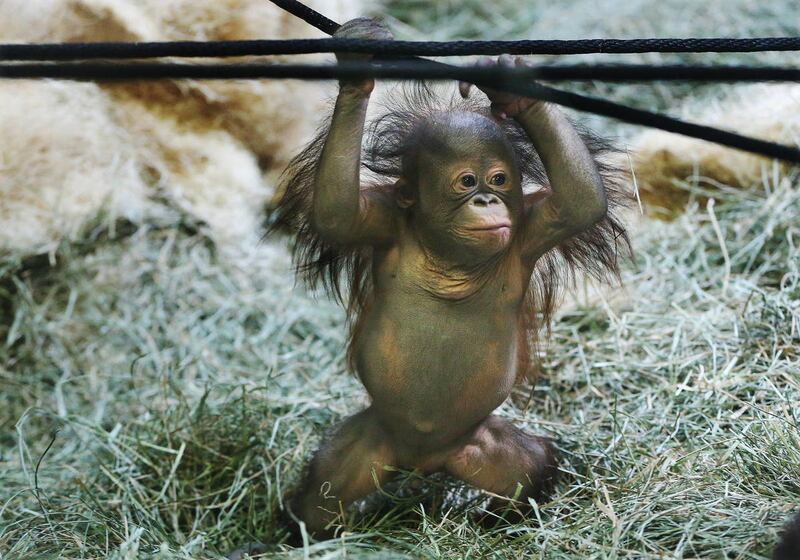
A. They are very strong. From the first day that they are born they are able to make a fist and grasp onto their mom’s hair. So that is one reason they have such long hair, it makes good handholds for the babies. So unlike a human baby who isn’t that strong and can’t support their own body weight, a baby orangutan can fully support their body weight by gripping onto mom’s hair and just hanging off her hair.
Q. How fast can they swing? — James, age 6
A. I don’t know if we have ever had a radar gun to test how fast they can go, but they are very quick. They can move through the trees as fast or faster than a human can run on the ground.
Q. Do orangutans cry? — Lulu, age 5
A. I’ve never seen an orangutan physically have tears like a human, but they definitely can experience grief and sadness. Maybe not in the way that you and I do, but there are things like if they look outside and it is raining and they really want to go outside, it’s not their happiest day because they want to go sit in the sunshine. They recognize when a family member has passed away and they are not interacting with them anymore. We definitely notice a period of time before they return to their normal activity and behavior level that at least to us appears like a grieving.
Q. Do orangutans get haircuts? — Alyssa, age 8
A. We do not give them haircuts. The only time we might is if there is some sort of wound we need to treat. Their fur is designed to clump together for protection against the weather and insects, so we figure if it is good enough for them to be swinging out there in the wild without a haircut it is good for them here.
Q. What do orangutans do most of the day? — Gage
A. Orangutans are very, very smart animals, so they are constantly looking for things to do, looking for puzzles to figure out. The keepers try very hard to keep them occupied and give them tasks to do. We will put their food in puzzle feeders so they have to figure out several tasks to get to the end goal of finding the food. We give them enrichment, which is a lot of devices throughout the day to stimulate. Also sensory manipulation where we might give them a new smell. They love interacting with the public and going up to the windows to see all the little kids that come to see them.
In the wild their main activities would be finding food and staying safe. Making the next nest they plan to sleep in. Avoiding inclement weather, avoiding predators. Unfortunately and fortunately, they really don’t have any other predators other than humans.
Q. What do orangutans and humans have in common?
A. They are both mammals and they are both primates. So they have similar features. Orangutans act very much like us, and you can tell when they are trying to figure something out. You know when they are upset or happy.
Q. What kind of art can orangutans do?
A. The orangutans here do a lot of painting. Orangutans at other zoos also paint or do sculpture if they are given some clay.
Q. How tall can they grow? Can they swim? —James Meadows, 6
A. It varies, but from the top of their head to the bottom of their feet they usually are around 4 feet. They seem much bigger because their arms are so long, and if they were to stand up and stretch their arms over their head, they would be closer to 6 feet.
They have been known to swim. It doesn’t appear to be their favorite thing. Researchers in the wild will see them in the water if they need to cross a river or if a baby falls in a mother will go in to rescue it. But it doesn’t appear to be something they enjoy.
Q. How many bones does it have in its body? How old can they live to be? — Alyssa, 8
A. Roughly the same number as humans (approximately 250).
In the wild, they can live into their 50s; even into their 60s.
In the zoo, usually longer because we can give them medicine and they are protected from predators.
Q. Why is their fur orange? — Alyssa, 8
A. Just one of those things. But maybe the fact that they are darker is to help them blend in more with the shadows.
Q. How many teeth do they have? Do you brush them? — Emily, 4
A. Same number we have (32). They get the same ones we get. Same as with little kids, they start with their incisor and then move out. They get them in the same pattern as we do.
We do not brush their teeth on a daily basis. Most of the food they get is chosen for nutrition and to help clean the tartar off their teeth. So we don’t put toothpaste on a brush and do that on a regular basis. They are all trained to allow us to do that in case they need some extra cleaning if they had some bad problems.
Q. When they are born how many pounds do they weigh? — Andrew
A. Just like human babies, each one is a little different. Usually anywhere from 2 to 5 pounds when they are born. Boys are always heavier because they get bigger than the girls.
Q. What sense do they use most to explore their world?
A. Being a primate they definitely use their eyes more than other animals. While they have a better sense of smell and hearing than humans, I would say they rely on their eyesight most.
Q. How strong are they? Like as strong as 20 men?
A. Researchers have speculated they are probably as strong as 10 men. When we play tug of war with Acara, it’s no contest. We can tug for maybe a minute or two, or a few seconds, before she is pulling it away from you. And if you do think you are winning, it is probably because she is letting you.
Q. Are they endangered? How many are there?
A. There are about 50,000 to 60,000 in the wild of the Borneo. The Sumatran population is about 6,000. Zoo population: 87 in U.S. and 217 worldwide.
The main thing that is causing endangerment is habitat loss. They are losing their home in the trees. The rain forest is being cut down for different farms to come in to plant palm oil trees. Palm oil is used in many different products — food, plastics, cosmetics, so there is high demand for palm oil. There is money in building more and more of these tree farms.
One way we can help is being an informed consumer. You have power to make a change in the world. There is a free app from cmzoo.org that tells you which companies use sustainable palm oil (trees that are harvested and then replanted the next year) and have signed a pledge to not contribute to the deforestation of the rain forest. So maybe if you prefer a product that has not signed the pledge, then write that company and ask them to change. Maybe if we change our policies it will mean a better world for everybody.
DID YOU KNOW?
Orangutans’ arms stretch out longer than their bodies — up to 7 feet from fingertip to fingertip.
Like humans, orangutans have opposable thumbs. Their big toes are also opposable. Unlike humans, approximately one-third of all orangutans do not have nails on their big toes.
There are two subspecies of orangutans, the Bornean and the Sumatran. Sumatran orangutans look slightly different. They are more slender and the males don’t have the long hair the Borneans do.
SOURCE: Utah’s Hogle Zoo, orangutan.org