

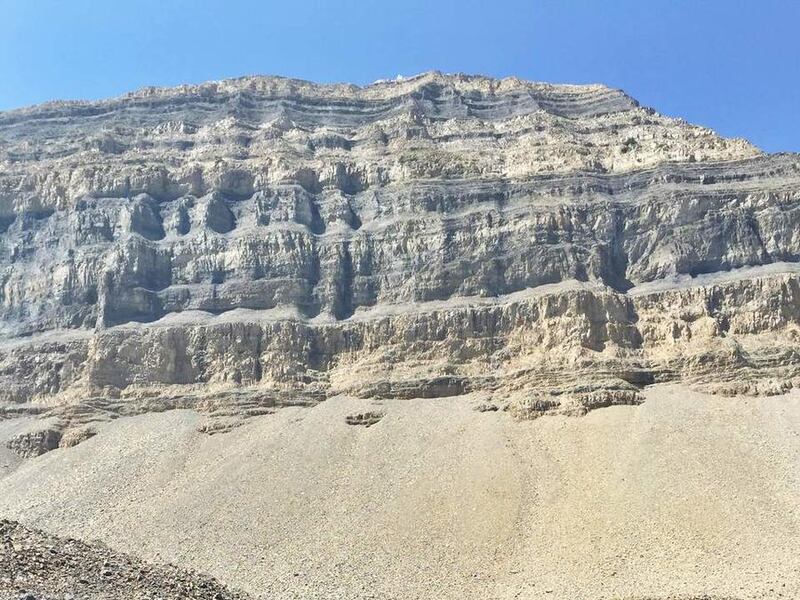

From its perch, Mount Timpanogos sits like an ever-changing beacon above Utah Valley. White in winter, pink at sunset, shrouded in mist or haze, and blue in the morning light.
I had a tradition of climbing Timp every year in college. So on our family’s road trip to the West this month, I wanted my older boys to have the same experience. Sure, they’re only 13, 11 and newly 10, but they’re sturdy kids. Besides, it would build character!
We spent much of the summer preparing, at least as much as we could on our flat Midwestern landscape. Every time I sent the boys on a bike ride or a morning jog, I’d say, “This is to prepare you for Timp.”
I prepared them mentally. I told them climbing the mountain would be the most physically demanding thing they’d ever done. I warned them that going up the mountain was hard, but coming down was the hardest of all.
When the morning of the climb finally arrived, everyone sprang out of bed at 5 a.m. We loaded our packs with granola bars, peanut butter sandwiches and about 50 bottles of water.
In addition to our three boys, my husband and I were joined by my dad, my two sisters and one of my brothers.
This made nine climbers in total, which, as my son Addison pointed out, was the same number who set out with Frodo to destroy the ring of power in J.R.R. Tolkien’s “Fellowship of the Ring.”
We considered this a good omen.
We arrived at the base of the mountain a hair after sunrise, just as a golden glow spilled over the mountain, bathing our first steps in an ethereal light.
There’s a reason Mount Timpanogos is one of the most popular hikes in the entire state of Utah. It has that perfect cocktail of topography, from waterfalls and quaking aspens to the high alpine meadow that surrounds the glacial lake. It’s difficult without being impossible, traversing almost the entire backside of the mountain in a dizzying array of switchbacks.
The hike’s popularity was helped along by an early BYU professor, Eugene Lusk Roberts, who wanted to introduce Timp to the world. In the early 1900s, he instituted an annual trek up the mountain, a tradition that lasted nearly 60 years.
Our own family roots run deep on Timp. My great-great uncle, Harrison R. Merrill, a BYU professor of English, wrote a poem about the mountain titled “O God, Let This Be Heaven,” which enjoyed some years of fame before falling into obscurity.
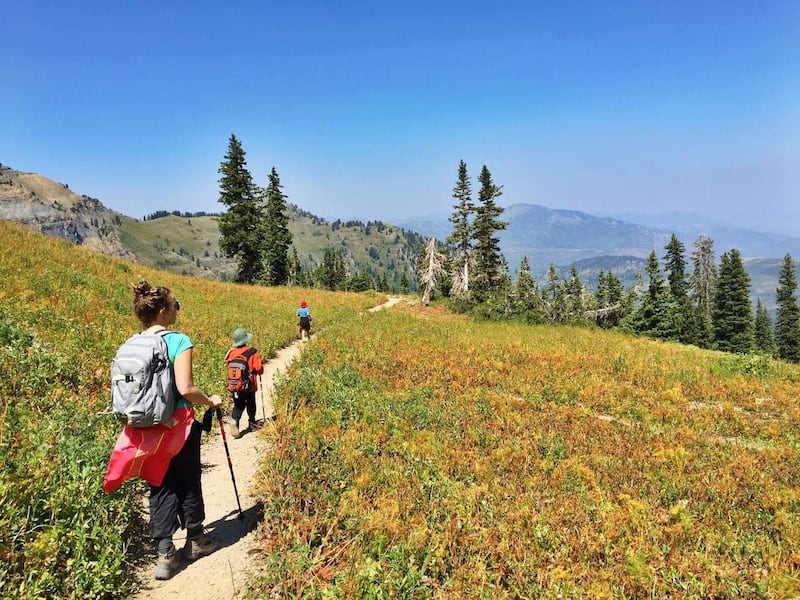
The trail was surprisingly quiet the day we hiked, so it seemed at times to be just us and the mountain. The first part of the hike was perfect. Our legs were fresh, and the air had a tinge of early autumnal chill.
I’d brought along a potpourri of dangling carrots: fruit leather and granola bars and the even heavier-hitting Swedish Fish, Red Vines and Sour Patch Kids. We gave the kids benchmarks: get to mile 4 and they could have some Swedish Fish; Red Vines at mile 5.5.
However, by mile 5 it became clear: The Red Vines weren’t enough, unless we planned to rope them around my boys’ waists and pull them up the mountain. The complaints had begun in earnest.
That’s when the Fellowship rallied. My siblings and Dad sang songs, told funny stories, asked questions and distracted my boys from the real task at hand until we reached Emerald Lake.
Emerald Lake comes around mile 6 of the hike and is the final pit stop before the push for the summit. When we reached the lake, we cheered, ate lunch, took a brief nap and sang Uncle Merrill’s poem, which my dad changed slightly and set to music several years ago:
O Lord, let this be heaven —
I do not ask for golden streets,
Or long for jasper walls.
Nor do I sigh for pearly shores,
Where twilight never falls;
Just leave me here, beside these peaks,
In this rough Western land —
I love this grand old world of Thine,
Dear God, you understand.
O Lord, let this be heaven —
I do not crave white stainless robes,
I’ll keep these marked by toil;
Instead of straight and narrow walks,
I love trails soft with soil.
I have been healed by crystal streams,
Like these from snow-crowned peaks,
Where dawn burns incense to the day,
And paints the sky in streaks.
Oh Lord, let this be heaven —
I do not ask for angel wings,
Just leave that old peak there,
And let me climb ‘til comes the night,
I want no golden stair.
Then, when I say my last adieu,
And all farewells are given,
Just leave my spirit here somewhere
Oh, Lord, let this be heaven.
We originally thought to go beyond the lake, but fatigue and the treacherous trail had my sisters and I, including the kids, turning around not far beyond the alpine meadow.
True to my warnings, the way down was harder — much harder — than the way up. We were all about to summon angel wings and leave our spirits right there on the mountain.
Once again, my sisters rallied beside my weary kids. They recounted the entire plot of the latest Mission Impossible movie. They listened to the boys describe intricate details of favorite games like "Minecraft" and "Terraria." They cheered, encouraged and laughed every painful step of they way.
Late in the afternoon, 12 miles and 11 hours after we had begun, we made it back to the car, where we all fell in a heap on the ground.
Mountains are metaphors for many things: temples, spiritual retreats, something to forge, something to carve, something to climb and conquer. If the mountain is a metaphor for life’s journey, then what I learned is that I can’t do it alone.
If it had just been me cajoling my kids along, they would have turned around after just a few miles. I needed my own village, my Fellowship, to get us up and back.
I hope my boys, like my great-great uncle, find heavenly mountains a regular part of their earthly adventure.
And I hope they learn, as I did, to rely upon a village of singing, dancing, story-telling family members to help them reach heights they never thought possible.
Tiffany Gee Lewis runs the newly launched site Raise the Boys (raisetheboys.com), dedicated to rearing creative, kind, courageous and competent boys. Follow it on Instagram and Twitter at raisetheboys. Email: tiffanyelewis@gmail.com